
Support Politikanta Minute
Your support keeps independent commentary alive.
☕ Buy us a coffee and keep the conversation going
Latest Videos
Daily political commentary, breaking news, Senate hearings, government updates, and featured video reports.
BBM Issues
Latest BBM-related updates, reactions, political tension, hearing clips, and issue breakdowns.
Watch MoreDuterte Legacy Playlist
Senate Circus Playlist
House of Representatives Scandals Playlist
Celebrity Updates
Sports
🎵 Music
18 Marines Playlist
Global Entertainment Playlist
Global News Playlist
Bible Scripture Playlist
Breaking News Playlist

‘HINDI PA NGA KAMI MAGKAKILALA NG ASAWA KO NOON’ MATIBAG DENIES ₱72M CALIFORNIA MANSION REPORT
‘Hindi Pa Nga Kami Magkakilala ng Asawa Ko Noon’: Matibag Denies ₱72M California Mansion Report
By Politikanta Minute | July 29, 2026
National Bureau of Investigation Director Atty. Melvin Matibag is pushing back against a report alleging that he owns a ₱72-million mansion in California.
During a press conference, Matibag categorically denied owning the property and said that neither he nor his wife, Congresswoman Ann Matibag, owns properties abroad.
The NBI chief also maintained that all of their declared assets are reflected in their Statement of Assets, Liabilities, and Net Worth, or SALN.
According to Matibag, anyone who wants to examine his declared properties can request or inspect the relevant records.
But Matibag's strongest response to the California mansion allegation centered on one key detail.
He said the person listed as the owner of the property is simply someone who shares his name.
And according to the NBI chief, the timeline alone should raise questions about the allegation.
“Hindi pa nga kami magkakilala ng asawa ko noon,” Matibag said, referring to the reported 2004 purchase of the property.
In other words, Matibag's argument is that the property was allegedly purchased by a different person who happens to have the same name—and that the timeline does not match his personal circumstances at the time.
Matibag Presents Documents
During the press conference, Matibag reportedly presented a folder containing documents that he said would prove that the report was incorrect.
The move appears to be part of a broader effort by the NBI chief to directly challenge the allegation and defend his credibility.
Matibag believes the issue is not an isolated controversy.
He suggested that the spread of what he described as fake news may be intended to weaken his credibility as a witness in the ongoing impeachment trial.
The NBI director also argued that the mansion allegation is unrelated to his testimony.
According to Matibag, the information he has presented before the impeachment court is supported by records held by the bureau.
His position is essentially that questions surrounding an alleged property should not be used to undermine testimony that, according to him, can be independently checked against official records.
Potential Legal Action
Matibag is also reportedly considering legal action against the news outlet that published the original report.
Although the outlet has since released a follow-up report clarifying the issue, Matibag said the correction was insufficient.
His argument is that the initial report had already caused significant damage to his reputation.
This raises an important question in the age of instant news and social media:
How much damage can be done before a correction arrives?
A sensational allegation can spread rapidly.
A clarification often travels much more slowly.
By the time the correction is published, the original claim may already have been shared thousands of times across social media platforms.
For public officials, the consequences can be even more serious.
Reputation is part of public credibility.
And when a person is involved in a high-profile investigation or impeachment proceeding, even an unrelated allegation can become politically significant.
The Politics of Credibility
Matibag's case highlights a broader reality of modern Philippine politics.
Public officials are constantly under scrutiny.
That scrutiny is necessary.
Government officials should be questioned about their assets, their decisions, and their conduct.
But scrutiny only works when the information being examined is accurate.
There is a fundamental difference between investigating a legitimate allegation and repeating an allegation that turns out to be based on mistaken identity or incomplete information.
The first is accountability.
The second can become misinformation.
That distinction matters.
Matibag is arguing that this particular controversy falls into the second category.
His claim is that the property belongs to another person who simply shares his name.
He says the documents he presented support that position.
He also maintains that his assets are properly declared in his SALN.
Those are claims that can—and should—be examined against official records and documentary evidence.
The Politikanta Minute Take
This story is a reminder that being accused is not the same as being proven guilty.
At the same time, denying an allegation is not automatically the same as proving it false.
The truth lies in the evidence.
That's why the documents Matibag presented—and the records that can independently verify the property's ownership—matter.
If the mansion genuinely belongs to a different person with the same name, then the original allegation deserves a clear correction.
If there are questions about the property that remain unresolved, those questions should be investigated through official records.
Either way, the public deserves facts.
Not assumptions.
Not viral outrage.
Not political spin.
And certainly not a rush to judgment.
Matibag has now publicly denied the allegation, presented documents he says support his denial, and indicated that he may pursue legal action over the report.
The news outlet has reportedly issued a subsequent clarification, but Matibag says it came too late to undo the damage.
That leaves a larger lesson for everyone involved in public discourse.
When an allegation is published, the responsibility doesn't end with getting attention.
The same standard of accuracy must apply when correcting the record.
Because in the digital age, the first headline may travel around the world before the truth even has a chance to put on its shoes.
And when the wrong person is accused, the correction needs to be just as visible as the accusation.
For now, Matibag's position is clear:
He denies owning the ₱72-million California mansion.
He says the owner is a namesake.
He says his assets are declared in his SALN.
And he says the documents he presented support his version of events.
The next question is not who can shout the loudest.
It's simple:
What do the records show?
✝️ BIBLE VERSE CONNECTION
Proverbs 18:17 (KJV)
“He that is first in his own cause seemeth just; but his neighbour cometh and searcheth him.”
Exegesis / Reflection
This verse offers an important principle for stories involving accusations and denials.
The first version of a story can often appear convincing because it is the first version people hear.
But the Bible reminds us that hearing one side is not the same as establishing the truth.
In Matibag's case, the public has heard an allegation.
Now it has also heard his denial and his explanation.
He says the property belongs to a namesake and has presented documents that he claims support his position.
The responsible response is not to automatically believe either side simply because one version is more convenient.
The responsible response is to examine the evidence.
This is particularly important when allegations involve public officials.
Accountability requires scrutiny.
But fairness requires accuracy.
A person should be held responsible for what they actually did—not for something someone else did simply because they share a name.
The same principle applies to corrections.
If an allegation is wrong, the correction should be clear.
If the evidence remains disputed, the public should be told that as well.
Truth does not need exaggeration.
It needs examination.
And ultimately, the facts should be allowed to speak for themselves.
Berberabe and the Burden of Power: Can the OSG Still Serve the People?
December 26, 2025•2 min read

When Solicitor General Menardo Guevarra Berberabe stepped into the Office of the Solicitor General (OSG), he inherited more than a title — he inherited a system overwhelmed by power, pressure, and politics.

Today, the OSG is handling over 140,000 active cases, ranging from civil disputes and criminal appeals to some of the most politically sensitive legal battles in the country. For Berberabe, the challenge is no longer just about winning cases — it’s about balancing justice, independence, and public trust in a polarized environment.
In a recent interview, Berberabe admitted the weight of the responsibility. As the government’s chief lawyer, the OSG is expected to defend the state — yet also uphold fairness, due process, and the rule of law. That balancing act becomes especially difficult when cases involve powerful institutions, high-ranking officials, or controversial government actions.
Critics argue that the OSG has increasingly relied on procedural defenses — appeals, technical motions, and delays — which, while legal, may contribute to a perception that justice is being stalled rather than served. Berberabe himself acknowledged that the office is rethinking this approach, exploring ways to simplify litigation and reduce unnecessary appeals.
The burden is not merely institutional — it is personal. Berberabe has spoken openly about protecting his family, particularly his daughter, from public scrutiny. In an era where public officials are relentlessly targeted online, the human cost of public service has become impossible to ignore.
Yet the deeper question remains: Can the OSG remain credible if the public increasingly doubts whose interests it truly serves?
As corruption scandals mount, budgets swell, and accountability mechanisms weaken, the role of the OSG becomes more crucial — and more scrutinized. The office stands at a crossroads: continue operating as a defensive shield for the state, or evolve into a legal institution that actively restores public confidence in governance.
Justice, after all, is not only measured by court victories — but by whether the people still believe the law works for them.






🔥 Trending on Facebook
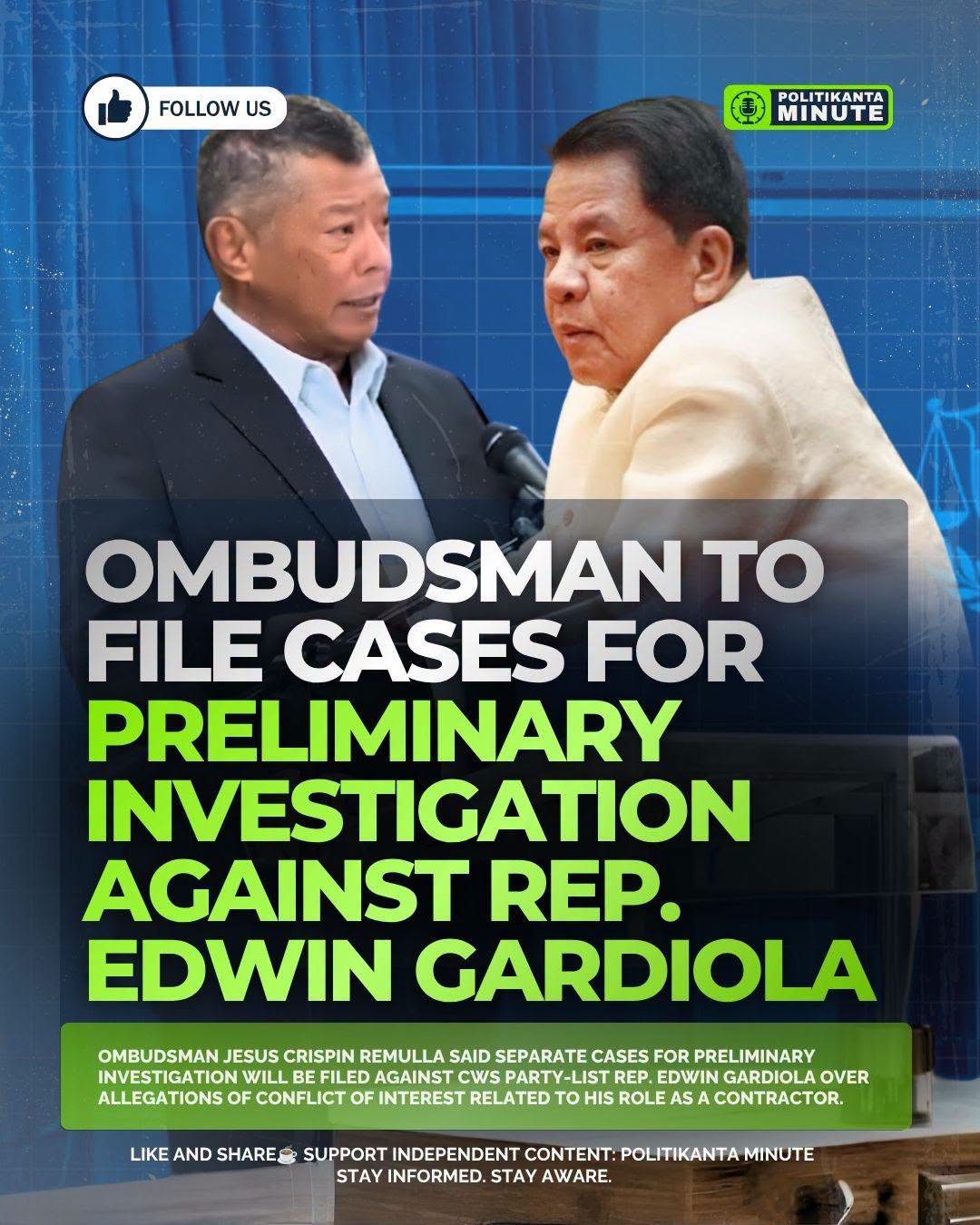
Stay connected with Politikanta Minute through our latest Facebook posts featuring breaking political news, viral discussions, exclusive commentary, and community conversations. Click any post below to read more, leave a comment, and join the discussion.



























More BBM Watch Stories
Philippine Political News, Commentary & Breaking Updates
About Politikanta Minute
Politikanta Minute delivers daily political news, commentary, breaking developments, Senate hearings, House investigations, government updates, sports, entertainment, and faith-based content.
Readers can browse thousands of articles, curated YouTube playlists, and organized topic hubs covering Philippine and global events.
Whether you're following BBM Issues, Duterte Issues, Congress hearings, or the latest entertainment stories, Politikanta Minute brings together videos, articles, and analysis in one place.
FOLLOW US
Disclaimer: This site uses publicly available images and materials for news, satire, and commentary. All rights belong to their respective owners. No copyright infringement intended.
© 2025 Politikanta Minute. All Rights Reserved.
Political Commentary • Satire • Faith-Based Reflection
Some visuals may be AI-generated for satire and illustration. Not real footage unless stated.
FOLLOW US
Disclaimer: This site uses publicly available images and materials for news, satire, and commentary. All rights belong to their respective owners. No copyright infringement intended.
© 2025 Politikanta Minute. All Rights Reserved.
Political Commentary • Satire • Faith-Based Reflection
Some visuals may be AI-generated for satire and illustration. Not real footage unless stated.
FOLLOW US
Disclaimer: This site uses publicly available images and materials for news, satire, and commentary. All rights belong to their respective owners. No copyright infringement intended.
© 2025 Politikanta Minute. All Rights Reserved.
Powered by Graprix Design and Prints.
Political Commentary • Satire • News • Faith & Devotion