
Support Politikanta Minute
Your support keeps independent commentary alive.
☕ Buy us a coffee and keep the conversation going
Latest Videos
Curated Politikanta Minute playlists by focused political topic.
FAITH
Latest FAITH-related updates, reactions, political tension, hearing clips, and issue breakdowns.
Watch MoreDuterte Legacy Playlist
Senate Circus Playlist
House of Representatives Scandals Playlist
18 Marines Playlist
Global Entertainment Playlist
Global News Playlist
Celebrity Updates
Sports
🎵 Music
Breaking News Playlist
BBM News Playlist

“Na-Demonize Kasi”: Garin Defends Flood Control Funding in 2027 Budget Amid Anomaly Concerns
Janette Garin Defends Flood Control Funding in 2027 Budget Amid Anomaly Concerns
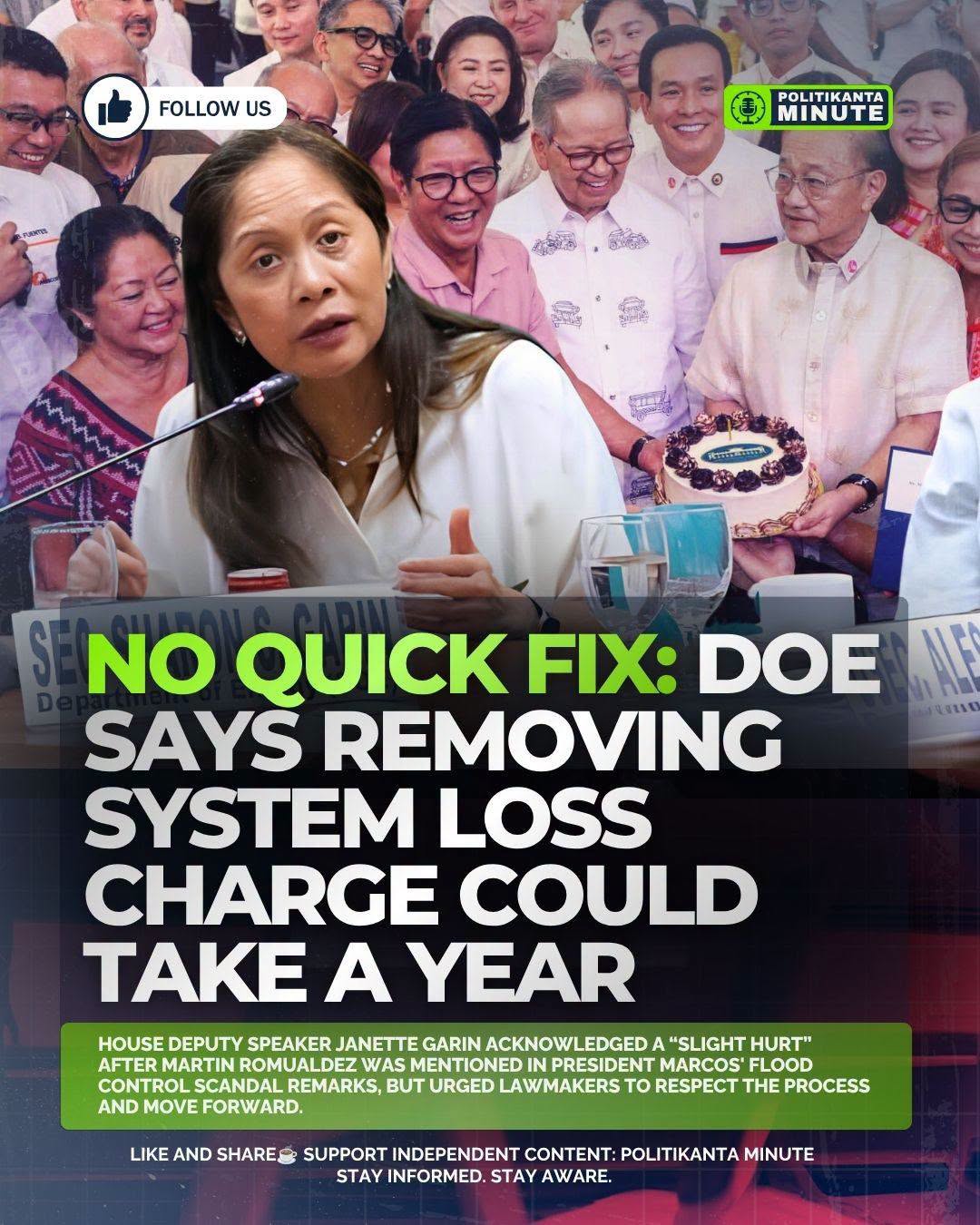
MANILA — House Deputy Speaker Janette Garin defended the possible inclusion of flood control funding in the proposed 2027 national budget, arguing that legitimate flood mitigation projects should not be abandoned because of alleged anomalies involving some projects.
Garin made the statement Monday, August 10, as lawmakers continued discussions on the proposed 2027 budget and the government's approach to flood control following widespread scrutiny of infrastructure projects.
“Na-demonize kasi yung flood control projects… With the proper watchdogs, kailangan talaga siyang mabalik.”
Her remarks reflect the government's challenge of balancing two competing concerns: continuing much-needed flood protection projects while preventing a repeat of alleged irregularities that have placed the flood-control program under intense scrutiny.
Flood Control Projects Still Needed
Garin argued that flood control remains an essential government function, particularly as communities across the Philippines continue to experience destructive flooding during periods of heavy rainfall and tropical cyclones.
The controversy surrounding certain projects, she suggested, should not mean that legitimate flood mitigation efforts are completely removed from the national budget.
Instead, the focus should be on strengthening monitoring and accountability.
That means ensuring that projects funded by taxpayers are properly evaluated, implemented and inspected.
“With Proper Watchdogs”
Garin emphasized the importance of having proper watchdogs overseeing flood-control spending.
The proposed safeguards are intended to ensure that projects included in the 2027 budget meet stricter requirements before receiving funding.
According to Garin, flood-control projects will face stringent requirements for inclusion in the proposed budget.
The goal is to prevent questionable projects from being funded while allowing legitimate infrastructure that communities actually need to proceed.
Government Promises No Repeat of Anomalies
Garin also assured that lawmakers will not allow a repeat of the flood-control anomalies that have triggered investigations and public outrage.
She pointed to President Ferdinand Marcos Jr.'s pronouncements as well as safeguards being implemented by the Department of Budget and Management (DBM) and the Department of Public Works and Highways (DPWH).
The message is essentially that flood control should not be eliminated—but the way projects are selected, funded and monitored must change.
The ₱64-Billion Question
The debate comes amid the government's continuing review of flood-control spending.
Billions of pesos have been allocated to flood mitigation over the years, yet flooding remains a recurring problem in many parts of the country.
That has fueled questions over whether some projects were poorly designed, improperly implemented, inadequately maintained or potentially affected by irregularities.
The current scrutiny has therefore placed every new flood-control proposal under a much brighter spotlight.
Can Stricter Safeguards Restore Public Trust?
The biggest challenge facing lawmakers may not simply be approving money for flood control.
It is convincing taxpayers that the money will actually produce functioning infrastructure.
For the 2027 budget, that could mean more rigorous project selection, clearer documentation, stronger procurement oversight, independent inspections and greater transparency over where projects are located and how much they cost.
If those safeguards are genuinely enforced, legitimate flood-control projects could continue while questionable projects are rejected.
But if the same weaknesses that allowed previous anomalies to occur remain, simply putting flood-control funding back into the budget could reignite the controversy.
The Debate Isn't Whether Flood Control Is Needed
Flooding is a real and recurring problem in the Philippines.
The debate is therefore shifting from whether the country needs flood-control projects to a more important question:
Can the government guarantee that flood-control money will be spent properly?
Garin's position is that the answer should be yes—with stronger watchdogs and stricter requirements.
That puts the burden on lawmakers, DBM, DPWH and implementing agencies to prove that the safeguards are more than just promises.
Because ultimately, taxpayers aren't simply paying for flood-control projects.
They are paying for protection.
And if a project is included in the 2027 budget, Filipinos will expect it to work—and expect every peso behind it to be accounted for.
KEY TAKEAWAY
House Deputy Speaker Janette Garin defended the possible return of flood-control funding in the proposed 2027 budget, saying legitimate projects should not be abandoned because of alleged anomalies. She said stricter requirements and stronger watchdogs from the government should help prevent a repeat of previous problems.
Rep. Janette Garin Calls “Maleta” Allegations Fake: ‘Clearly Fabricated and Baseless’
‘Clearly Fabricated and Baseless’
February 26, 2026•3 min read
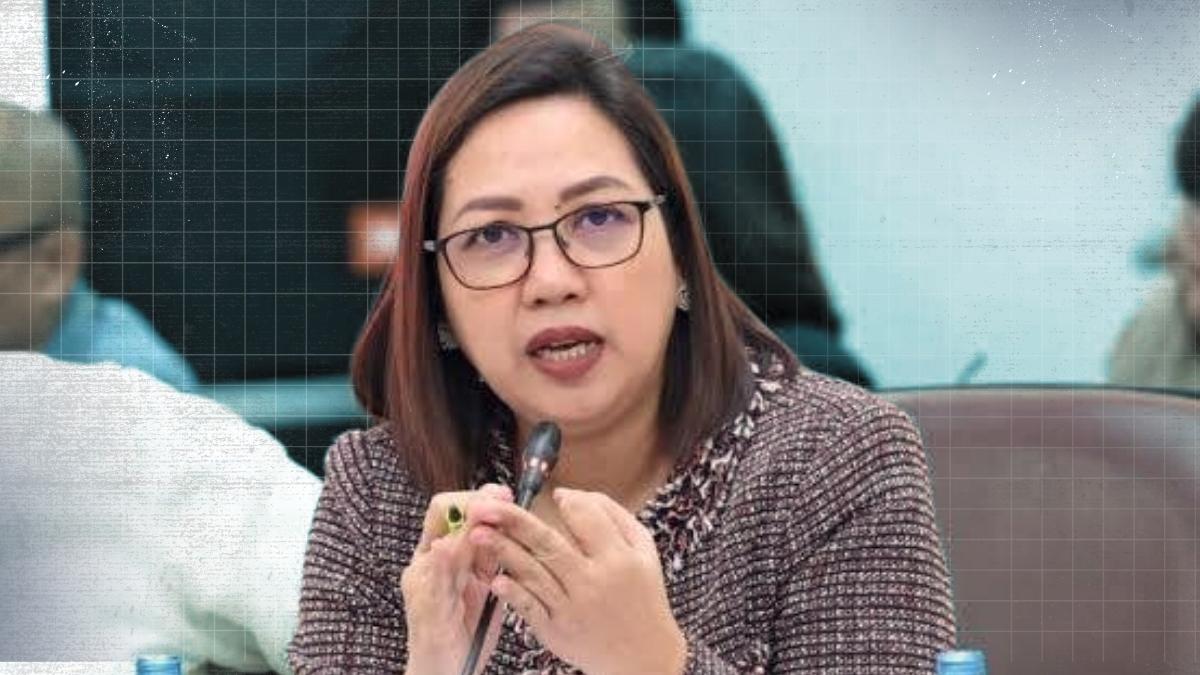
Iloilo First District Representative Janette Garin has strongly rejected allegations linking her to the so-called “maleta” money controversy, describing the claims as fake and fabricated.
In a public statement dated February 25, 2026, Garin addressed the accusations directly:
“Fake news again. Clearly fabricated and baseless. Who delivered? Where and when?”
She further argued that those making the claims have failed to provide concrete details or evidence.
“Obviously hindi nila masagot because it’s fake information and patalang. Diversion sa tuod nga mga issues subong. No wonder the press con was not attended and carried by reputable outlets.”
Garin’s remarks come amid continuing political turbulence surrounding allegations made in a joint affidavit reportedly executed by former soldiers. The affidavit claimed that certain lawmakers were linked to deliveries of suitcases allegedly containing large sums of money.
Allegations vs. Evidence
As of this writing:
No formal criminal charges have been filed against Garin.
No court ruling has confirmed wrongdoing.
No official investigative agency has released verified findings substantiating the claims.
The absence of documented proof remains central to the debate.
In political environments where narratives can spread rapidly, especially through social media, the distinction between allegation and evidence becomes crucial.
Garin’s response emphasizes precisely that gap — the lack of specifics.
Her challenge — “Who delivered? Where and when?” — points to the evidentiary threshold required in legal proceedings.
“Pare-pareho ang Sagot”?
Online commentary has also highlighted that several lawmakers issued similarly worded denials.
Some critics interpret this as coordinated messaging.
Supporters argue that identical responses simply reflect a unified rejection of what they consider baseless accusations.
Political communication strategy often involves consistency of message. Whether that consistency signals coordination or simply clarity of position depends largely on interpretation.
The Legal Arena
Garin’s critics have suggested that those involved should address the issue in court rather than in press conferences.
That raises an important question:
Will the allegations formally transition into judicial proceedings?
For claims of financial misconduct to proceed legally, they require:
1️⃣ Sworn affidavits with detailed testimony
2️⃣ Financial transaction records
3️⃣ Documentary evidence
4️⃣ Witness corroboration
5️⃣ Independent investigation
Without those elements, accusations remain part of political discourse — not legal adjudication.
Political Timing and Narrative Control
The “maleta” controversy is unfolding amid broader political tensions, including impeachment discussions and early positioning for the 2028 presidential race.
In such an environment, narratives can serve multiple functions:
Damage control
Political offense
Diversion
Or whistleblowing
Garin’s characterization of the allegations as a “diversion” suggests she believes the controversy may be strategically timed.
Whether that assessment holds depends on whether investigative bodies step in to formally examine the claims.
Media and Credibility
Garin also pointed out that the press conference linked to the allegations was not widely carried by major news outlets.
In political controversies, media uptake often influences public perception.
Mainstream coverage can amplify legitimacy.
Limited coverage can raise questions about credibility.
However, lack of coverage alone does not determine truth — it merely reflects editorial judgment at a given moment.
What Happens Next?
There are three possible paths forward:
1️⃣ Formal investigation begins, and evidence is examined publicly.
2️⃣ The allegations fail to produce documentation and lose traction.
3️⃣ The issue remains a political talking point without judicial resolution.
If the claims are proven, accountability mechanisms will activate.
If the claims lack evidence, reputational harm may linger despite absence of proof.
That is the complex reality of public allegations in modern politics.
The Bigger Picture
Suitcase-money narratives tend to generate strong reactions because they symbolize potential corruption at high levels.
But democratic systems rely on structured verification — not viral amplification.
The rule of law requires:
Proof
Procedure
Due process
Without these, accusations cannot evolve into convictions.
Conclusion
Rep. Janette Garin has categorically denied allegations linking her to alleged “maleta” cash deliveries. She calls the claims fabricated and baseless, challenging accusers to provide concrete details.
As of now, no verified legal findings confirm the accusations.
The next decisive step — if any — will come from formal investigative bodies, not social media exchanges.
Until then, the issue remains within the realm of allegation.





🔥 Trending on Facebook
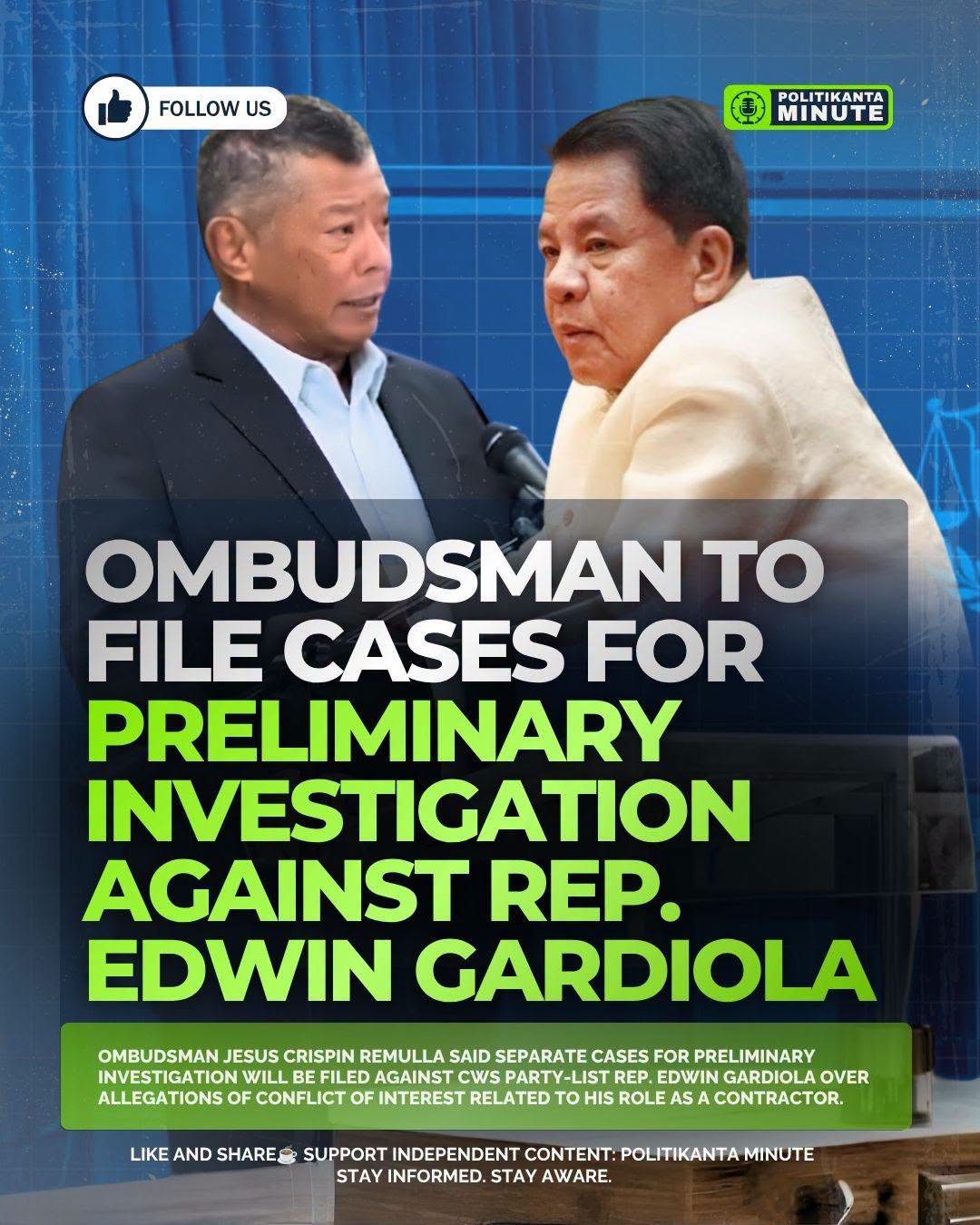
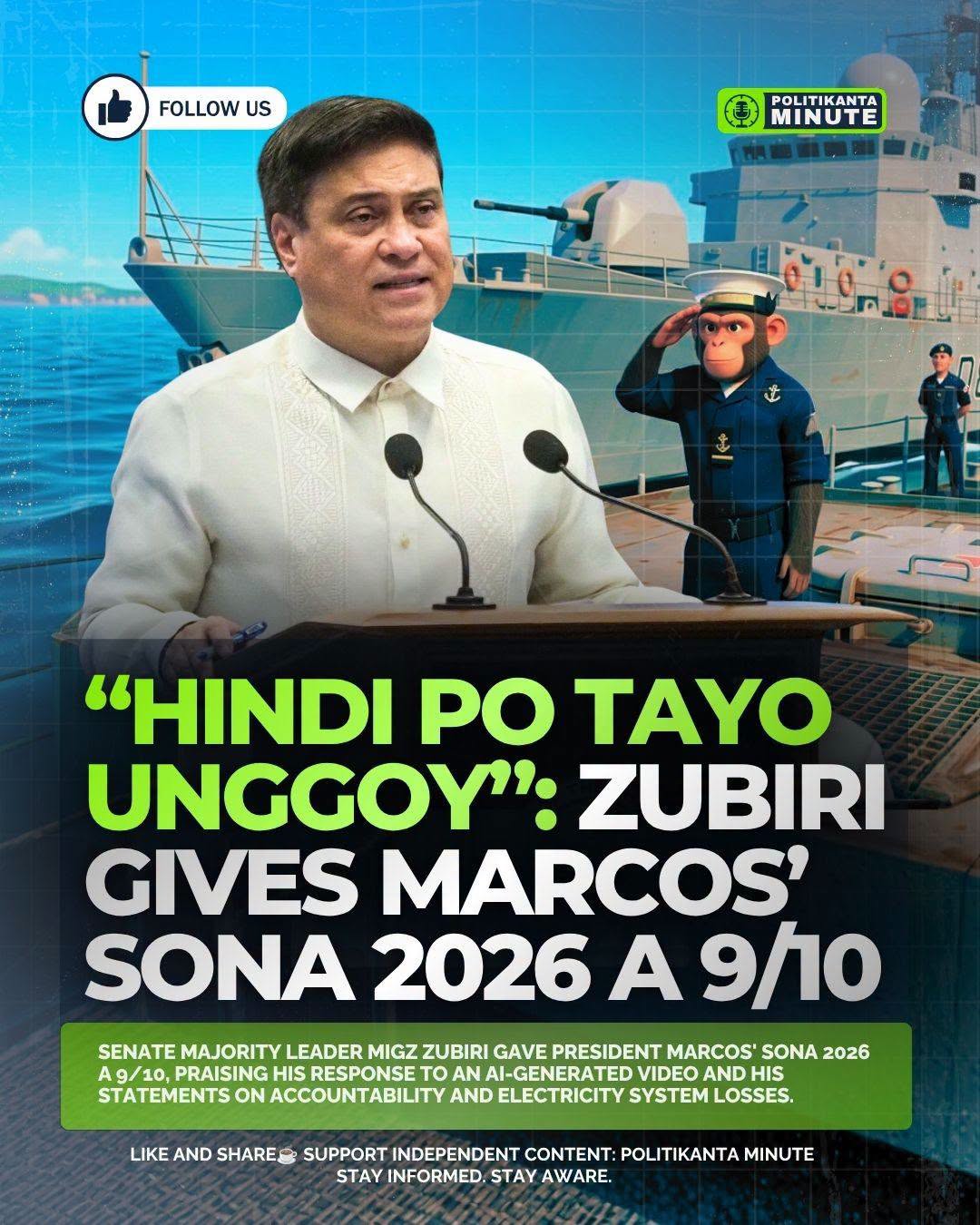
Stay connected with Politikanta Minute through our latest Facebook posts featuring breaking political news, viral discussions, exclusive commentary, and community conversations. Click any post below to read more, leave a comment, and join the discussion.





















More Faith & Devotion Stories
Philippine Political News, Commentary & Breaking Updates
About Politikanta Minute
Politikanta Minute delivers daily political news, commentary, breaking developments, Senate hearings, House investigations, government updates, sports, entertainment, and faith-based content.
Readers can browse thousands of articles, curated YouTube playlists, and organized topic hubs covering Philippine and global events.
Whether you're following BBM Issues, Duterte Issues, Congress hearings, or the latest entertainment stories, Politikanta Minute brings together videos, articles, and analysis in one place.
FOLLOW US
Disclaimer: This site uses publicly available images and materials for news, satire, and commentary. All rights belong to their respective owners. No copyright infringement intended.
© 2025 Politikanta Minute. All Rights Reserved.
Political Commentary • Satire • Faith-Based Reflection
Some visuals may be AI-generated for satire and illustration. Not real footage unless stated.