
Alan Cayetano Questions Timing of NBI SEA Games Probe
"Hindi Kayo Halata": Alan Cayetano Questions Timing of NBI's SEA Games Investigation
Alan Cayetano Questions Timing of NBI Investigation into 2019 SEA Games
Politics often raises questions not only about what is being investigated but also when an investigation begins.
That was the message Senator Alan Peter Cayetano delivered after learning that the National Bureau of Investigation (NBI) had begun looking into alleged irregularities surrounding infrastructure projects connected to the 2019 Southeast Asian (SEA) Games, an event organized during his leadership of the Philippine Southeast Asian Games Organizing Committee (PHISGOC).
Speaking during a Facebook Live broadcast on July 16, Cayetano sarcastically addressed the Department of Justice (DOJ), the NBI, and Malacañang.
"Sa DOJ, NBI, Malacañang: Hindi kayo halata ha? Slight lang, pero hindi naman kayo halata."
The remark reflected his belief that the investigation's timing deserves public scrutiny.
The Investigation
Earlier, NBI Director Melvin Matibag confirmed that the bureau had already assembled documents supporting its inquiry into alleged anomalies involving the construction of facilities for the 2019 SEA Games.
According to Matibag, a dedicated task force has been formed to review the available records and determine whether violations of law may have occurred.
Authorities have emphasized that the investigation remains in its preliminary stage, with no findings of criminal liability having been reached.
Why Cayetano Raised Questions
Rather than focusing solely on the allegations themselves, Cayetano centered his criticism on timing.
His comments came amid heightened political tensions in the country, including ongoing impeachment proceedings against Vice President Sara Duterte and several other politically charged investigations involving prominent public officials.
For Cayetano, the coincidence between these developments naturally invites questions from the public.
His statement suggests that transparency should extend not only to the investigation itself but also to the circumstances surrounding its launch.
Timing and Public Perception
In democratic societies, the credibility of an investigation depends not only on the evidence collected but also on public confidence in the fairness and independence of the institutions conducting it.
Investigations that begin during periods of intense political conflict often become subjects of public debate.
Supporters of an investigation may view it as a long-overdue accountability measure.
Critics may interpret the same investigation as selective or politically timed.
Ultimately, determining which interpretation is more accurate requires evidence rather than speculation.
The Role of Due Process
The NBI maintains that its actions fall within its legal mandate to investigate possible violations of law.
At the same time, those being investigated retain the right to question the process, challenge evidence, and defend themselves under Philippine law.
Neither allegations nor suspicions automatically establish guilt.
Likewise, questioning the timing of an investigation does not by itself invalidate the investigation's legal basis.
These safeguards exist to ensure that accountability proceeds through evidence, procedure, and judicial review rather than public opinion alone.
A Larger Conversation
The exchange highlights a recurring issue in Philippine politics: balancing the pursuit of accountability with maintaining public trust in government institutions.
Whether the SEA Games investigation ultimately leads to formal charges, clears those involved, or uncovers additional facts, its credibility will depend on how transparently and fairly it is conducted.
As investigations continue, many Filipinos are likely to watch not only the evidence presented but also how institutions demonstrate their independence throughout the process.
Conclusion
Senator Alan Peter Cayetano's remarks have added another layer to the national conversation surrounding accountability and political timing.
While he questioned whether the investigation was initiated for reasons beyond law enforcement, the NBI maintains that its inquiry is supported by documentary evidence and falls within its official mandate.
As the investigation progresses, the legal process—not political rhetoric—will ultimately determine what conclusions, if any, are supported by the facts.
Biblical Reflection
"Whoever walks in integrity walks securely, but whoever takes crooked paths will be found out." — Proverbs 10:9 (NIV)
Integrity in public service requires both accountability and fairness. Allegations should be investigated thoroughly, but conclusions should rest on verified evidence rather than political assumptions. Justice is strengthened when truth is pursued impartially and due process is respected for everyone involved.
🚨 Political Watch | Revilla Refuses to Enter Plea in Graft Case Arraignment
February 10, 2026•2 min read
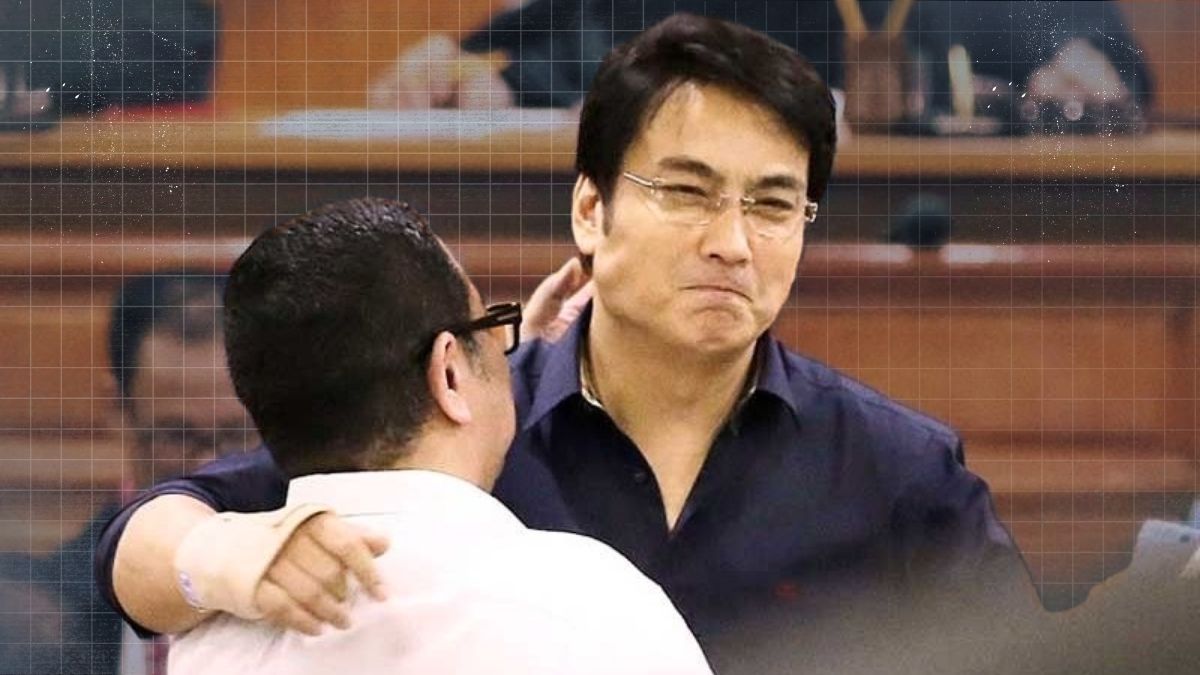
A Tactical Pause: What It Means When an Accused Refuses to Plead
Former senator Bong Revilla declined to enter a plea during his arraignment in a graft case, prompting the court to note the refusal and proceed under established criminal procedure.
The move immediately drew public attention, but in legal terms, it is not unprecedented—nor does it halt the case.
Under Philippine rules, when an accused refuses to plead, the court typically enters a plea of “not guilty” on the accused’s behalf, ensuring proceedings continue while preserving the accused’s constitutional rights.
Why Refuse to Plead?
Defense lawyers may advise a refusal for several procedural reasons, including:
pending motions that could affect jurisdiction or validity of charges,
unresolved questions about the information filed, or
objections to how the arraignment is being conducted.
In short, a refusal is often a procedural signal, not a declaration of innocence or guilt.
The Court’s Response
The Sandiganbayan followed standard practice by recording the refusal and ensuring the case remains on track. This prevents delays that could otherwise arise if defendants could stall cases simply by declining to plead.
The court’s approach underscores a key principle: arraignment is a gateway, not a roadblock.
Context: The Graft Case
The charges stem from alleged irregularities tied to a flood control project—part of a broader cluster of cases scrutinizing infrastructure spending. Such cases are complex, document-heavy, and politically sensitive, which explains why defense teams often pursue every available procedural safeguard.
Importantly, refusing to plead does not invalidate the charges, dismiss the case, or weaken the prosecution’s evidence by itself.
Public Optics vs. Legal Reality
To the public, a refusal to plead can look defiant—or strategic. In court, it’s neutral.
Legal experts caution against overreading the move:
It does not delay trial indefinitely
It does not imply special treatment
It does not change the presumption of innocence
What it does do is preserve objections the defense may later raise on appeal.
What Happens Next
With a plea effectively entered by the court, the case proceeds to:
pre-trial conferences,
presentation of evidence, and
resolution of pending motions.
Any challenge raised by the defense will be addressed through written pleadings and hearings, not through the arraignment alone.
Why This Matters
High-profile cases test the justice system’s balance between rights and efficiency. Allowing procedural protections while preventing obstruction is the court’s tightrope.
This episode shows that:
defendants retain full procedural rights, and
courts retain control over the pace of justice.
Quiet takeaway: Refusing to plead pauses nothing essential—it simply preserves process.
Bible verse anchor:
Ecclesiastes 8:6 — “For there is a proper time and procedure for every matter.”