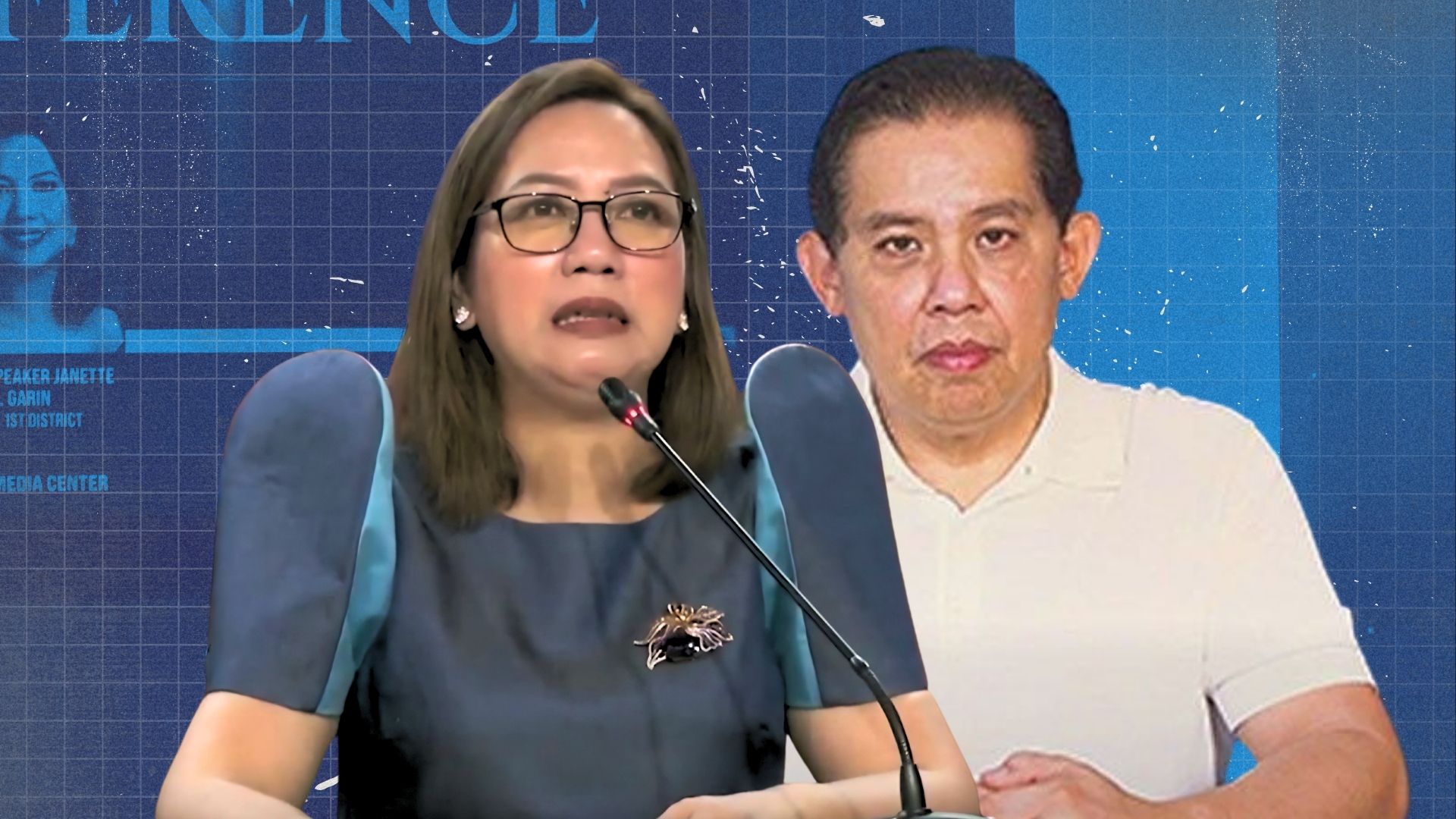
“ANDUN ANG KAUNTING KIROT SA ATING PUSO”: GARIN ADMITS HURT AFTER ROMUALDEZ NAMED IN FLOOD CONTROL SCANDAL
“Andun ang Kaunting Kirot sa Ating Puso”: Garin Admits Hurt After Romualdez Named in Flood Control Scandal
By Politikanta Minute | July 29, 2026
A moment of political tension appeared to surface in the House of Representatives following President Ferdinand Marcos Jr.'s remarks about the flood control scandal during his 2026 State of the Nation Address.
House Deputy Speaker Janette Garin acknowledged that there was “a slight hurt in our hearts” after the President mentioned former House Speaker Martin Romualdez in connection with the controversy.
But despite the emotional impact, Garin said lawmakers must respect the process, respect the system, and move forward.
Her message reflected the difficult balance facing members of Congress: dealing with the political and personal consequences of a controversy while maintaining focus on government responsibilities.
“Andun ang Kaunting Kirot sa Ating Puso”
Garin made the remark when asked about the morale of her colleagues following the President's comments.
Her response was candid.
She acknowledged that there was some emotional pain following the mention of Romualdez.
“Andun ang kaunting kirot sa ating puso,” Garin said.
The statement immediately captured the human side of a politically sensitive moment.
For lawmakers who had worked alongside Romualdez, the President's remarks were not simply another political statement.
They involved someone who had been a central figure in the House leadership.
But Garin's response did not stop at acknowledging the hurt.
She quickly shifted the conversation toward the need to respect the institutions handling the issue.
Respect the Process
Garin emphasized that lawmakers must respect the process and the system.
Her position was clear:
Let the appropriate mechanisms work.
Rather than allowing political emotions to dominate the response, she argued that the House must continue performing its responsibilities.
She said:
“Nirerespeto natin ang proseso, nirerespeto natin ang sistema.”
That statement reflects the broader challenge facing lawmakers amid controversies involving government projects and allegations of irregularities.
Political alliances can be tested.
Personal relationships can become complicated.
And public trust can be affected.
But institutions still have to function.
“We Need to Move On”
Garin then delivered what may be the most important part of her message.
“We need to move on because a bigger stake is on hand and this is delivering for our people.”
The statement essentially placed the public interest above the political discomfort surrounding the controversy.
Her argument was that regardless of the emotional impact of the President's remarks, lawmakers cannot afford to remain consumed by the issue.
The government still has work to do.
Filipinos still expect public services.
Infrastructure projects still need attention.
And Congress still has responsibilities to fulfill.
A Difficult Moment for the House
The remarks come at a politically sensitive time.
The flood control scandal has become one of the major issues confronting the government, with questions surrounding the implementation and funding of projects designed to protect communities from flooding.
The controversy has also raised broader concerns about accountability, government spending, and the integrity of public infrastructure programs.
When individuals connected to political institutions become part of such controversies, the consequences can extend beyond the individuals involved.
They can affect political alliances.
Institutional morale.
And public confidence.
That is why Garin's statement was notable.
She acknowledged the emotional reality of the situation without calling for the process to be abandoned.
The Politics of Moving Forward
Garin's response represents one of the most difficult positions for any political organization.
On one hand, there is the instinct to defend colleagues and allies.
On the other hand, there is the responsibility to respect investigations and institutional processes.
The challenge is finding the balance between the two.
Garin appeared to choose the latter approach.
Her message was not that the issue should simply be ignored.
Instead, she emphasized that the system must be allowed to work.
And once the process is underway, lawmakers must continue addressing the problems facing the country.
The Politikanta Minute Take
The most revealing part of Janette Garin's statement may be the phrase:
“Andun ang kaunting kirot sa ating puso.”
It is a simple acknowledgment that politics is not always purely about policy.
Politicians have relationships.
They have colleagues.
They have friendships and alliances.
When one of those people becomes the subject of controversy, emotions naturally enter the equation.
But Garin's second message was equally important:
Respect the process.
Respect the system.
Move forward.
That is ultimately the test of any political institution.
The challenge is not to avoid difficult moments.
The challenge is to face them without allowing personal loyalties to override accountability.
And while the controversy continues to unfold, the public will ultimately be watching not only what politicians say—but what institutions actually do.
Because at the end of the day, the biggest stake is not the political comfort of lawmakers.
It is the public's trust.
And the delivery of results to the Filipino people.
✝️ BIBLE VERSE CONNECTION
Micah 6:8 (KJV)
“He hath shewed thee, O man, what is good; and what doth the LORD require of thee, but to do justly, and to love mercy, and to walk humbly with thy God?”
Exegesis / Reflection
Leadership is often tested when loyalty and accountability collide.
It is easy to support people we know and respect when everything is going well.
The real test comes when difficult questions arise.
Micah 6:8 presents three principles that remain relevant to public leadership:
Do justly.
Love mercy.
Walk humbly.
Justice requires that allegations and controversies be examined fairly.
Mercy reminds us not to rush to judgment before the facts are established.
Humility recognizes that no individual or political alliance should place itself above accountability.
Janette Garin's statement reflects this difficult tension.
She acknowledged the personal hurt that can come when someone within one's political circle faces controversy.
But she also emphasized respecting the process and the system.
That balance is important.
Accountability does not require hatred.
And loyalty should never require abandoning justice.
In the end, institutions are strongest when they can pursue truth fairly—even when the truth is uncomfortable.
De Lima to Chinese envoy spox: 'You are not in China'
February 14, 2026•3 min read

A fresh diplomatic exchange has stirred political discussion after former Justice Secretary and ML Party-list Representative Leila de Lima responded sharply to a spokesperson of the Chinese Embassy, declaring: “You are not in China.”
The remark came amid tensions involving statements from Chinese diplomatic representatives concerning Philippine domestic matters. De Lima’s message was clear: foreign officials must respect the sovereignty and constitutional framework of the Philippines.
What Triggered the Exchange?
The issue reportedly stemmed from comments made by the Chinese Embassy’s spokesperson addressing Philippine political developments. While diplomatic missions commonly issue statements on bilateral concerns, criticism arises when such remarks appear to cross into domestic political commentary.
De Lima responded by emphasizing a fundamental principle of international relations: respect for host country sovereignty.
Her statement — “You are not in China” — was interpreted as a reminder that Philippine democratic institutions operate under Philippine law, not foreign authority.
The Principle at Stake: Sovereignty
At the heart of the exchange is a long-standing principle in international law: non-interference in internal affairs.
Under the Vienna Convention on Diplomatic Relations, foreign diplomats are expected to respect the laws and regulations of the receiving state and avoid interfering in its internal political processes.
De Lima’s remarks reflect growing sensitivity in the Philippines regarding foreign influence — especially amid ongoing geopolitical tensions in the West Philippine Sea and broader regional competition.
Why This Matters
The Philippines and China share complex economic and security ties. Trade relations remain significant, yet maritime disputes continue to test diplomatic boundaries.
When foreign embassy officials comment on Philippine politics, it often triggers public debate about:
The limits of diplomatic speech
The protection of democratic space
National independence in policy-making
De Lima’s response positions the issue not merely as political rhetoric, but as a defense of institutional autonomy.
Diplomatic Speech vs. Political Perception
Embassies routinely release statements on issues affecting bilateral relations. However, the tone and framing of such statements can shape public perception.
Critics argue that certain remarks by foreign officials risk being perceived as pressure or interference. Supporters may say embassies have the right to clarify positions that affect their country’s interests.
This latest exchange illustrates how quickly diplomatic language can become politically charged — particularly in environments where sovereignty and territorial disputes are ongoing concerns.
The Broader Context: Philippines–China Relations
Relations between Manila and Beijing have fluctuated across administrations. Economic cooperation, infrastructure projects, and trade discussions exist alongside maritime confrontations and diplomatic protests.
Public opinion in the Philippines remains divided. Surveys in recent years have shown significant concern among Filipinos regarding China’s actions in contested waters.
Thus, any statement from Chinese diplomatic officials tends to receive heightened scrutiny.
Political and Public Reaction
Reactions to De Lima’s statement have ranged from applause to criticism.
Supporters frame her comment as a firm assertion of Philippine sovereignty. Critics caution against escalating rhetoric that could strain diplomatic relations.
Still, the key takeaway is this: the issue has reignited debate about the boundaries of diplomatic engagement in domestic politics.
The Legal and Diplomatic Framework
Diplomatic conduct is governed by international conventions designed to balance communication and sovereignty.
While embassies may express positions on international matters, direct commentary on internal political processes can be controversial.
De Lima’s statement reinforces a longstanding diplomatic understanding: foreign representatives operate within the jurisdiction of the host country’s laws.
What Happens Next?
It is unlikely that this exchange alone will significantly alter bilateral relations. However, it may influence how future diplomatic communications are framed.
Both Manila and Beijing have incentives to maintain stable relations while protecting national interests.
Observers will watch whether this incident results in:
Clarifications from the Chinese Embassy
Statements from the Department of Foreign Affairs
Further political commentary from lawmakers
Final Thoughts
The phrase “You are not in China” resonates beyond the immediate controversy. It reflects deeper tensions about sovereignty, democratic space, and foreign influence.
In a region marked by strategic competition, words matter. Diplomatic language can either build bridges — or widen divides.
For now, the exchange underscores one enduring principle of international relations: respect for sovereignty remains central to diplomacy.