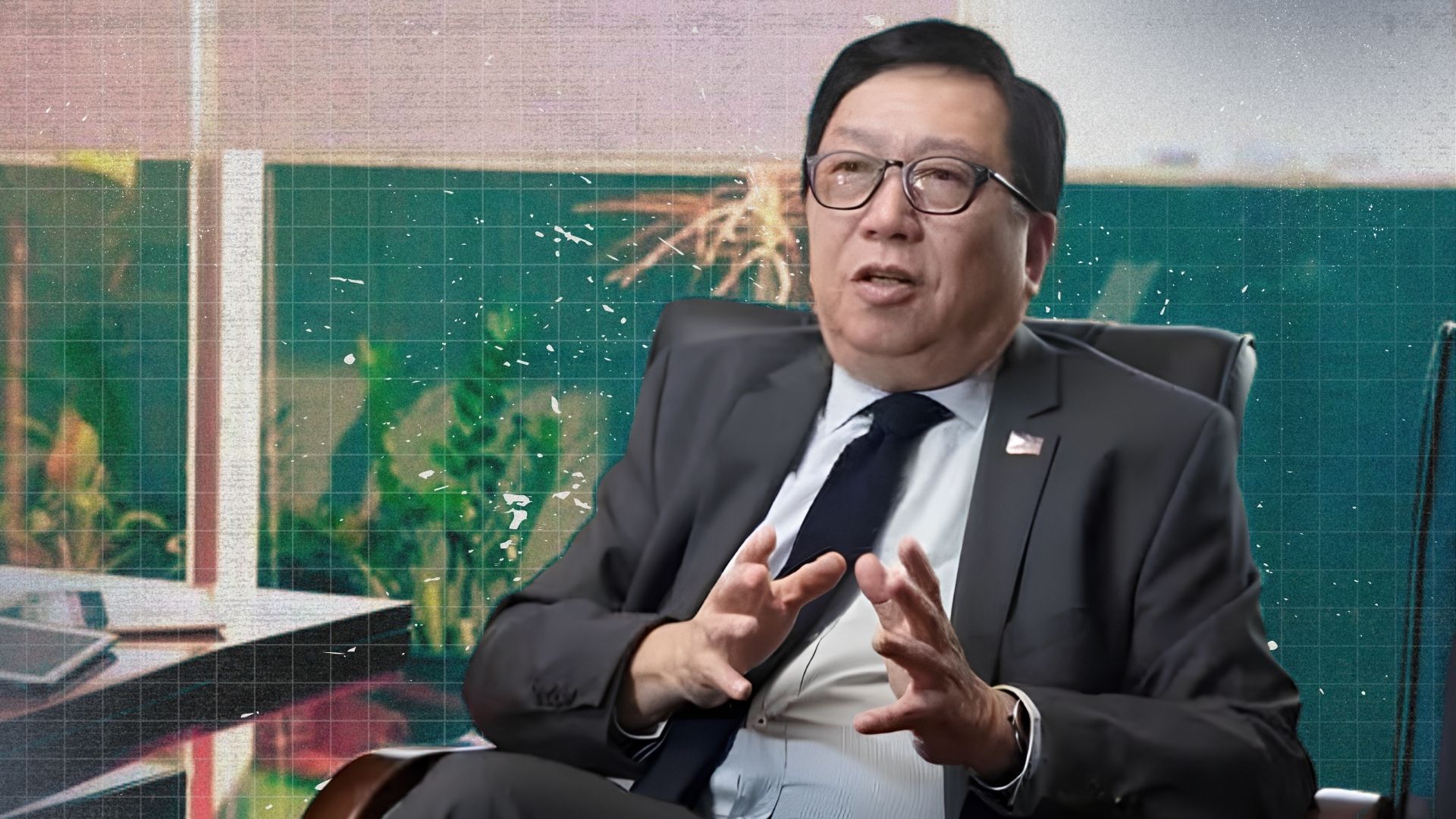
Banayo Alleges 'Weaponizing the Law' Against Political Opponents
Former presidential adviser Lito Banayo claimed that the law is being used as a political weapon against certain opposition figures and senators, citing recent investigations and criminal complaints involving several lawmakers.
According to Banayo, some of the legal actions filed against political personalities appear intended to pressure or sideline them rather than simply pursue accountability.
"Patuloy nilang iweweaponize ang batas."
Marcoleta Case Raised
Banayo questioned the filing of plunder charges against Senator Rodante Marcoleta, arguing that, in his view, the allegations should not have been classified as plunder.
He claimed that the case was allegedly filed as a non-bailable offense, which he suggested could prevent Marcoleta from actively participating in Senate proceedings.
These remarks reflect Banayo's opinion. The allegations against Marcoleta remain subject to the judicial process, where prosecutors and the courts will determine whether sufficient evidence exists.
Cayetano and SEA Games Issue
Banayo also referred to reports that Senator Alan Peter Cayetano could face scrutiny over matters related to the 2019 Southeast Asian Games.
He described the reported investigation as another example of what he believes is political intimidation.
As of now, any investigation or complaint involving the senator would still need to go through the appropriate legal procedures before any determination of liability.
Villanueva and Escudero Also Mentioned
Banayo likewise discussed earlier statements regarding Senator Joel Villanueva, noting that despite previous reports suggesting charges would be filed, no formal case has materialized to date.
He also mentioned Senate President Francis "Chiz" Escudero, recalling that his name had previously surfaced during Senate hearings involving former Public Works Undersecretary Roberto Bernardo, who later became a state witness.
Banayo questioned why no charges were ultimately filed against Escudero despite earlier public discussions.
No court has found Escudero liable for any wrongdoing related to those matters.
Political Debate Continues
Banayo's remarks add to the continuing debate over whether high-profile investigations involving politicians are purely legal actions or have political implications.
Government authorities have maintained that investigations are conducted according to existing laws and available evidence, while critics argue that the justice system should remain free from political influence.
Ultimately, any allegations against public officials must be resolved through the courts and established legal processes.
Key Takeaways
Lito Banayo alleged that the law is being used as a political weapon.
He cited the cases involving Rodante Marcoleta, Alan Cayetano, Joel Villanueva, and Francis Escudero.
Banayo questioned the filing of certain criminal complaints.
The individuals mentioned remain entitled to due process, and legal proceedings are ongoing or unresolved.
Bible Reflection
"Speak up and judge fairly; defend the rights of the poor and needy." — Proverbs 31:9 (NIV)
Sa anumang alegasyon o usaping legal, mahalagang pairalin ang pagiging patas, paggalang sa due process, at pananagutan. Ang katotohanan ay dapat matukoy sa pamamagitan ng ebidensya at tamang proseso ng batas.
More Jails Next Year? Promises, Bars, and the Long Wait for Accountability
December 29, 2025•1 min read

Malacañang has once again raised expectations.
According to Presidential Communications Office Secretary Dave Gomez, more individuals linked to anomalous flood control projects are expected to be jailed in the coming year. The statement comes amid growing public frustration over the slow pace of arrests in one of the biggest corruption scandals tied to infrastructure spending.

“There will surely be more thrown behind bars in the New Year,” Gomez said, reiterating President Ferdinand Marcos Jr.’s earlier commitment that those responsible for the alleged misuse of billions in flood control funds would be held accountable.
The promise echoes loudly.
But the cages still look half-empty.
So far, only a limited number of suspects—mostly contractors and lower-level officials—have been detained. Critics continue to question why other prominent figures allegedly connected to the scheme remain free, unnamed, or untouched by formal charges.
Government officials insist investigations are ongoing and that cases must be built carefully to withstand scrutiny in court. Supporters of the administration argue that rushing arrests risks acquittals and wasted prosecutions.
Yet for many Filipinos, the issue is no longer just legal—it is moral.
Communities devastated by floods, washed-out roads, and failed projects hear the same assurances year after year. The calendar changes, the language softens, and accountability is always positioned just beyond reach.
Justice is promised in seasons.
But corruption does not wait for January.
As 2025 approaches, the public watches closely—not for speeches, but for outcomes. Not for quotes, but for names. Not for timelines, but for consequences.
If more jail cells are truly coming, the question remains simple:
Who will actually walk through those doors?
Until then, the eagle circles patiently—
and the people keep score.