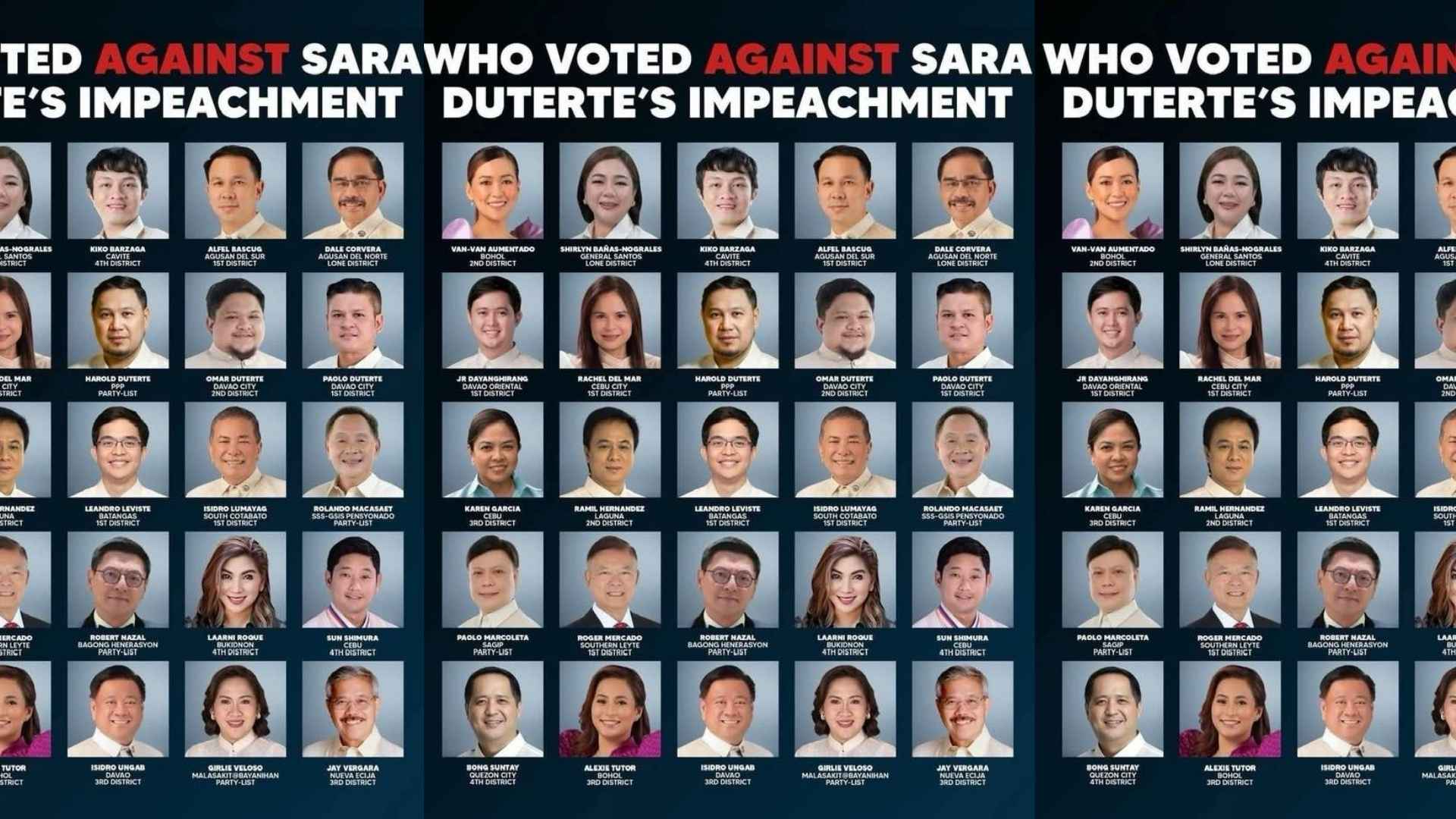
“Boses ng Prinsipyo sa Loob ng Kamara: Sino ang Tumindig at Sino ang Sumabay sa Agos?”
Sa gitna ng mainit na usapin tungkol sa impeachment complaint laban kay Vice President Sara Duterte, isang detalye ang biglang naging sentro ng usapan — ang listahan ng mga mambabatas na bumoto ng “NO.”
Matapos itama ng Kamara ang opisyal na bilang ng boto, lumabas na 257 ang sumuporta, 25 ang tumutol, habang 9 naman ang nag-abstain. At sa social media, mabilis na naging usap-usapan kung sino ang mga kongresistang hindi sumabay sa dominanteng agos ng botohan.
Para sa ilan, simpleng proseso lamang ito ng politika. Pero para sa iba, may mas malalim na simbolismo ang nangyari.
Sa panahon kasi ngayon, maraming Pilipino ang naghahanap hindi lang ng mga lider na marunong magsalita, kundi mga lider na handang tumayo kahit hindi popular ang posisyon nila.
At dito naging interesante ang reaksyon ng publiko.
May mga nagsasabing ang mga bumoto ng “NO” ay nagpapakita ng prinsipyo. May iba namang naniniwalang bahagi lamang ito ng mas malawak na political alignment sa bansa. Ngunit anuman ang pananaw, malinaw na naging emosyonal at personal para sa maraming supporters ang usaping ito.
Dahil para sa maraming Pilipino, si VP Sara Duterte ay hindi lamang opisyal ng gobyerno. Simbolo rin siya ng isang estilo ng pamumuno na direkta, matapang, at hindi madaling matinag sa pressure ng politika.
Habang patuloy ang debate online, isang tanong ang unti-unting lumilitaw:
Hanggang saan ba dapat ang loyalty ng isang mambabatas — sa partido, sa administrasyon, o sa sariling konsensya?
Ito ang klase ng tanong na hindi basta nasasagot ng simpleng numero ng boto.
At habang sinusuri ng publiko ang bawat galaw sa Kongreso, may ilan ding nagsasabing mas lalong nagiging polarized ang political climate sa bansa. Ang dating simpleng disagreement ay nagiging personalan na minsan sa social media.
Pero may isa pang mas malaking issue rito.
Nararamdaman ng ordinaryong Pilipino ang pagod sa walang katapusang bangayan sa pulitika habang marami pa ring problema sa labas ng Kamara — mataas na presyo ng bilihin, trabaho, public services, at iba pang pangunahing pangangailangan.
Kaya para sa ilan, ang totoong tanong ay hindi lang kung sino ang bumoto ng YES o NO.
Ang mas mahalagang tanong:
Paano maaapektuhan nito ang direksyon ng bansa?
At dito pumapasok ang tunay na hamon sa mga lider ng bayan.
Hindi sapat na marunong magsalita sa harap ng kamera. Hindi sapat ang palakpakan sa social media. Sa dulo, ang tunay na sukatan ng pamumuno ay kung paano nito naaapektuhan ang buhay ng ordinaryong Pilipino.
Narito ang mas malalim na obserbasyon ng ilan:
Kapag mas tumitindi ang political tension, mas lalong nagiging mahalaga ang mga lider na kayang manatiling kalmado, matatag, at malinaw ang direksyon.
At ito marahil ang dahilan kung bakit maraming Pilipino ang patuloy na nagmamasid hindi lang sa resulta ng botohan — kundi sa karakter ng mga taong sangkot dito.
Dahil sa politika, mabilis magbago ang alyansa.
Pero ang prinsipyo?
Iyon ang tunay na sinusubok kapag mainit na ang laban.
“HERE’S WHAT THIS REALLY MEANS…”
Ang naging usapan ay hindi na lang tungkol sa impeachment.
Naging usapan ito tungkol sa political courage.
Sa mata ng supporters ni VP Sara, ang mga bumoto ng “NO” ay maaaring makita bilang mga taong handang manindigan kahit kontra sa mas malaking bilang.
At sa mata naman ng mga kritiko, bahagi ito ng normal na democratic process.
Pero ang malinaw:
Habang tumitindi ang political division, mas nagiging emosyonal ang koneksyon ng publiko sa kanilang mga lider.
“WHY THIS MATTERS…”
Kapag nawawala ang tiwala ng tao sa proseso, doon nagsisimulang lumalim ang political fatigue ng publiko.
Kaya mahalaga kung paano kikilos ang mga lider pagkatapos ng ingay.
Dahil sa dulo, hindi numero lang ang maaalala ng tao.
Kundi kung sino ang nagpakita ng paninindigan sa gitna ng pressure.
EXEGESIS BIBLE VERSE
Proverbs 29:2
“When the righteous are in authority, the people rejoice: but when the wicked beareth rule, the people mourn.”
Reflection:
Ang pamumuno ay hindi lamang tungkol sa kapangyarihan kundi pananagutan. Sa bawat desisyon ng mga lider, may epekto ito sa tiwala, pagkakaisa, at direksyon ng bayan. Kaya mahalaga ang prinsipyo, karunungan, at takot sa Diyos sa bawat posisyong hawak ng tao.
Philippines May Borrow Billions as Delays Stall Foreign-Assisted Projects
January 10, 2026•3 min read
The Philippines may be forced to borrow billions of pesos to keep major infrastructure projects afloat after delays pushed several foreign-assisted developments into unprogrammed funds, according to Edgar Erice, a senior lawmaker who warned that the financial consequences could eventually fall on ordinary Filipinos.

Speaking in recent interviews, Erice cited large-scale transport projects—including the Metro Manila Subway and the Philippine National Railways—as examples of initiatives that were originally intended to be funded under programmed appropriations but were later reclassified as unprogrammed in the 2025 national budget. Because unprogrammed funds can only be released if excess government revenues are generated, projects with signed loan agreements may now face prolonged delays or require additional borrowing.
The issue, Erice said, is not merely administrative. When projects backed by foreign loans are stalled, the country risks paying commitment fees, penalties, or interest on funds that are already contractually secured but cannot be fully utilized. In effect, delays transform development financing into a growing fiscal burden.
Several of the affected projects were initially scheduled for completion within this decade but have since seen their timelines pushed back by years. The Metro Manila Subway, for instance, has reportedly moved from an original target of 2028 to 2030, largely due to funding classification issues and right-of-way complications. Similar setbacks have affected rail and road initiatives critical to decongesting urban centers and improving regional connectivity.
In the 2026 national budget proposal, nearly ₱97 billion worth of foreign-assisted projects were placed under unprogrammed appropriations. Erice questioned the logic behind this move, noting that projects with finalized loan agreements and ongoing implementation are typically included under programmed funds to ensure continuity.
“If the loan is already signed and the project is underway,” he argued, “there is no reason to treat it as optional.”
Budget analysts point out that unprogrammed appropriations are designed as contingency mechanisms—activated only when surplus revenues materialize. While legally permissible, excessive reliance on unprogrammed funding can introduce uncertainty into long-term infrastructure planning, particularly for projects that depend on synchronized financing schedules with foreign partners.
The Department of Public Works and Highways (DPWH), one of the main implementing agencies for foreign-assisted projects, has also faced funding constraints. For 2026, DPWH reportedly received a significantly reduced allocation for foreign-assisted initiatives compared to earlier House proposals, raising concerns that implementation gaps could widen further.
Projects supported by Japanese development loans—including the North-South Commuter Railway and major flood control works—remain especially vulnerable to delays. While Japan International Cooperation Agency (JICA) financing allows favorable loan terms, implementation setbacks can still lead to increased costs over time.
Beyond fiscal implications, prolonged delays can erode public confidence in the government’s capacity to manage complex infrastructure programs. For commuters and communities awaiting improved transport systems, postponed completion dates translate into continued congestion, lost productivity, and missed economic opportunities.
Erice and other minority lawmakers have linked the issue to broader concerns about the constitutionality of unprogrammed appropriations. Earlier this year, a petition was filed before the Supreme Court questioning whether unprogrammed funds—by definition lacking assured financing—can legally support projects with existing loan obligations.

While Malacañang and the Department of Budget and Management have defended the use of unprogrammed appropriations as lawful and longstanding, critics argue that their rapid expansion in recent budgets warrants closer scrutiny.
As the government weighs its options, one reality remains clear: delays in foreign-assisted projects do not erase financial obligations. They merely shift costs forward—often at a higher price. In the end, whether through borrowing, fees, or extended loan terms, the bill is likely to come due.