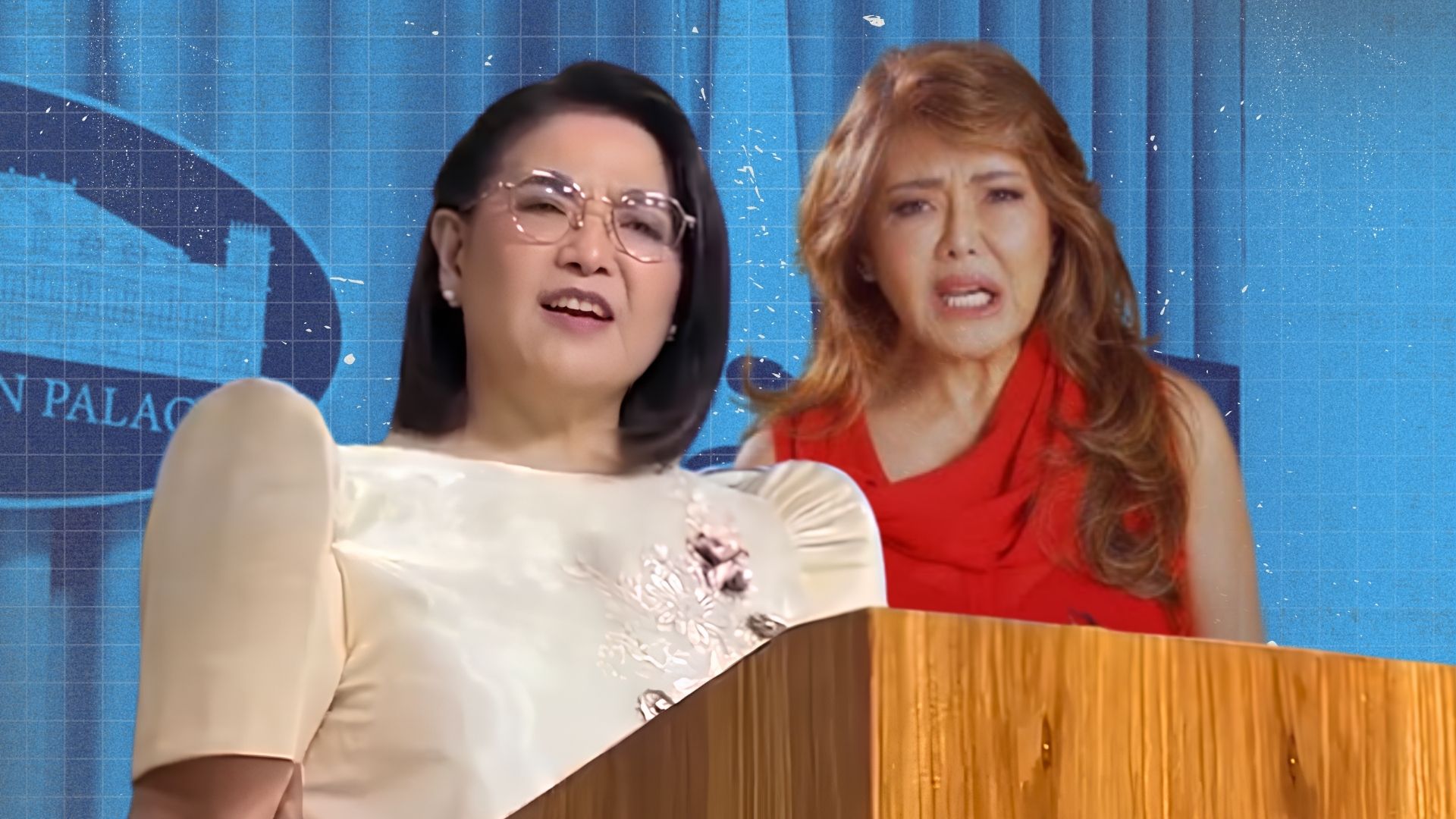
CASTRO FIRES BACK OVER “IMPAKTA” REMARK: “IT TAKES ONE TO KNOW ONE”
“It Takes One to Know One”: Castro Fires Back Over “Impakta” Remark
By Politikanta Minute | July 29, 2026
A political controversy surrounding the word “impakta” has taken another turn after Castro was asked whether she believed the term used in a video was referring to her.
Her response?
She turned the question around.
During an interview, Castro was asked whether, after watching the video, she believed that the term being discussed was directed at her.
She answered in the affirmative.
But instead of simply accepting the label or engaging in a direct exchange over the insult, Castro questioned the people who allegedly used the term in the first place.
Her argument was simple:
If they know the meaning of the word, why did they use it?
“Hindi Ako Sanay sa Mga Ganung Salita”
Castro explained that she does not normally use that kind of language when speaking about other people.
She said she was not accustomed to using personal attacks or ad hominem remarks against others.
Because of that, she reportedly asked Marcel to repeat the word for her during the discussion.
Her point was that the language did not reflect the way she normally speaks.
But Castro's response went further.
She argued that those who used or described the word must themselves understand its meaning.
That led to her pointed phrase:
“It takes one to know one.”
The statement effectively flipped the controversy.
Instead of focusing solely on whether the word was directed at her, Castro questioned what it says about the people who allegedly chose to use the term.
The “Fake News” Connection
Castro then connected the controversy to a broader political battle over what she described as fake news.
She suggested that if her critics were offended by her opposition to misinformation, perhaps they were revealing more about themselves through their reaction.
Her argument was essentially that she is willing to fight what she considers fake news—and that some people may dislike her precisely because of that position.
Castro then delivered another pointed line:
“Kung sila ay affected sa aking mga nababanggit dahil tayo'y kumakalaban sa fake news at iyan ang kanilang pananaw, isang impakta ang kumalaban sa fake news…”
The remark reframed the controversy.
Instead of allowing the insult to define her, Castro attempted to turn it into a political statement about standing against misinformation.
“Sino Ngayon ang Naglalarawan ng Totoong Impakta?”
Castro then took the argument one step further.
She asked who, in her view, was actually demonstrating the behavior associated with the word.
Her answer was not directed at herself.
Instead, she pointed toward those who created and participated in the video.
Her argument was that the people who allegedly used the term were the ones ultimately revealing what the word represented.
It was a classic rhetorical reversal:
If you use the insult, are you also revealing something about yourself?
That became the core of Castro's response.
The “Corona” Remark
Castro also added another sharp line, telling her critics not to worry about the “corona.”
According to her, the crown was already with them and their groups—and she had no intention of taking it away.
She described them as being at the “maximum level.”
The statement appeared to be another sarcastic jab, suggesting that her critics had already reached the highest possible level of whatever negative characterization they were trying to assign to her.
Rather than fighting for the label, Castro essentially handed it back.
A Political Battle of Words
The controversy demonstrates how political communication increasingly operates through soundbites.
One word can become a headline.
One phrase can dominate social media.
And one insult can quickly become a political weapon.
But Castro's response shows another familiar strategy:
Turn the attack into an attack on the attacker.
Instead of spending the entire conversation defending herself against the word “impakta,” she questioned why the people involved knew the term and chose to use it.
She also positioned herself as someone who does not normally engage in personal attacks.
Whether that argument is persuasive depends largely on how audiences interpret the original video and the surrounding context.
But rhetorically, Castro's response was clear.
She refused to simply accept the framing of the controversy.
Instead, she redirected attention toward the people who allegedly created the video and used the term.
The Politikanta Minute Take
Politics has always had its share of insults.
But today's political environment has transformed insults into content.
A single word can generate thousands of reactions.
Supporters defend it.
Critics condemn it.
Social media users turn it into memes.
And suddenly, the original political issue can disappear beneath the controversy.
Castro's response attempts to reclaim the narrative.
Her message is essentially:
If you know what the word means, ask yourself why you were the one who used it.
The phrase “it takes one to know one” became the centerpiece of her counterattack.
Whether the audience agrees with her or not, the rhetorical strategy is unmistakable.
She is refusing to be defined by the insult.
Instead, she is challenging those who allegedly used it to explain why they chose those words in the first place.
In the end, the controversy raises a broader question about political discourse.
When political arguments descend into name-calling, does anyone actually win?
Or does the insult simply become another distraction from the issues voters actually care about?
For Castro, the answer appears to be clear.
She says she will continue fighting what she considers fake news.
And if her critics choose to respond with insults, she seems more than willing to turn the words back around.
“It takes one to know one.”
In the increasingly heated world of political rhetoric, sometimes the sharpest counterattack isn't a louder insult.
It's simply asking:
“Who said it—and why did they know exactly what it meant?”
✝️ BIBLE VERSE CONNECTION
Proverbs 15:1 (KJV)
“A soft answer turneth away wrath: but grievous words stir up anger.”
Exegesis / Reflection
Political disagreements often become more intense when words become weapons.
An insult invites another insult.
A personal attack creates another personal attack.
And before long, the original issue disappears completely.
The verse reminds us that the words we choose can either reduce conflict or intensify it.
In this controversy, Castro chose to respond to an alleged insult with a rhetorical counterattack of her own.
Her response demonstrates the power of words in public discourse.
The phrase “it takes one to know one” may be clever, but it also shows how quickly political arguments can become personal.
The deeper lesson is that political debate is strongest when it focuses on facts, policies, and accountability—not simply on attacking the character of opponents.
At the same time, those who enter public debate should understand that words have consequences.
When insults are introduced into political discourse, they can easily become the story themselves.
The challenge for everyone involved is simple:
Can we disagree without allowing the disagreement to become hatred?
Because when political debate becomes nothing more than a battle of insults, the public loses—and the real issues remain unanswered.
ICI Is a Lost Cause: What Should Marcos Do Now?
December 26, 2025•2 min read
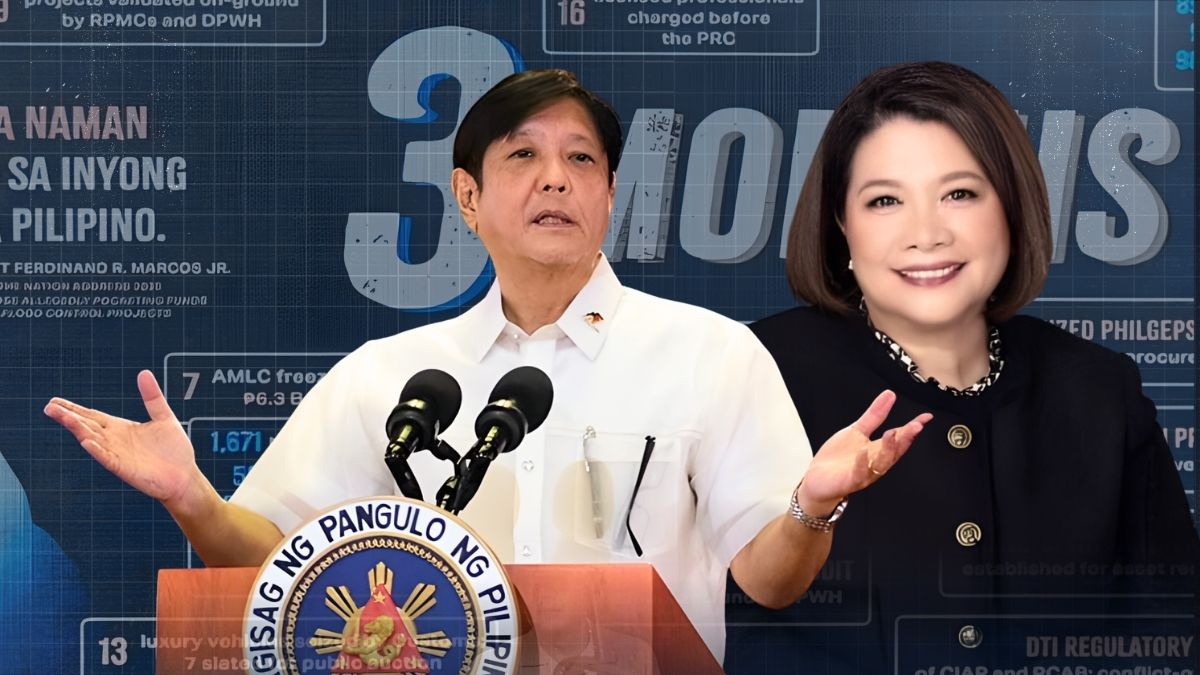
Barely three months after its creation, the Independent Commission for Infrastructure (ICI) is already unraveling — and with it, the Marcos administration’s flagship promise of accountability in infrastructure projects.

The resignation of ICI Commissioner Rosanna Fajardo, effective December 31, 2025, has intensified doubts about whether the body was ever meant to deliver real justice. What was introduced as a safeguard against corruption in flood control and infrastructure spending is now reduced to a shell, following the exit of two commissioners in quick succession.
For minority lawmakers and governance advocates, the message is clear: the ICI experiment has failed. The commission was supposed to provide teeth — independence, authority, and resolve — to investigate billions in questionable public works projects. Instead, its short life has been marked by internal fractures, limited mandate, and a conspicuous absence of accountability at the highest levels.
Critics argue that the resignations reflect more than personal decisions; they expose a structural weakness. Without strong political backing, budgetary support, and the willingness to implicate powerful figures, anti-corruption bodies risk becoming symbolic gestures rather than instruments of reform.
The timing is also telling. The administration is pushing a massive 2026 national budget amid ongoing controversies surrounding flood control projects, confidential funds, and alleged irregularities within key agencies. The collapse of the ICI further erodes public trust at a moment when transparency is most needed.
So what should President Ferdinand “Bongbong” Marcos Jr. do now?
Lawmakers say the answer is no longer incremental fixes. They are urging Malacañang to certify as urgent the bill creating a permanent Independent Commission Against Infrastructure Corruption (ICAIC) — one with clear investigative powers, insulation from political pressure, and the authority to compel cooperation.
Without decisive action, the ICI’s failure risks becoming a symbol of hollow reform: strong rhetoric, weak execution. For a public already weary of unfinished roads, flooded communities, and recycled promises, the administration’s next move will determine whether accountability is revived — or quietly buried.
Because in governance, delay is not neutral. It chooses a side.