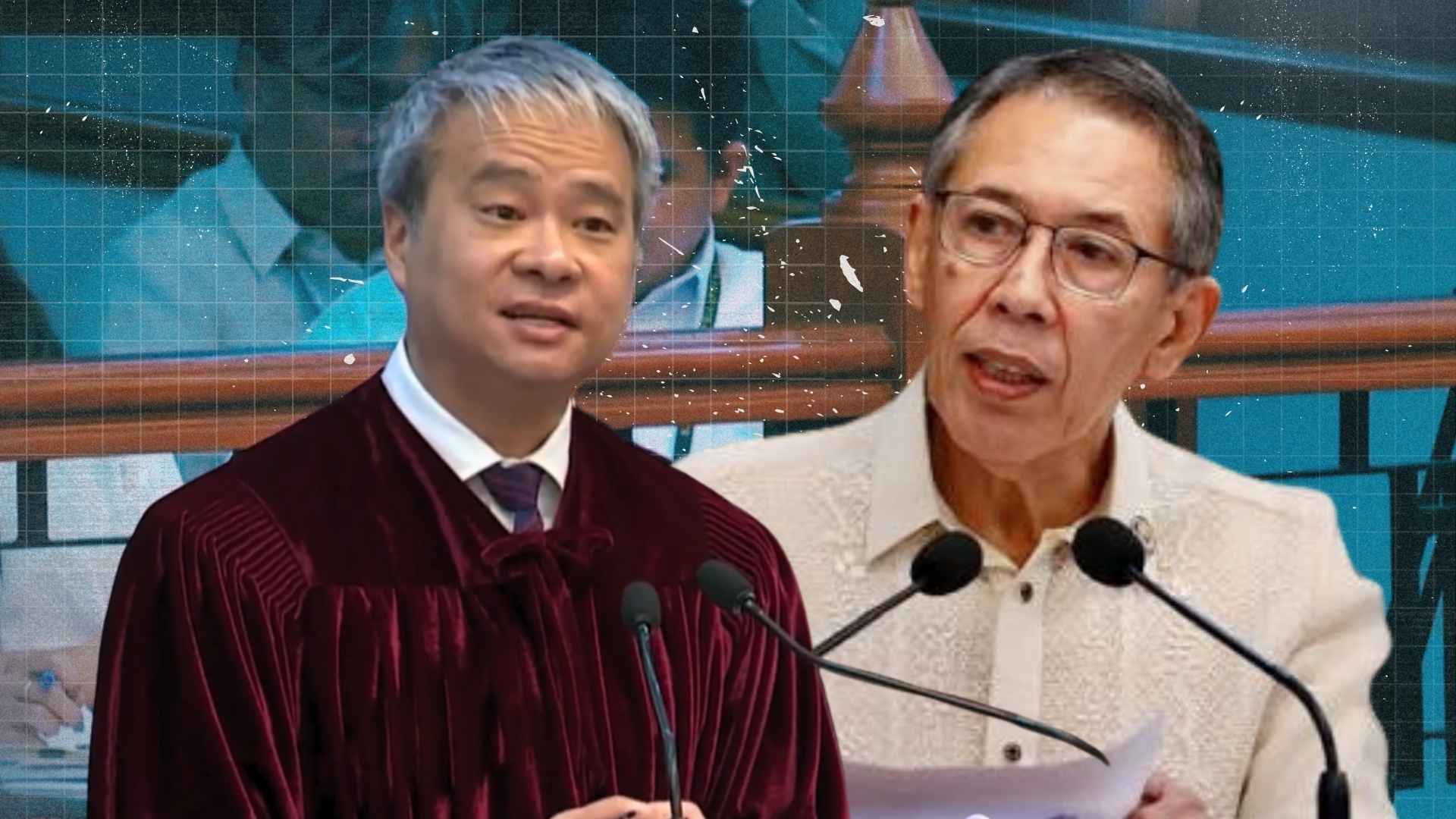
Chel Diokno Says VP Sara Duterte’s Bank Records Are Key to Seeing the ‘Complete Picture’
Chel Diokno: 'The Complete Picture Will Be Seen Through the Bank Records'
House prosecutor and Akbayan Representative Chel Diokno urged the Senate Impeachment Court to approve the request to subpoena the bank records of Vice President Sara Duterte and her spouse, arguing that the documents are necessary to determine the complete financial picture behind allegations of unexplained wealth.
Diokno made the argument while responding to questions from Senator-judge Joel Villanueva, who sought clarification on whether the subpoena request amounted to a prohibited "fishing expedition."
Responding to the 'Fishing Expedition' Question
During the oral arguments, Villanueva questioned whether the prosecution was simply searching for possible evidence without sufficient basis.
In response, Diokno rejected that characterization.
According to him, the prosecution is not asking the court to authorize an unrestricted search for evidence but is requesting specific financial documents that it believes are directly relevant to the allegations contained in the Articles of Impeachment.
He argued that examining the bank records would help reveal the "buong larawan" or complete financial picture.
Focus on Article II
The subpoena request forms part of the prosecution's efforts to support Article II of the Articles of Impeachment, which contains allegations related to unexplained wealth.
The prosecution maintains that financial records—including bank documents—could help establish whether public funds were properly accounted for.
Meanwhile, the defense has consistently opposed the request, arguing that compelling the production of the records raises constitutional and legal concerns and should not be allowed without satisfying the applicable legal requirements.
The Court's Decision Awaits
At the time of the hearing, the Senate Impeachment Court was expected to rule on whether to grant or deny the subpoena request.
The decision could significantly affect the scope of evidence that may be presented as the impeachment trial progresses.
Whatever the ruling, it will determine whether the prosecution can obtain the financial documents it considers central to its allegations.
A Balance Between Transparency and Due Process
The debate before the Senate reflects two competing legal principles.
On one hand, the prosecution argues that financial transparency is necessary to establish the truth behind allegations of unexplained wealth.
On the other, the defense emphasizes the protection of constitutional rights, privacy, and due process before compelling the disclosure of sensitive financial records.
Ultimately, the Senate Impeachment Court must determine whether the legal standards for issuing the subpoena have been satisfied.
Conclusion
Chel Diokno argued that the requested bank records are essential to presenting a complete picture of the Vice President's finances and are not part of a mere fishing expedition.
The defense disagrees, insisting that the subpoena lacks sufficient legal basis.
The Senate Impeachment Court's ruling will determine whether those financial records become part of the evidence considered in the impeachment proceedings.
Bible Reflection (Exegesis)
"Whoever walks in integrity walks securely, but whoever takes crooked paths will be found out." — Proverbs 10:9
This proverb teaches that integrity and transparency provide confidence, while hidden wrongdoing is ultimately exposed. In the context of public office, it reminds both leaders and institutions of the importance of accountability under the law. At the same time, any examination of allegations should proceed through fair legal processes that respect both the pursuit of truth and the rights guaranteed by law.
Drilon: Opposition Needs One Candidate—or ‘No Chance’ in 2028
February 12, 2026•3 min read

Unity or Defeat: Drilon’s Warning to the Opposition
Former Senate President Franklin Drilon delivered a blunt assessment of the political landscape heading into 2028: if the opposition fails to unite behind one candidate, it stands “no chance” against Vice President Sara Duterte.
The message was not subtle. It was strategic.
Drilon framed the 2028 race as less about ideology and more about arithmetic. In multi-candidate contests, fragmented opposition votes historically benefit candidates with consolidated support bases. His warning underscores a basic electoral principle: division dilutes viability.
The Math of Multiplicity
Philippine presidential elections are decided by plurality. There is no runoff. The candidate with the most votes wins—even without majority support.
That structure rewards:
strong political machinery,
loyal voter bases,
and coalition consolidation.
Drilon’s argument implies that Duterte, if she runs, would likely begin with a stable base. If opposition forces split their votes among multiple aspirants, their collective numbers may fail to coalesce into a winning plurality.
Not About Personality—About Structure
Drilon’s remarks were less about endorsing a specific opposition figure and more about highlighting structural reality. Whether the opposition chooses:
a reformist senator,
a former executive official,
or a consensus newcomer,
the key variable is unity.
Without it, Drilon suggests, even strong individual candidates may falter.
Context: Opposition Rebuilding
In recent cycles, opposition forces have struggled with:
messaging coherence,
geographic reach,
and coordination among blocs.
Drilon’s statement follows earlier remarks from figures like Risa Hontiveros, who indicated openness to running only if backed by a united opposition.
Together, these comments reveal a common theme: 2028 strategy discussions are already underway, even if formal campaigns remain distant.
The Duterte Factor
Sara Duterte remains a formidable national figure with:
high name recognition,
established political networks,
and regional strength.
Drilon’s warning assumes that defeating a well-organized candidate requires not just momentum—but alignment.
He is essentially arguing that the opposition’s primary contest should happen internally, early, and decisively.
Risks of Fragmentation
Multiple opposition candidates could:
split reform-oriented voters,
confuse campaign messaging,
and drain limited resources.
Drilon’s use of the phrase “no chance” may sound dramatic, but its core is practical: numbers don’t add themselves together automatically.
Coalition politics requires negotiation, compromise, and often personal sacrifice.
What Unity Would Require
Backing a single bet means:
early consensus-building,
negotiated ticket balancing (president–vice president pairing),
shared platform agreements,
and disciplined messaging.
These steps are politically delicate. Rival ambitions and ideological differences can complicate alignment.
Drilon’s statement functions as both caution and call to action.
What This Means for 2028
Although 2028 remains years away, groundwork matters. Coalitions built late often collapse under pressure. Coalitions built early may mature into credible alternatives.
The coming years will likely feature:
exploratory talks,
polling assessments,
informal alliances.
Drilon’s comment sets a strategic tone: decide early—or divide late.
Quiet Takeaway
In plurality systems, victory belongs not just to the strongest—but to the most unified.
Politikanta Minute jab (clean):
Kung lima ang tatakbo laban sa isa—alam na ang ending.
Bible verse anchor:
Mark 3:25 — “If a house is divided against itself, that house cannot stand.”