
CHIZ RULED ON SARA DUTERTE’S BANK RECORDS—WHY WAS THERE NO VOTE?
WHY WAS THERE NO VOTING ON CHIZ ESCUDERO’S SUBPOENA RULING? HERE’S WHAT HAPPENED
By Politikanta Minute
The Senate impeachment trial of Vice President Sara Duterte raised another question on Monday after the impeachment court did not hold a separate vote on Presiding Officer Francis “Chiz” Escudero’s ruling regarding the prosecution’s request for access to the Vice President’s financial records.
For some observers, the absence of a vote may have been surprising.
After all, the subpoena request involves sensitive records—including bank and tax documents—and could potentially become a significant part of the prosecution's effort to establish its allegations of unexplained wealth.
So why wasn't there a vote?
According to impeachment court spokesperson Atty. Regie Tongol, the answer lies in the Senate's impeachment rules.
Under Rule 6 of the Senate Impeachment Rules, the Presiding Officer is allowed to resolve motions and procedural matters unless the matter is referred to the impeachment court for a decision or a senator-judge challenges or appeals the ruling.
In Monday's proceedings, neither happened.
No senator-judge appealed the ruling.
And the Presiding Officer did not refer the matter to the full impeachment court for a vote.
Therefore, the ruling stood.
This is an important distinction.
The absence of a vote does not automatically mean that the senator-judges unanimously approved the ruling.
It simply means that, under the procedure being followed, no appeal or challenge was made that would have required the impeachment court to vote on the matter.
In other words, the process allowed the Presiding Officer's ruling to take effect without a separate vote.
And this is where the political and legal debate becomes interesting.
Throughout the impeachment trial, senator-judges have repeatedly debated the importance of rules.
Some have argued that the impeachment court should not be overly restricted by technical procedures because its primary responsibility is to determine the truth.
Others have emphasized that rules exist precisely to ensure that everyone—including the accused—is treated fairly.
The subpoena issue puts those principles to the test.
The prosecution has argued that the requested bank, tax, and financial records are relevant to its allegations of unexplained wealth.
The defense, meanwhile, has questioned the necessity and scope of the requests and has raised concerns over due process and the proper handling of sensitive financial information.
But before the actual evidence can even be considered, the court must first determine how the evidence can legally and procedurally be obtained.
That's where Rule 6 comes in.
The presiding officer has authority to rule on procedural matters.
But that authority is not necessarily absolute.
A senator-judge can challenge the ruling.
The matter can be referred to the impeachment court.
And once that happens, the senator-judges can decide collectively.
But if no one challenges the ruling, the ruling remains in place.
This also explains why the public may have seen no dramatic vote on the issue.
There was simply no appeal that triggered one.
For supporters of the prosecution, the ruling may be viewed as a procedural step that allows the case to move forward.
For supporters of the defense, the absence of a vote may raise questions about whether the full impeachment court should have had the opportunity to weigh in.
But the crucial point is this:
The ruling was not decided by a vote because the rules did not require one under the circumstances.
Whether that procedure was the best approach is another question.
And that is precisely where reasonable debate can begin.
An impeachment trial is unlike an ordinary courtroom proceeding.
It is a constitutional process designed to determine accountability for the highest public officials.
Because of that, every procedural decision is likely to attract scrutiny.
But rules are rules.
And if the Senate impeachment rules give the Presiding Officer authority to decide a motion unless the matter is appealed or referred to the court, then that procedure must be understood before conclusions are drawn.
The bigger question now is what happens next.
Will the financial records become part of the evidence?
Will the defense challenge future rulings?
Will senator-judges begin appealing more procedural decisions?
And most importantly:
Will the evidence ultimately answer the questions being raised by both sides?
Because at the end of the day, an impeachment trial cannot be decided by headlines, social media arguments, or political loyalty alone.
It must be decided by the process established by the Constitution, the rules adopted by the impeachment court, and the evidence presented before the senator-judges.
The public may disagree with individual rulings.
That's part of democracy.
But understanding why a ruling happened is just as important as debating whether the ruling was correct.
And in this particular case, the explanation is straightforward:
There was no voting because no senator-judge appealed or challenged the Presiding Officer's ruling, and the matter was not referred to the full impeachment court.
No appeal.
No referral.
No vote.
📖 EXEGESIS — THE IMPORTANCE OF ORDER AND DUE PROCESS
1 Corinthians 14:40
“But everything should be done in a fitting and orderly way.”
This verse reminds us that even when the goal is important, the process still matters.
In an impeachment trial, the goal is accountability and truth.
But the process used to reach that truth must also be respected.
Rules exist to create order.
They establish who has authority to decide, when a decision can be challenged, and how disputes should be resolved.
That doesn't mean every rule is beyond criticism.
It means that before we criticize a decision, we should first understand the rules that produced it.
In the case of the subpoena ruling, the explanation given was simple:
The Presiding Officer ruled. No senator-judge appealed. The matter wasn't referred to the full court. Therefore, there was no vote.
Whether one agrees with that procedure is a separate debate.
But the first step is to understand it accurately.
Because when the stakes are this high, truth requires more than emotion.
It requires facts.
It requires evidence.
And it requires a process that the public can understand and scrutinize.
Dela Rosa, Go Named in ICC Charging Document Linked to Duterte Case
February 15, 2026•2 min read
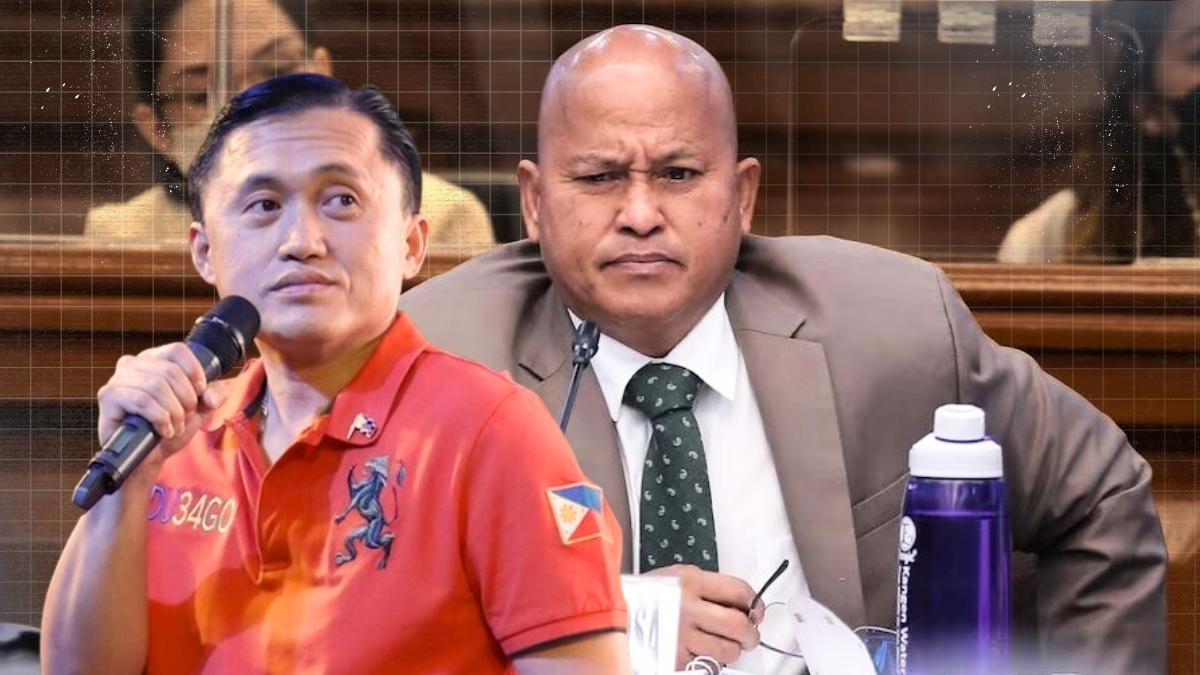
A recent international development has drawn renewed attention to the Philippines’ controversial anti-drug campaign. According to reports, Ronald dela Rosa and Bong Go were mentioned in a charging document filed before the International Criminal Court (ICC) related to the case involving former President Rodrigo Duterte.
It is important to clarify what this development means—and what it does not mean.
What Is a Charging Document?
A charging document filed before the ICC outlines allegations and legal theories submitted by the prosecution. It identifies individuals connected to the case—whether as primary accused, co-perpetrators, or persons of interest—depending on the prosecution’s argument.
Being “named” in such a document does not automatically mean indictment, conviction, or even formal charges against those individuals. It can indicate mention in the narrative of events, alleged roles, or contextual references.
The Context
The ICC has been examining alleged crimes against humanity in relation to the Philippine anti-drug campaign implemented during President Duterte’s administration.
While the Philippines formally withdrew from the ICC in 2019, the tribunal maintains jurisdiction over alleged crimes committed while the country was still a member state.
The ICC process involves several stages:
Preliminary examination
Investigation
Application for arrest warrants
Pre-trial confirmation of charges
Trial (if charges are confirmed)
Legal experts emphasize that proceedings at this stage remain procedural.
Reaction from Those Named
Senator Bong Go has reportedly described the ICC document referencing him as “unfounded,” while Senator Dela Rosa has previously expressed his position that the ICC lacks jurisdiction over Philippine officials.
Both have consistently denied wrongdoing.
Under international law, individuals named in documents remain presumed innocent unless proven guilty in a court of law.
Jurisdiction Debate
The ICC’s authority over Philippine nationals remains politically and legally contentious within the country.
Supporters of ICC involvement argue:
The tribunal ensures accountability in cases where domestic remedies are perceived as insufficient.
International mechanisms provide independent oversight.
Critics argue:
Philippine courts remain fully operational.
Sovereignty and domestic jurisdiction should prevail.
Withdrawal from the ICC limits its reach.
This tension between sovereignty and international accountability continues to shape public debate.
Political Implications
The inclusion of sitting senators in international legal documents carries political weight, regardless of legal outcome.
Potential impacts include:
Diplomatic considerations
Public perception shifts
Election cycle narratives
Institutional reactions from the Executive and Legislative branches
However, legal processes often move slowly and methodically.
What Happens Next?
If arrest warrants are sought or issued, enforcement depends on cooperation from member states.
The ICC does not have its own police force. It relies on state cooperation.
Should domestic authorities decline cooperation, enforcement becomes complicated and heavily dependent on international travel or diplomatic changes.
A Measured Perspective
This development represents a procedural step in a long-running legal and political process.
Key points to remember:
Being named is not equivalent to conviction.
Legal processes require evidence evaluation and judicial review.
Political reactions often outpace courtroom timelines.
The situation remains fluid.