Claire Castro Responds After VP Sara Duterte Calls Marcos a 'Weak Leader'
Palace Responds to VP Sara's Latest Remarks
Malacañang has responded to Vice President Sara Duterte's recent comments about President Ferdinand Marcos Jr., after she said she had "no personal problem" with the President but described him as a "weak leader."
During a press briefing, Palace Press Officer Undersecretary Claire Castro questioned the tone of the Vice President's statements.
"Pero bakit pinersonal ng Bise Presidente yung galit niya?"
Castro suggested that the Vice President's public remarks appeared to go beyond policy disagreements.
VP Sara's Position
Earlier, Vice President Duterte clarified that her criticism was directed at President Marcos' leadership rather than at him personally.
She said she does not have a personal conflict with the President but disagrees with his performance as the country's chief executive.
The comments add to the continuing public exchanges between leaders who were elected on the same ticket in 2022 but have since experienced a widely reported political rift.
Palace Defends the President
Responding to the Vice President's remarks, Castro maintained that criticism should focus on issues and governance rather than personal attacks.
The Palace has consistently defended President Marcos' leadership, pointing to government programs and ongoing initiatives as evidence of the administration's priorities.
The exchange reflects the continuing political tensions between the Marcos and Duterte camps.
Political Differences in the Public Eye
The disagreement between the President and the Vice President has increasingly played out through speeches, interviews, and press briefings.
Political observers note that differences among national leaders are not uncommon, but prolonged public exchanges can shape public perception and influence political discourse.
As of now, both camps continue to publicly defend their respective positions.
Final Thoughts
Claire Castro's latest response underscores the continuing political tensions between Malacañang and the Office of the Vice President.
While both sides maintain that their comments relate to governance and leadership, the public exchanges continue to draw attention as the country's political landscape evolves ahead of the 2028 elections.
Bible Reflection
"Let your conversation be always full of grace, seasoned with salt, so that you may know how to answer everyone." — Colossians 4:6 (NIV)
Political disagreements are part of a healthy democracy, but respectful dialogue and constructive debate help strengthen public trust. Even amid sharp differences, public officials are called to communicate with wisdom and responsibility.
Partial Files, Full Questions: Why the Ombudsman Wants the Original Cabral Evidence
December 29, 2025•1 min read
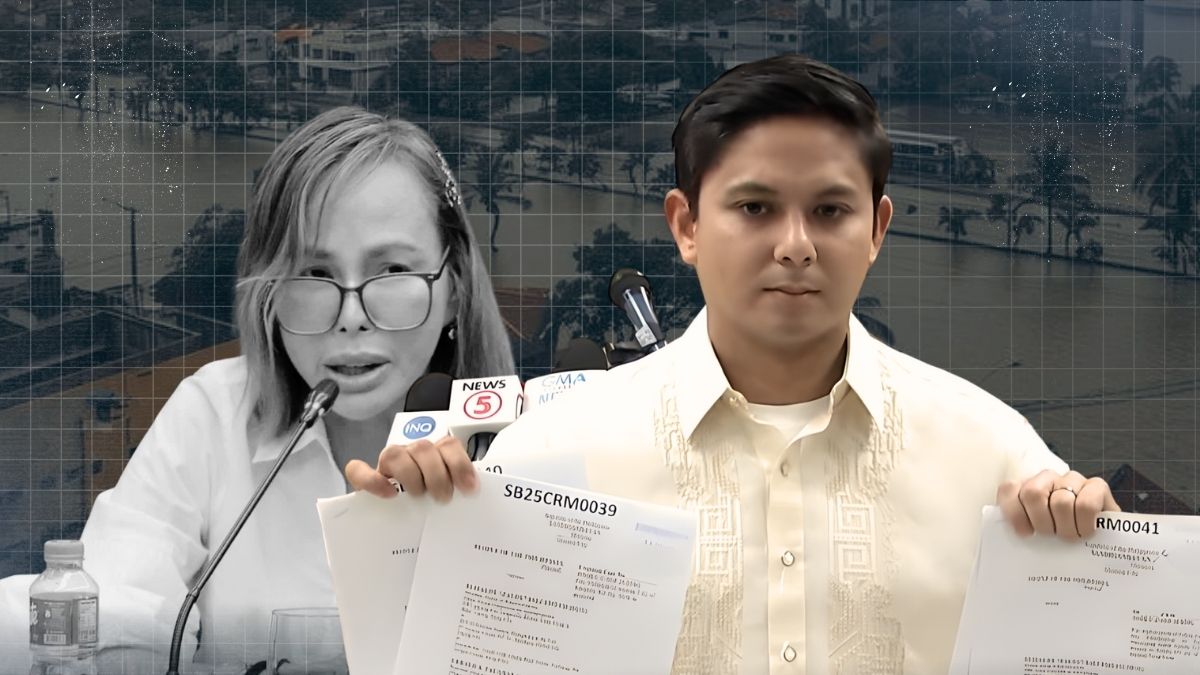
The Office of the Ombudsman has clarified a critical point in the ongoing investigation surrounding the so-called “Cabral files”: what matters most is the original evidence, not circulating copies.

According to Assistant Ombudsman Mico Clavano, Batangas 1st District Rep. Leandro Leviste did not present the complete set of computer files allegedly belonging to the late DPWH undersecretary Maria Catalina Cabral.
Instead, investigators were shown only limited portions of the supposed list—insufficient to verify authenticity, context, or evidentiary value.
Hindi sapat ang listahan kung walang pinanggalingan.
Ang tanong: saan galing, sino ang may hawak, at buo ba?
Clavano explained that for due process and forensic integrity, investigators must rely on original digital sources—specifically, the personal computer and storage devices under Cabral’s custody prior to her death.
That is why the Ombudsman has taken custody of Cabral’s personal CPU, now undergoing forensic examination in coordination with the Office of the Ombudsman, Department of Public Works and Highways, COA, and the PNP Anti-Cybercrime Group.
Clavano stressed that copies, screenshots, Excel lists, or third-party versions—especially those circulating outside official custody—naturally lose evidentiary weight and are vulnerable to alteration or incomplete context.
Sa korte, hindi sapat ang “may nagsabi.”
Kailangan: may pinanggalingan, may buo, may patunay.
He further clarified that the presence of a fund insertion in documents does not automatically mean criminal liability. It only becomes criminal if proven to involve fraud, misuse of public funds, or non-existent (“ghost”) projects.
The Ombudsman also revealed that multiple individuals have claimed to possess copies of the alleged Cabral files—making it even more crucial to distinguish original evidence from secondary or tertiary reproductions.
Hindi minamadali ang katotohanan.
Hinahabol ito—hanggang dulo.