ELON MUSK RESPONDS TO “ARE YOU ANTI-MUSLIM?” QUESTION: “I'M AGAINST RAPE AND MURDER”
Elon Musk Responds After Being Asked If He's Anti-Muslim
By Politikanta Minute | July 29, 2026
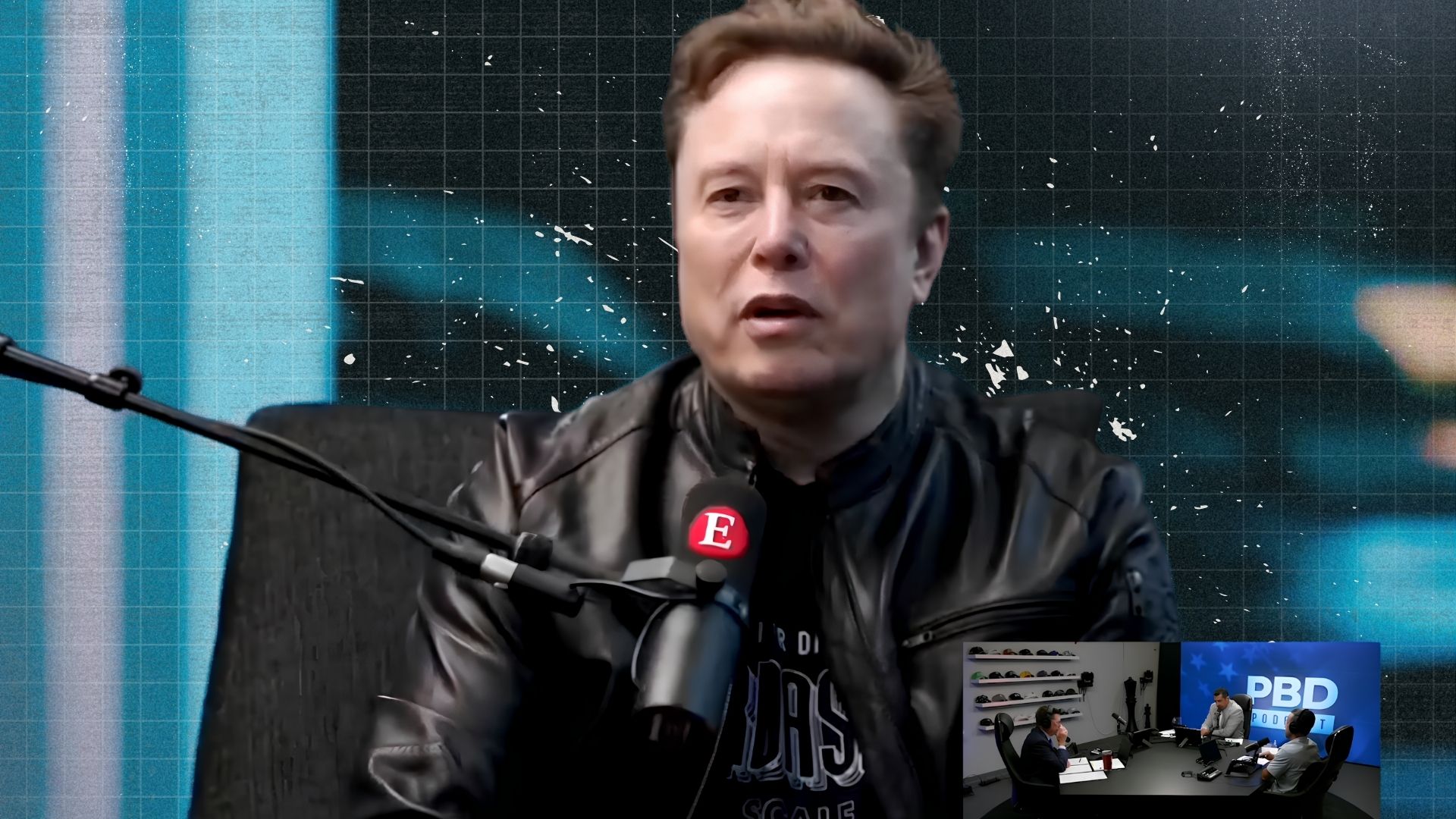
Elon Musk was recently asked directly whether he is anti-Muslim, prompting a response that quickly turned the conversation toward violence, laws, Western values, and the role of traditional media.
The question was blunt.
“Are you anti-Muslim?”
Musk's response did not simply answer the question with a yes or no.
Instead, he outlined what he said he opposes.
“I'm against rape and murder,” Musk responded, according to a clip circulating online.
He then said he is opposed to what he described as the imposition of rules and laws that are contrary to what Western societies have traditionally accepted.
Musk also criticized the interviewer and traditional media organizations, arguing that they fail to recognize what he sees as the underlying issues behind his position.
The exchange has generated discussion because it touches on a broader debate that has become increasingly prominent in Western politics: how societies balance religious freedom, cultural differences, individual rights, public safety, and the application of laws.
Musk's answer appears to frame his position around opposition to violence and opposition to laws or rules that he believes conflict with Western liberal democratic norms.
However, the response also raises a question that extends beyond Musk himself.
How should societies distinguish between criticism of specific laws, ideologies, or practices and prejudice against an entire religious or ethnic group?
That distinction is at the heart of many debates surrounding Islam and immigration in Western countries.
For some critics of Musk, his comments may reinforce concerns about how he discusses Islam and Muslim communities.
For his supporters, the statement may be seen as a defense of Western values and individual freedoms rather than an attack on Muslims as people.
The difference between those interpretations is significant.
A criticism of a specific belief, law, or practice is not automatically the same as hostility toward every person who follows a particular religion.
At the same time, critics argue that rhetoric surrounding religion and culture can sometimes contribute to broader stereotypes, which is why the language used in these debates matters.
The Media Question
Musk's response also included a direct criticism of traditional media.
He argued that mainstream media outlets fail to recognize what he considers the real issue.
That criticism reflects a much larger conflict between Musk and established media organizations.
The billionaire entrepreneur has repeatedly accused traditional media of selective reporting, bias, and failure to address issues that he believes are important.
His critics, meanwhile, argue that Musk himself can amplify controversial claims and oversimplify complex social and political issues.
The disagreement is therefore not simply about one question.
It is part of a much larger argument over who gets to define the public narrative.
Traditional media?
Social media?
Independent creators?
Or increasingly influential individuals with enormous online audiences?
That battle over information has become one of the defining political and cultural conflicts of the digital age.
The Politikanta Minute Analysis
The question directed at Musk was simple:
“Are you anti-Muslim?”
But his answer reveals why these conversations are rarely simple.
Musk says he is against violence and against laws he believes violate Western values.
His critics may ask whether his broader rhetoric about Islam and Muslim communities contributes to prejudice.
His supporters may argue that criticism of religious practices or laws should not automatically be labeled anti-Muslim.
The truth is that these are separate questions—and they should be debated separately.
A person can oppose a particular law without opposing every person who follows the religion associated with that law.
Likewise, criticism of a religion or ideology does not automatically justify discrimination against individuals.
The challenge is maintaining that distinction.
In a polarized political environment, nuance is often the first casualty.
One side hears criticism and calls it hate.
The other hears accusations of prejudice and calls them censorship.
Meanwhile, the actual debate over individual rights, religious freedom, public safety, cultural integration, and the rule of law gets buried beneath political labels.
Musk's response has therefore opened a much broader conversation.
The real question isn't simply whether Elon Musk is “anti-Muslim.”
The more important question is whether public figures—and the media covering them—can discuss difficult issues involving religion, culture, and law without reducing the conversation to accusations and counter-accusations.
Because in a democracy, people should be able to criticize ideas.
People should also be protected from discrimination.
And those two principles do not have to be mutually exclusive.
The challenge is knowing where one ends—and the other begins.
✝️ BIBLE VERSE CONNECTION
James 1:19 (KJV)
“Let every man be swift to hear, slow to speak, slow to wrath.”
Exegesis / Reflection
Conversations about religion, politics, culture, and identity can quickly become emotionally charged.
James 1:19 offers a simple principle: listen carefully before responding.
That principle is particularly relevant when discussing controversial public figures and sensitive subjects.
People can disagree strongly about laws, religious beliefs, cultural practices, or political ideologies. But disagreement becomes more productive when people distinguish between ideas and individuals.
A person may criticize an ideology without hating everyone who holds it.
At the same time, people should be careful not to allow criticism of an idea to become an excuse for mistreating individuals.
The biblical principle is not about avoiding difficult conversations.
It is about approaching them with wisdom, patience, and self-control.
In today's media environment, where a single sentence can become a viral controversy within minutes, taking time to understand the complete argument is more important than ever.
**Listen first.
Understand the context.
Then respond.**
That approach doesn't eliminate disagreement.
But it can make disagreement more honest.
Iran Protests Intensify as Khamenei Issues Hardline Warning
January 09, 2026•1 min read
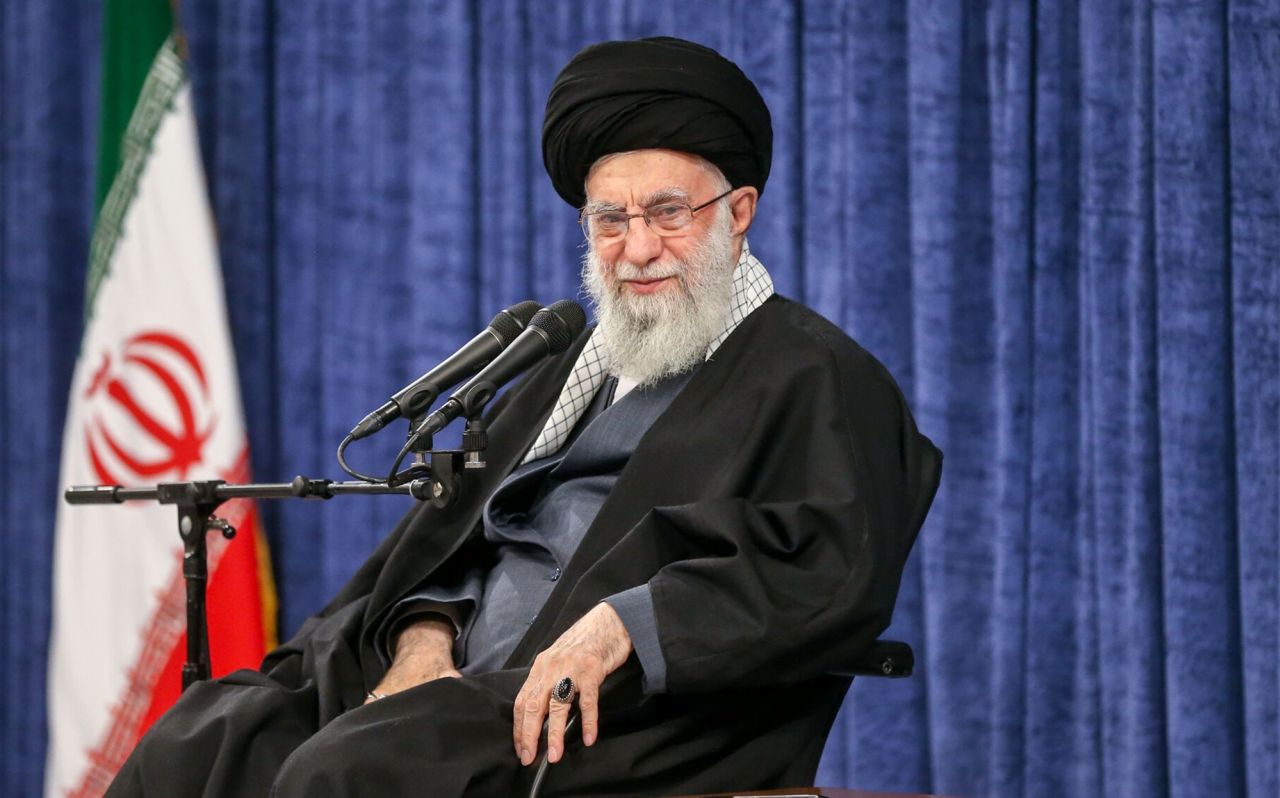
According to reporting by Euronews, Iran’s Supreme Leader Ayatollah Ali Khamenei issued a stark warning following a week of nationwide protests, stating that what he described as “rioters” must be “put in their place.”

The protests, which have spread across multiple Iranian cities, are largely driven by economic hardship, currency collapse, and public frustration with governance. At least ten people have reportedly died, making the unrest among the most serious since the 2022 demonstrations following the death of Mahsa Amini.
In remarks aired on state television, Khamenei drew a distinction between peaceful protest and what he labeled as rioting, arguing that dialogue with protesters was no longer productive. He also claimed — without presenting evidence — that foreign powers were influencing the unrest, a narrative frequently used by Tehran during periods of internal crisis.
The comments come amid heightened international tension. Just days earlier, former U.S. President Donald Trump warned that Washington would respond if Iran violently suppressed peaceful demonstrators. This backdrop adds to fears of escalation, both domestically and regionally.
Iran’s economic situation continues to weigh heavily on public sentiment. The sharp decline of the rial, rising prices, and limited economic opportunity have fueled anger that goes beyond politics, touching everyday survival for many citizens.
As history has shown, Iran often responds to unrest with force rather than reform. Whether this approach will restore stability — or deepen resistance — remains uncertain.
📖 “Where there is no guidance, a people falls, but in an abundance of counselors there is safety.” — Proverbs 11:14