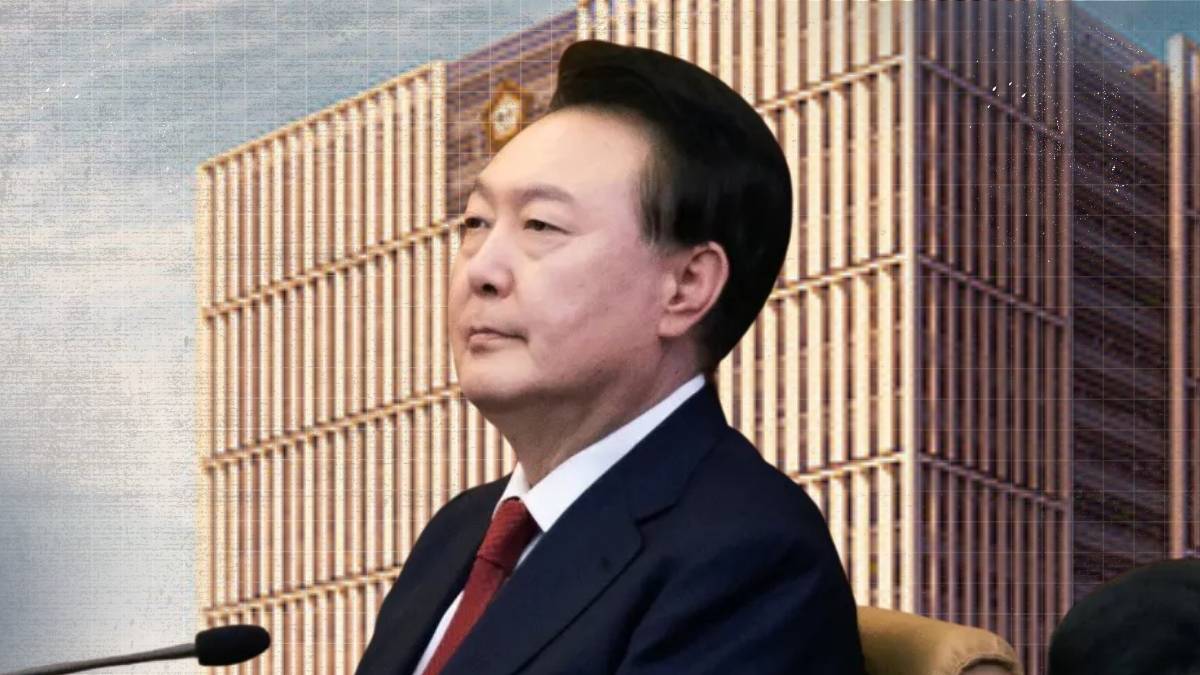
Former South Korean President Yoon Sentenced to Life for Insurrection
A South Korean court has sentenced former president Yoon Suk-yeol to life imprisonment after finding him guilty of charges related to insurrection, marking one of the most consequential rulings in the country’s modern political history.
The decision follows months of investigation and legal proceedings that examined allegations of attempts to undermine constitutional order during his time in office.
The ruling underscores South Korea’s robust judicial system and its history of holding former leaders accountable under the law.
⚖️ The Charges
Prosecutors argued that Yoon engaged in actions that constituted insurrection — a grave charge under South Korean law that involves attempts to destabilize or overthrow constitutional governance structures.
According to court findings, the former president’s conduct crossed the threshold from political dispute into criminal violation.
The court concluded that the actions were serious enough to warrant a life sentence, reflecting the severity of offenses involving threats to democratic institutions.
Legal analysts note that insurrection charges in South Korea carry heavy penalties, including life imprisonment or, in rare cases, capital punishment.
🏛️ A Pattern of Accountability
South Korea has a notable history of prosecuting former presidents.
In past decades:
Former president Chun Doo-hwan was convicted for his role in a military coup.
Former president Park Geun-hye was sentenced on corruption charges before receiving a presidential pardon.
The conviction of Yoon continues a pattern in which former leaders face legal scrutiny after leaving office.
Observers say this reflects both the volatility and strength of South Korea’s democracy.
🌏 Domestic Reaction
The verdict has sparked strong reactions across South Korea.
Supporters of Yoon argue that the ruling is politically motivated and reflects deep polarization within the country.
Opponents say the decision reaffirms the principle that no one is above the law — not even a former president.
Large crowds reportedly gathered near the courthouse during proceedings, with both supporters and critics expressing their views.
Authorities increased security in anticipation of demonstrations.
📊 Political Implications
The sentencing carries significant implications for South Korea’s political landscape.
Key areas of impact include:
Party realignment
Upcoming elections
Public trust in institutions
Foreign policy continuity
Political analysts say the ruling may deepen divisions but also clarify accountability standards.
The opposition party may seek to leverage the ruling to reinforce governance reforms.
Meanwhile, conservative factions are expected to mobilize in response.
🇰🇷 Regional & Global Significance
South Korea plays a critical role in regional security and economic dynamics in East Asia.
The sentencing of a former president on insurrection charges could:
Affect diplomatic engagements
Influence perceptions of political stability
Strengthen global narratives about rule of law
International observers note that while the decision may create short-term political tension, it also reinforces democratic institutional resilience.
🧠 Legal Perspective
Legal experts emphasize that insurrection cases require high evidentiary standards.
Convictions typically involve documented actions that directly challenge constitutional authority or public order.
The court’s decision signals that prosecutors met those standards.
However, appeals are expected.
Under South Korean law, defendants have the right to challenge verdicts in higher courts.
Thus, the legal process is not yet fully concluded.
📌 What Happens Next?
The next steps include:
Formal filing of appeals
Potential Constitutional Court review
Political response from major parties
The situation remains fluid.
While the sentence is severe, South Korea’s legal framework allows further judicial review before final resolution.