“HINDI PO TAYO UNGGOY”: ZUBIRI GIVES MARCOS’ SONA 2026 A 9/10
“Hindi Po Tayo Unggoy”: Zubiri Gives Marcos’ SONA 2026 a 9/10
By Politikanta Minute | July 29, 2026
Senate Majority Leader Migz Zubiri gave President Ferdinand Marcos Jr.'s 2026 State of the Nation Address a strong 9 out of 10, highlighting what he described as the President's firm response to an AI-generated video depicting Filipinos as monkeys.
For Zubiri, the issue was more than an offensive piece of digital content.
It was a question of national dignity.
The senator particularly praised Marcos for addressing the controversial video reportedly produced by state-run Chinese media outlet China Daily.
Zubiri's message was blunt:
“Hindi po tayo unggoy.”
A Strong Response to an AI-Generated Video
The controversy surrounding the AI-generated video became one of the notable international issues raised during the President's SONA.
The video reportedly depicted Filipinos as monkeys, triggering criticism and outrage among Filipinos who viewed the material as insulting and degrading.
The controversy also raised broader concerns about the growing use of artificial intelligence in creating misleading or offensive digital content.
For Zubiri, however, the immediate issue was clear.
Filipinos should not be portrayed in a demeaning manner.
His praise for Marcos' response suggests that the administration's position on the issue resonated with members of the Senate majority.
The message was not complicated:
Filipinos deserve respect.
Why Zubiri Gave the SONA a 9/10
Zubiri's rating of 9 out of 10 is significant because it reflects a generally positive assessment of the President's performance during the annual address.
The senator particularly highlighted three areas:
First, Marcos' response to the controversial AI-generated video.
Second, the President's mention of the looming cases involving his cousin and former House Speaker Martin Romualdez.
Third, the President's call to address the system loss charges being passed on to electricity consumers.
Together, these issues represented a mix of national sovereignty, political accountability, and economic concerns affecting ordinary Filipinos.
The Romualdez Issue
Another notable moment for Zubiri was Marcos' mention of the looming cases involving his cousin, former House Speaker Martin Romualdez.
The issue carries particular political weight because of their family relationship.
By acknowledging the possibility of legal action involving a close relative, the President sent a message that political connections should not automatically shield anyone from accountability.
For supporters of the administration, this could be interpreted as a sign that the government is willing to allow legal processes to proceed regardless of political relationships.
For critics, however, the question will remain whether those processes are truly independent and impartial.
Either way, the mention was politically significant.
The System Loss Problem
Zubiri also welcomed Marcos' call to stop charging system losses to electricity consumers.
This is an issue that directly affects millions of Filipino households.
System loss charges are connected to electricity losses occurring as power moves through the distribution network.
Some losses are technical, while others may result from electricity pilferage and other non-technical causes.
The debate is therefore about who should ultimately carry the financial burden.
Consumers who pay their bills on time may understandably question why they should bear costs associated with electricity losses they did not personally cause.
The President's call to address the issue therefore has obvious political appeal.
For ordinary families, lower electricity bills mean more money available for food, transportation, education, and other household needs.
However, as the Department of Energy has indicated, eliminating the charge may require time because the underlying causes of system losses must first be addressed.
Three Messages From One SONA
Zubiri's assessment of the President's speech highlights three different messages.
National dignity.
Accountability.
Consumer relief.
The first concerns how Filipinos are portrayed internationally.
The second concerns whether political connections should protect anyone from legal scrutiny.
The third concerns the cost of electricity and the financial pressure facing Filipino families.
These issues may appear unrelated, but they share one common theme:
The government is being judged by how it responds to problems affecting the public.
The Politics Behind the 9/10
Giving the SONA a 9 out of 10 is also a political statement.
Zubiri is part of the Senate majority.
His strong assessment signals confidence in the President's message and leadership.
But the rating also sets a benchmark.
If the President's SONA promises are to translate into real results, the public will eventually judge the administration based on implementation—not speeches.
A strong response to an offensive AI video may demonstrate diplomatic resolve.
Acknowledging legal cases involving politically connected individuals may demonstrate a willingness to allow accountability.
And addressing system losses may eventually provide financial relief to consumers.
But the real test comes afterward.
The Politikanta Minute Take
“Hindi po tayo unggoy.”
That statement may have been one of the simplest but most emotionally powerful messages surrounding this year's SONA.
In an age where artificial intelligence can create almost anything, the public is increasingly vulnerable to manipulated images, videos, and narratives.
But the controversy also demonstrates something else.
Technology may be artificial.
The consequences are real.
An AI-generated video can trigger outrage.
A political decision can affect millions.
And an electricity charge on a monthly bill can determine whether a family has enough money left at the end of the month.
That's why the President's SONA cannot ultimately be judged by applause—or by a senator's 9/10 rating.
It must be judged by results.
Can the government protect the country's dignity?
Can it ensure that justice applies regardless of political connections?
Can it reduce the financial burden on ordinary Filipinos?
Those are the promises that matter after the cameras are turned off.
Because Filipinos are not monkeys.
And they are not fools.
They are voters.
They are taxpayers.
And ultimately, they are the ones who will decide whether a 9/10 performance on the SONA stage deserves the same rating when measured against reality.
✝️ BIBLE VERSE CONNECTION
Proverbs 14:34 (KJV)
“Righteousness exalteth a nation…”
Exegesis / Reflection
A nation's dignity is not measured only by how it responds to insults from outside its borders.
It is also measured by how it treats its own people.
A government can defend national dignity internationally while also being expected to uphold accountability at home.
It can respond strongly to offensive portrayals while being challenged to ensure that public funds are properly managed.
And it can promise relief from electricity costs while being expected to deliver meaningful results.
The biblical principle is simple:
A nation is strengthened when truth, justice, and righteousness are upheld.
National pride is important.
But pride must be accompanied by responsibility.
The Filipino people deserve leaders who will defend their dignity, protect their interests, and remain accountable for the promises they make.
Ultimately, the true measure of leadership is not the applause that follows a speech.
It is the impact that remains when the speech is over.
Lacson Orders Validation of 18 Ex-Marines’ Claims: Due Process or Political Smoke?
February 25, 2026•3 min read
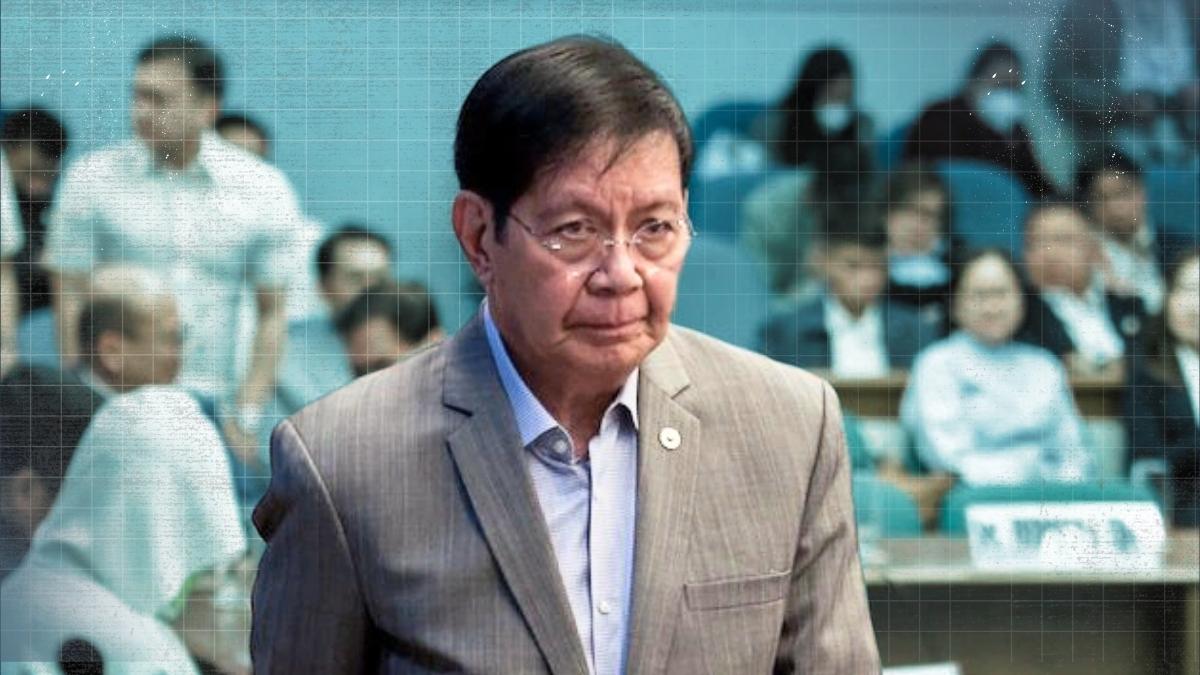
Senate President Pro Tempore Ping Lacson has ordered the validation of allegations made by 18 supposed former soldiers who claimed they delivered cash-filled suitcases to certain lawmakers and government officials — allegedly linked to anomalous flood control projects.
According to reports, the former soldiers alleged that from 2023 to 2025, billions of pesos were delivered to specific personalities, including former lawmaker Zaldy Co, and even cited an alleged residence connected to President Ferdinand Marcos Jr..
Lacson, however, noted discrepancies between the amounts cited by the alleged former soldiers and official budget allocations for flood control projects during the same period — raising questions about the credibility of the claims.
Verification Before Amplification
Rather than immediately endorsing or dismissing the accusations, Lacson stated that he wrote to the Armed Forces of the Philippines — including the Philippine Navy and Army — requesting background checks and service record verification of the 18 individuals.
This approach signals something critical:
Before conclusions, there must be confirmation.
Before outrage, there must be authentication.
In a political climate where allegations go viral within minutes, institutional validation becomes a stabilizing force.
The Timing Question
Lacson also raised concerns about timing.
He observed that the surfacing of the claims coincided with:
ICC confirmation of charges proceedings
The anniversary of the EDSA People Power Revolution
He suggested that the context creates the appearance of political color or even an element of destabilization.
In Philippine politics, timing often shapes perception as much as content.
Whether coincidence or coordination, public reaction tends to interpret events through broader national narratives.
Joint Affidavit: Does It Carry Weight?
One of the pressing questions raised publicly is about the joint affidavit reportedly submitted by the 18 individuals — including pictures and attachments.
Does it carry value?
Legally, an affidavit is evidence.
But its strength depends on:
Authenticity of the affiants
Verifiability of documents
Corroboration through independent sources
Consistency with financial records
An affidavit alone does not equal proof — but neither is it automatically dismissed.
That is precisely why validation matters.
Oversight vs. Destabilization
There are two dominant interpretations circulating:
Interpretation A:
The claims reveal large-scale corruption requiring urgent accountability.
Interpretation B:
The claims are politically timed narratives designed to undermine stability during sensitive national moments.
Reality may lie somewhere in between — or outside both frames entirely.
What remains constant is this:
Serious allegations require serious verification.
A Satirical Observation
In the Philippines, “maleta politics” has become almost symbolic — a recurring image in corruption controversies.
But here’s the irony:
Sometimes the loudest claims come with the lightest documentation.
And sometimes the quietest investigations uncover the heaviest truths.
Public discourse often demands immediate judgment.
Institutions, however, are built for deliberate process.
The difference between mob reaction and mature governance is patience.
Biblical Reflection on Discernment
Scripture offers timeless guidance in moments of accusation and uncertainty.
1 Thessalonians 5:21 (KJV):
“Prove all things; hold fast that which is good.”
Validation is not denial.
Verification is not suppression.
Inquiry is not guilt.
Truth survives scrutiny.
Falsehood collapses under it.
What Happens Next?
Lacson’s move suggests the issue may proceed through:
Service record confirmation
Senate-level scrutiny
Possible hearings if warranted
Cross-checking against official budget data
If discrepancies are validated, the claims weaken.
If documentation aligns with evidence, accountability intensifies.
Either path demands discipline over drama.
A Discreet Agila Note
Strong institutions are not shaken by allegations — they are strengthened by transparent processes.
The true measure of governance is not how loudly accusations are made,
but how firmly procedures are followed.
When sovereignty, stability, and national credibility are involved, careful steps matter more than viral moments.