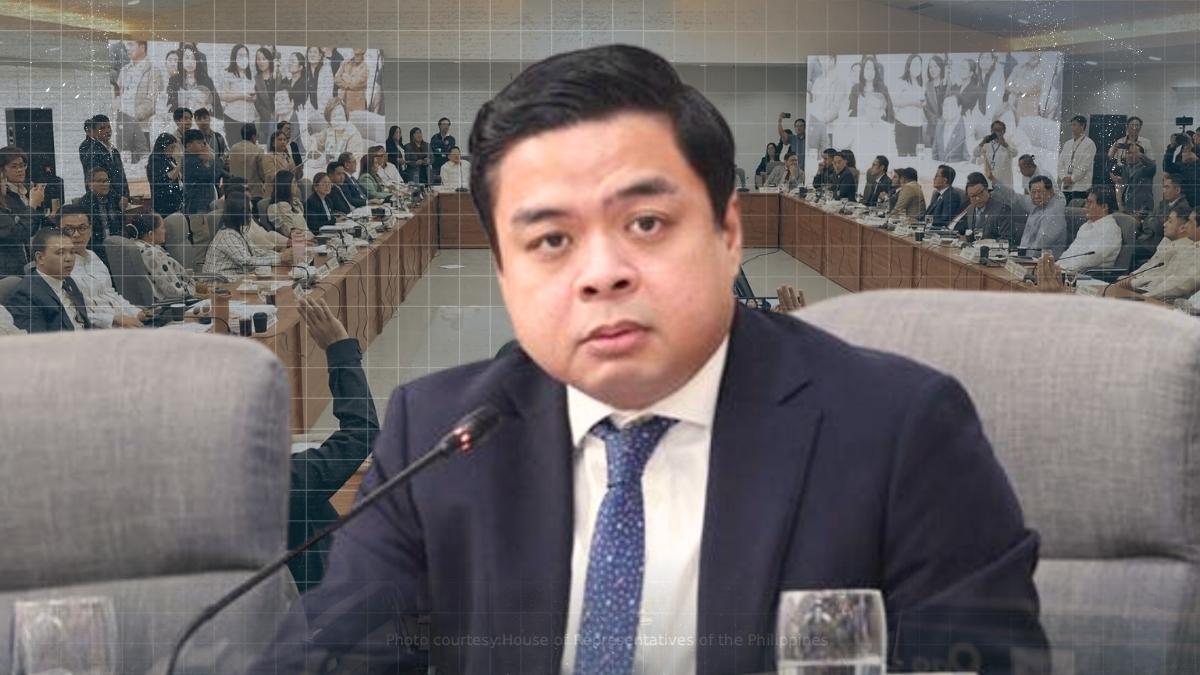
HOUSE WATCH | Ridon Calls for Unmasking of “Mary Grace Piattos”: Transparency or Political Theater?
A new name—or perhaps a pseudonym—has entered the impeachment-era vocabulary in Congress: “Mary Grace Piattos.” The figure, whose identity remains unclear, has become the subject of renewed calls for disclosure after former lawmaker Antonio Tinio Ridon urged a former aide of Vice President Sara Duterte to reveal who is really behind the name.
Ridon’s call adds another layer to an already crowded political stage, where allegations, counter-allegations, and demands for transparency compete for attention. At its core, the issue raises a familiar but unresolved question in Philippine politics: when does anonymity protect accountability—and when does it undermine it?
Who—or What—is “Mary Grace Piattos”?
Based on public statements, “Mary Grace Piattos” is alleged to be connected to transactions or communications now being cited in discussions surrounding Vice President Duterte and individuals formerly linked to her office. However, no verified public record has conclusively established whether the name belongs to a real individual, a pseudonym, or a placeholder identity.
Ridon argues that this ambiguity itself is the problem. According to him, if references to “Mary Grace Piattos” are being used to support claims or defenses in politically significant matters, then the identity behind the name should be disclosed—particularly if a former aide has direct knowledge.
Discreet satire, transparency edition: it’s hard to subpoena a nickname.
The Call to a Former Aide
Ridon’s statement specifically points to a former aide of the Vice President, suggesting that this individual is in a position to clarify whether “Mary Grace Piattos” is real, fictional, or symbolic. He frames the appeal as a matter of public interest, not personal vendetta.
From Ridon’s perspective, anonymity in this context risks muddying the factual record. If claims are anchored to an unidentified figure, accountability becomes elusive—allowing narratives to circulate without a clear subject to verify or challenge.
Yet the call also raises counter-questions: Does revealing identities advance truth—or does it shift focus away from evidence toward personalities?
Anonymity vs. Due Process
In many legal and investigative contexts, anonymity serves legitimate purposes—protecting whistleblowers, shielding private individuals, or preventing undue harm before facts are established. Critics of Ridon’s demand caution that forcing disclosure without safeguards could discourage cooperation or expose individuals to political retaliation.
Supporters counter that anonymity must have limits, especially when names—real or otherwise—are invoked to justify actions, defenses, or public claims involving high office.
Quiet civic satire: anonymous sources are powerful—until everyone asks who’s holding the microphone.
The Political Timing
The timing of Ridon’s call is notable. It comes amid heightened scrutiny of Vice President Duterte, ongoing impeachment-related discussions, and a broader push by various actors to frame narratives around accountability and trust.
In such an environment, even calls framed as procedural can be read politically. To critics, the demand to “unmask” feels less like fact-finding and more like pressure. To supporters, it is overdue clarity.
This tension reflects a recurring feature of impeachment seasons: procedural questions become political signals, whether intended or not.
What the Call Does—and Doesn’t Establish
It is important to separate what Ridon is asking for from what has been proven.
The call does not establish wrongdoing by the Vice President or her former aides.
It does not confirm that “Mary Grace Piattos” exists as a real person.
It does highlight uncertainty—and urges someone with alleged knowledge to clarify it.
In short, the demand is about identity, not yet about culpability.
Discreet satire, legal edition: before guilt, the system still needs a name.
Institutional Paths Forward
If questions around “Mary Grace Piattos” persist, several institutional routes are available:
Committee Clarification
Congressional committees can require sworn statements or testimonies that clarify references made in official proceedings.Affidavits or Records
Claims tied to specific transactions can be verified—or debunked—through documentary evidence rather than names alone.No Action
If no formal process takes up the issue, the name may remain part of political folklore rather than legal record.
Which path is taken will determine whether the issue matures into a factual inquiry or fades as rhetorical noise.
Why This Matters Beyond One Name
The controversy underscores a deeper concern: how narratives are built in high-stakes political moments. Names—real or symbolic—carry power. When they appear without context or verification, they can shape opinion faster than facts can catch up.
For institutions tasked with accountability, the challenge is to ensure that clarity does not become coercion, and that transparency does not become theater.
Discreet civic satire to close: truth doesn’t fear daylight—but it also doesn’t thrive in spotlights aimed at the wrong target.
