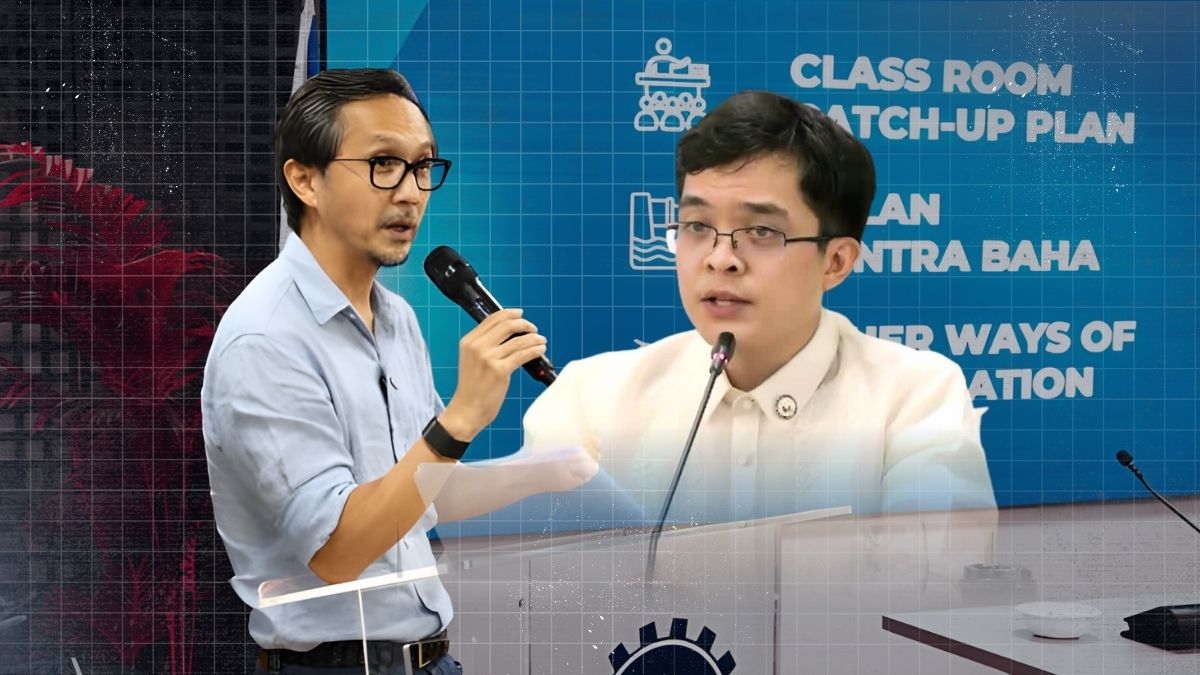
I Will Release Cabral’s Files If DPWH Allows It” — Levist Calls for Transparency
A renewed call for transparency has emerged amid the ongoing controversy surrounding former Department of Public Works and Highways (DPWH) undersecretary Maria Catalina Cabral, after Levist said he is willing to release documents related to Cabral — if the DPWH permits it.

In a statement circulating online and reported by Inquirer.net, Levist emphasized that the release of Cabral’s files hinges on clearance from the DPWH and its current leadership, including Public Works Secretary Vince Dizon.
The remark comes as public attention remains fixed on allegations tied to anomalous flood control and infrastructure projects, many of which are now under investigation by multiple government bodies.
Conditional Disclosure
Levist clarified that he is not withholding information out of personal interest, but rather citing institutional and legal constraints. According to him, any documents involving DPWH records must be cleared by the agency to avoid violating data privacy laws and due process requirements.
“I will release Cabral’s files if DPWH, Dizon will allow it,” Levist was quoted as saying, framing the issue as a matter of official authorization rather than individual discretion.
This conditional stance has reignited debate over who controls access to sensitive government records, particularly in cases involving high-ranking officials and public funds.
Pressure on DPWH Leadership
The statement effectively shifts attention to the DPWH leadership, placing pressure on the agency to clarify whether it will authorize the disclosure of documents related to Cabral’s tenure.
Secretary Dizon has previously vowed reforms within the department, promising transparency, accountability, and quality infrastructure projects moving forward. However, critics argue that meaningful transparency requires open access to records, especially those connected to allegations of corruption or misuse of funds.
So far, the DPWH has not issued a direct response to Levist’s statement regarding permission to release the files.
Public Trust and Accountability
The Cabral controversy has become emblematic of a larger public concern: whether institutions are willing to fully open their records when scrutiny intensifies.
Civil society groups and online commentators have noted that conditional disclosures — while legally cautious — can also prolong uncertainty and fuel suspicion. For many Filipinos, the key issue is not just whether files exist, but why access to them remains restricted.
Supporters of disclosure argue that transparency is essential to restoring trust in public institutions, especially in agencies responsible for billion-peso infrastructure programs that directly affect communities through flood control, roads, bridges, and public facilities.
Balancing Law and Transparency
Legal experts point out that government agencies must balance transparency with privacy laws, evidentiary rules, and the integrity of ongoing investigations. Unauthorized releases could compromise cases or expose individuals to unfair public judgment.
Still, they note that agencies retain the authority to release redacted or officially sanctioned documents if doing so serves the public interest.
Levist’s statement, therefore, places the decision squarely in the hands of the DPWH: authorize disclosure, or maintain restrictions until investigations conclude.
A Test of Reform Promises
As the government continues to promise reforms and improved governance, the handling of Cabral-related records may serve as a litmus test for those commitments.
Whether DPWH allows the release of the files or opts to keep them sealed, the decision will likely shape public perception of how serious the administration is about transparency — not just in words, but in action.
For now, the files remain unreleased, and the public waits for clarity on whether institutional doors will open or remain closed.

The controversy surrounding alleged DPWH budget insertions refuses to fade — even after the death of former DPWH Undersecretary Maria Catalina Cabral.

According to Batangas 1st District Rep. Leandro Leviste, Cabral personally handed him files detailing proposed infrastructure projects and budget insertions tied to the Department of Public Works and Highways. These documents, he said, were given to him months before her death and were meant to preserve records amid growing concerns over missing or altered files.
But here’s where the issue sharpens.
Leviste says he will only release the documents if allowed by DPWH Secretary Vince Dizon, citing congressional rules and institutional protocol. In other words, the files exist — but the gate remains locked.
This development comes as investigations into alleged “insertions” continue to raise uncomfortable questions:
Who proposed the projects?
Who approved the budget changes?
Who benefited — and who signed off?
Cabral’s death, officially ruled a fall, has not erased the paper trail. Legal experts and lawmakers alike stress that documents don’t die with witnesses. Accountability survives as long as records do.
Leviste himself warned that releasing the files would have “wide-ranging consequences,” implicating not just DPWH officials but possibly members of Congress and individuals outside government.
That warning alone speaks volumes.
In a political system long haunted by missing records, erased hard drives, and selective amnesia, the existence of physical files is already a crack in the wall of silence.
The public is no longer asking if the files exist.
The nation is asking why they still haven’t been released.
And in the shadow of flood control scandals, unprogrammed funds, and vanished projects, silence is beginning to sound less like caution — and more like fear.
“For there is nothing hidden that will not be disclosed, and nothing concealed that will not be known or brought out into the open.” — Luke 8:17
