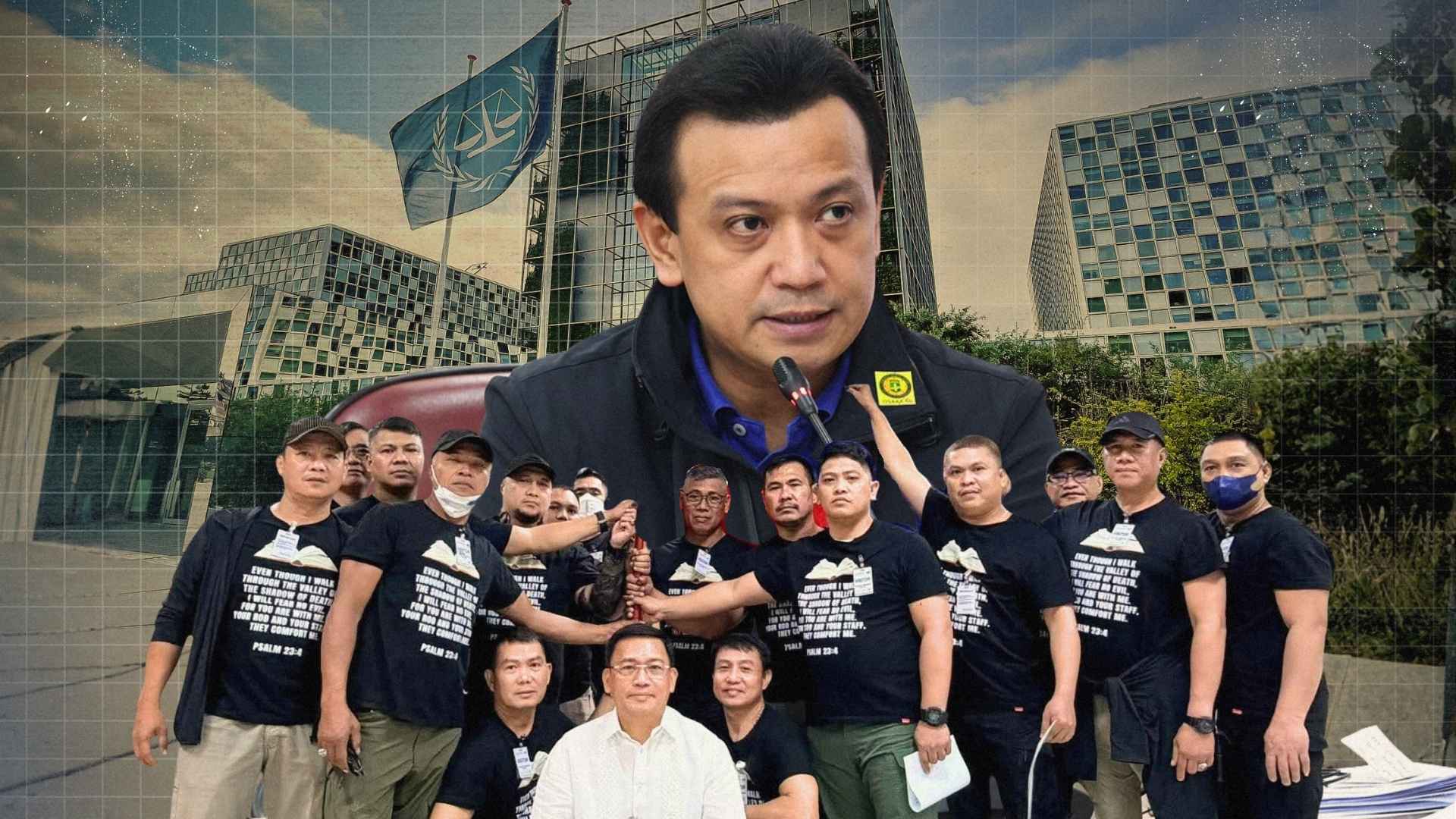
ICC Cases Without PH Membership? Trillanes Raises Possibility—But Can It Really Happen?
MANILA, Philippines — Former senator Antonio Trillanes IV has stirred discussion after suggesting that individuals involved in alleged obstruction of justice could face cases before the International Criminal Court (ICC), even if the Philippines is no longer a member.
According to Trillanes, ICC prosecutors may initiate cases independently, particularly if obstruction is involved.
He went further, saying he is willing to submit names to international authorities as part of that process.
📌 Here’s what this really means…
The claim sounds strong.
But legally, it’s not that simple.
Yes—the ICC can:
Investigate crimes within its jurisdiction
Act through its own prosecutors
But there’s a key limitation:
👉 Jurisdiction + cooperation
Because even if a case is filed:
The ICC has no independent police force
It relies on member states for arrests and enforcement
Non-member states are not automatically bound to cooperate
And that’s where the complication begins.
⚖️ This raises a bigger issue…
Trillanes himself acknowledged a crucial point:
👉 Cooperation from the country is still needed.
That changes everything.
Because without cooperation:
Arrests become difficult
Proceedings slow down
Enforcement becomes uncertain
So the real question becomes:
👉 Is this a legal path—or a political signal?
🧠 Why this matters…
The ICC issue is not just about law—
It’s about sovereignty.
For some:
International accountability is necessary
External mechanisms ensure justice
For others:
National systems should handle domestic issues
External intervention raises concerns about independence
And that divide has been at the center of the ICC debate involving the Philippines for years.
🗣️ Public Reaction
Public reactions reflect this divide.
Some support the idea of international accountability, especially in high-profile cases.
Others question whether such moves are practical—or even enforceable—given the country’s current status outside the ICC framework.
And that’s where the debate stands:
👉 Legal theory vs real-world execution
Closing Thought
In law, what is possible…
is not always what is enforceable.
Because in the end—
Justice is not just about filing a case.
👉 It’s about whether that case can move—and be carried out.
📜 Scripture
Luke 14:28
"Suppose one of you wants to build a tower. Won’t you first sit down and estimate the cost…?"
🔍 Exegesis (Contextual Meaning)
Jesus teaches about counting the cost before taking action.
It emphasizes:
Planning before execution
Understanding limitations
Considering feasibility—not just intention
🧠 Application
In legal and political decisions:
✔ Not all actions are equal in outcome
✔ Strategy matters as much as intention
✔ Reality must be considered—not just theory
Because in the end—
👉 What matters is not what can be started…
but what can be finished.
Bakit Pati Bata Inaalagaan na ng DILG? Marcoleeta’s Strike Sparks Bigger Questions
When Rep. Rodante Marcoleta dropped his now-viral question in the Senate hearing — “Bakit po napunta kayo sa pag-aalaga ng mga bata? Hindi po ba ang inaalagaan ninyo ay mga pulis at mga bombero?” — the room froze.
And the Filipino people asked the same thing: What exactly is going on inside the DILG?

Secretary Jonvic Remulla, who is supposed to supervise the PNP, BFP, and LGUs, somehow ended up defending programs involving minors — raising eyebrows, suspicions, and the age-old question: Ano ba talaga ang priority?
At a time when the nation faces:
massive flood-control corruption,
billions in budget insertions,
unresolved drug-use allegations against the President,
and looming instability in local governance…
…why is the DILG suddenly in the business of childcare?
Marcoleta’s question hits harder when placed beside the government’s current controversies.
The public sees:
A DILG with a P308-billion budget,
A DPWH flooded with P410B insertions,
An administration scrambling after Zaldy Co’s testimonies,
And a President promising “no more flooding next year” while refusing a drug test.
So the viral question becomes symbolic —
“Bakit pati bata, sila pa ang inaalagaan ninyo?”
When police and firefighters struggle with outdated equipment…
When disaster response remains slow…
When flood control projects are questionable…
Why is the department stretched into areas that don’t match its core mandate?
In times like these, when government seems confused, distracted, and defensive, the voice of accountability must be bold.
“Woe to those who call evil good and good evil…” — Isaiah 5:20
The verse hits the heart of the matter:
Leaders cannot redefine priorities just to escape scrutiny.
Accountability cannot be replaced with media spin.
Duty cannot be blurred with “feel-good programs.
Marcoleta’s question was not sarcasm — it was a warning.
A government that forgets its priorities loses its direction.
And a nation led by confused priorities ends up suffering the consequences.
But the Filipino people are watching.
And in due time, truth will roar louder than power.