“KWEKWELYUHAN KITA!” — Erwin Tulfo’s Heated Senate Warning Goes Viral
Senate Conflict Intensifies As Erwin Tulfo Issues Explosive Warning
The power struggle inside the Philippine Senate appears to be reaching a dangerous new level.
Senator Erwin Tulfo is now making headlines nationwide after releasing a fiery warning against personalities who may allegedly attempt to conduct separate Senate Blue Ribbon Committee hearings despite the ongoing reorganization battle inside the chamber.
And unlike typical political statements filled with diplomacy and restraint, Tulfo’s message came out direct, aggressive, and unmistakably confrontational.
“Hindi na po ako papayag na maghi-hearing hearingan kayo diyan and I will have you arrested, I promise.”
That line alone immediately sent political observers and social media into overdrive.
But Tulfo did not stop there.
“Kahit na senador ka… try me.”
“Kung dati kang Senate President… I don’t care.”
“Eh talagang papahuli kita!”
At one point, Tulfo even suggested physically removing individuals from the Senate floor if necessary.
Those statements are now fueling even deeper tensions between rival factions inside the Senate.
The Battle Over Senate Authority
The confrontation traces back to the June 3 Senate reorganization, where competing camps began asserting authority over leadership positions and committee control.
The camp of Senators Sherwin Gatchalian and Erwin Tulfo maintains that they now represent the legitimate majority, with Tulfo recognized as the rightful chairman of the Blue Ribbon Committee.
Meanwhile, the camp aligned with Senate President Alan Peter Cayetano continues conducting activities and hearings under its own interpretation of Senate authority.
The result?
A Senate increasingly divided not only politically — but institutionally.
And now, both camps appear unwilling to back down.
Here’s What This Really Means…
This is no longer just a disagreement over committee schedules.
What Filipinos are witnessing now is a deeper struggle over legitimacy, control, and political direction inside one of the country’s most powerful institutions.
That is why the rhetoric has become so intense.
Because whoever controls the Blue Ribbon Committee controls investigations, narratives, headlines, and political momentum.
And in Philippine politics, investigations are never just investigations.
They shape public perception.
They damage reputations.
They influence alliances.
And sometimes, they determine political survival.
That is why this Senate conflict matters far beyond the chamber walls.
The Optics Of Threats Inside The Senate
Tulfo’s statements immediately divided public opinion online.
Supporters viewed his remarks as proof of firmness and authority — the image of a leader refusing to tolerate what he considers illegitimate proceedings.
Critics, however, questioned whether the language escalated tensions unnecessarily and risked damaging institutional dignity.
And honestly, that may be the real political danger here.
Because once the public starts seeing the Senate less as a deliberative institution and more as a battlefield of rival camps, trust in the institution itself begins to weaken.
The Factor Quietly Emerging
What makes this conflict even more politically sensitive is the growing perception among some observers that the Senate is splitting into camps not only over procedure — but over future political alignments.
Many online supporters sympathetic to the Duterte camp interpreted Tulfo’s aggressive posture as part of a broader power realignment happening quietly inside the Senate.
Others believe the battle reflects larger tensions leading into future national political contests.
Whether that interpretation is accurate or not, one thing is undeniable:
The Senate no longer looks united.
And Filipinos are noticing.
Public Reaction Online
Social media quickly exploded with reactions:
“This sounds like political warfare already.”
“The Senate is turning into a pressure cooker.”
“Tulfo sounds dead serious.”
“Who really controls the Blue Ribbon now?”
“This is bigger than personalities.”
Others questioned whether competing hearings could create constitutional confusion and institutional instability if both camps continue asserting parallel authority.
Why This Matters Beyond Politics
Moments like this affect more than senators.
When institutions become unstable internally, public confidence weakens externally.
And at a time when Filipinos are already dealing with economic pressures, flood issues, corruption concerns, and political fatigue, visible conflict inside the Senate only adds to national uncertainty.
The public wants investigations.
But they also want order.
And right now, many Filipinos are wondering whether the Senate still has it.
Exegesis Bible Verse
1 Corinthians 14:33
“For God is not a God of disorder but of peace.”
Exegesis Reflection
This verse reminds believers that leadership and authority must operate with wisdom, order, and discipline.
Conflict may sometimes be unavoidable, especially when principles and legitimacy are questioned. But when institutions fall into confusion and hostility, trust and stability begin to suffer.
True leadership is tested not only in strength, but also in restraint, clarity, and accountability.
Senate Watch | Lacson: Kickback-Driven ‘Allocables’ Are Like Attempted Robbery
January 18, 2026•1 min read
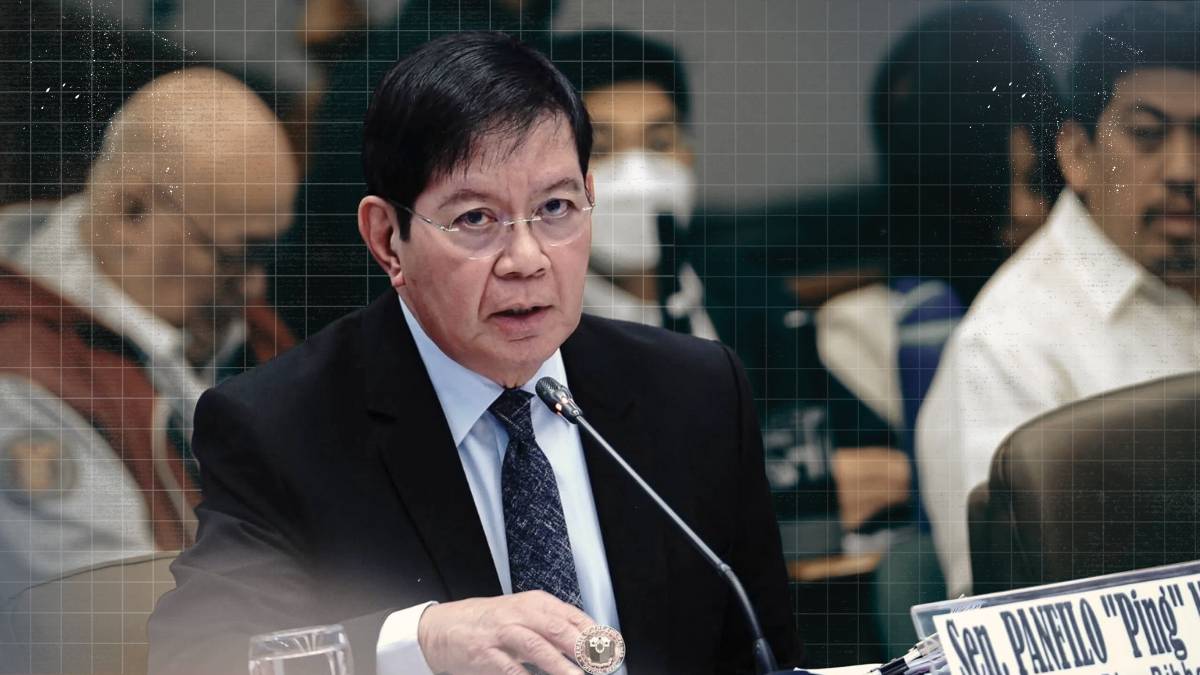
Senator Ping Lacson drew a sharp line in the budget debate, likening kickback-driven “allocables” to attempted robbery—a comparison meant to underscore how public funds can be coerced or siphoned before they ever serve their purpose.
Lacson explained that “allocables” become problematic when they are structured not for service delivery but to guarantee kickbacks. In such cases, he said, the act resembles an attempt to take public money through pressure, manipulation, or pre-arranged cuts—regardless of whether the scheme ultimately succeeds.
The senator’s remarks come amid heightened scrutiny of budget practices, where discretionary items and project insertions can create openings for abuse. Lacson stressed that transparency and documentation are the only antidotes: clear project lists, traceable approvals, and consequences when standards are breached.
Importantly, the statement framed the issue as systemic rather than personal. The danger, he warned, is normalizing practices that treat the national budget as negotiable spoils instead of a public trust. Stopping such attempts early—before money moves—protects both institutions and citizens.
As deliberations continue, the message is blunt but procedural: budgets should fund services, not schemes.
Quiet takeaway: When money is cornered for kickbacks, the crime begins—even if the cash hasn’t left the vault.