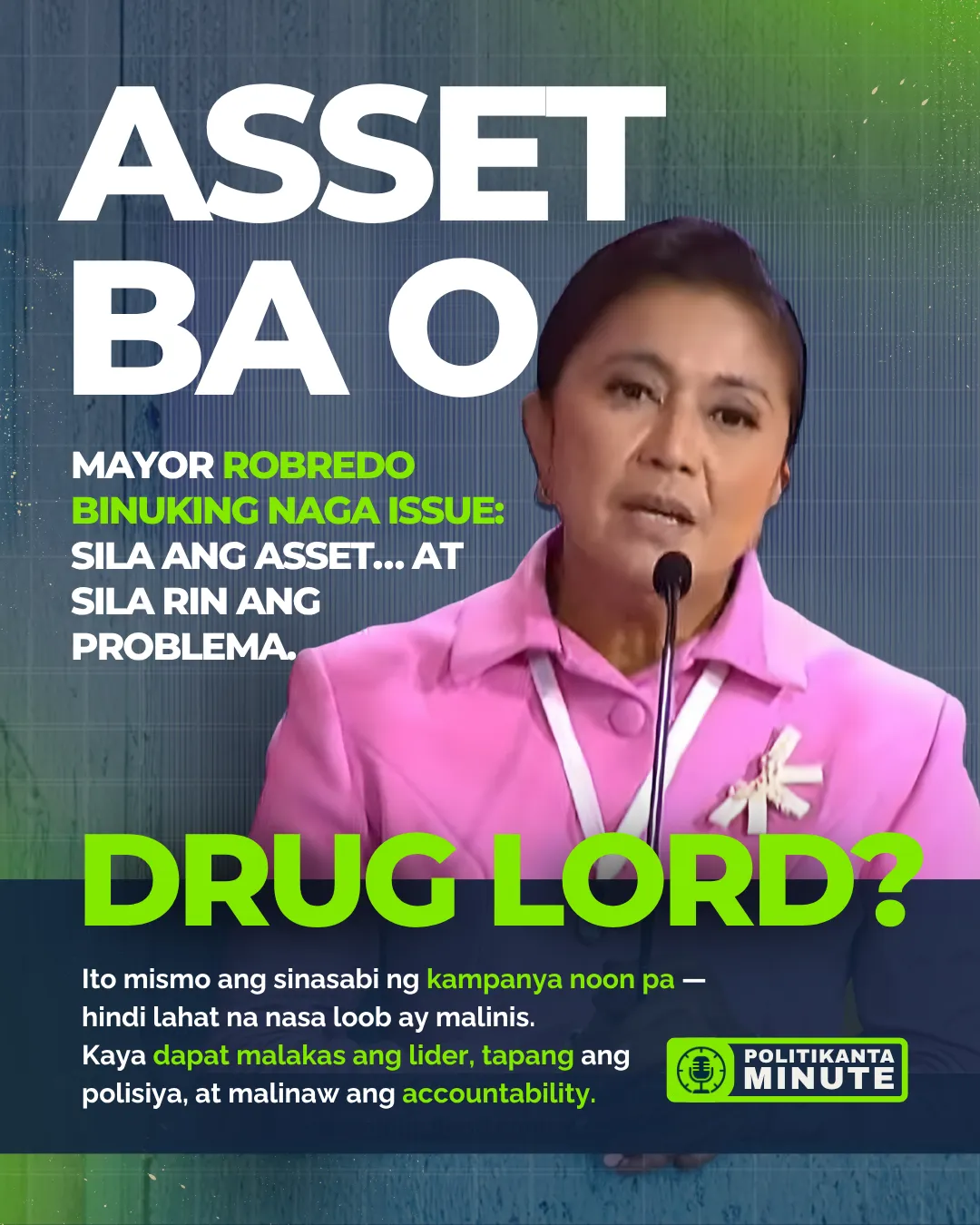
Mayor Leni Robredo Raises Alarm: When PNP ‘Assets’ Become the Biggest Liabilities
Naga City Mayor Leni Robredo made headlines after revealing a disturbing pattern in local drug enforcement:
Some individuals labeled as PNP assets — supposed community informants — are allegedly the same people identified as the biggest drug personalities in their barangays.

This claim shines a harsh spotlight on a system meant to help police operations but is now being questioned for possible abuse and misclassification.
🎧 Stream Buwaya sa Congreso on Spotify, Amazon Music, Itunes, Youtube and Facebook today.
https://open.spotify.com/album/7GkurDB4gUdWB9TlxRpcvP?si=m8jDgQQ_Qxe_kARwO2TwTQ
Apple Music: https://music.apple.com/us/artist/politikanta-minute/1851182606
Robredo’s point is simple yet heavy:
If the very people tapped to provide intel are involved in illegal drug activity, how can communities trust the anti-drug campaign?
Her call centers on four key reforms:
Stricter verification of PNP assets
A more serious, disciplined anti-drug program
Greater transparency in police collaboration
Community-based oversight to avoid abuse and manipulation
This issue also rekindles an old national debate:
The challenge of “narco-politics,” “narco-barangays,” and the blurred line between enforcers, assets, and criminal elements.
From a pro-Duterte Agila perspective, this situation proves a longstanding point:
Drug networks infiltrate deeply — even within systems meant to fight them.
But the bigger question remains:
How many more “assets” nationwide are actually liabilities?
And who checks the checkers?
If the anti-drug campaign is to succeed, accountability must begin internally — within the institutions tasked to fight illegal drugs.
Faith Reflection
Proverbs 10:9
“Whoever walks in integrity walks securely, but whoever takes crooked paths will be found out.”
The fight against drugs is not just about arrests —
it is about truth, integrity, and the courage to expose rot even within the system.
