
Migrants Interviewed in Ceuta Describe Economic Hardship as U.S. Aid to Morocco Draws Attention
Video From Ceuta Sparks Discussion About Migration and Foreign Aid
A video shared on social media by content creator Nick Shirley is drawing attention after he interviewed migrants in Ceuta, the Spanish enclave bordering Morocco.
In the video, several migrants said they left Morocco because they believed they had limited access to education, food, and economic opportunities.
Their comments quickly spread online, prompting renewed debate about migration, poverty, and international assistance.
The migrants' statements represent their own experiences and have not been independently verified.
U.S. Financial Assistance Comes Into Focus
The viral post also questioned how U.S. financial assistance to Morocco is being used.
According to ForeignAssistance.gov, Morocco continues to receive U.S. assistance through a combination of economic development, governance, education, and security programs.
Recent funding totals reported by the U.S. government include approximately:
2024: about $76 million
2025: about $74 million in reported assistance (with data subject to updates)
Previous years have also included significant assistance through multiple U.S. agencies.
What Does the Aid Support?
U.S. foreign assistance to Morocco is not provided as unrestricted cash to individual citizens.
Instead, funding is allocated across various programs, including:
Economic development
Education initiatives
Public health
Security cooperation
Counterterrorism
Military assistance
Governance and institutional support
Different U.S. agencies administer these programs in partnership with Moroccan institutions and international organizations.
Why Are People Still Leaving?
Receiving international aid does not necessarily eliminate poverty or prevent migration.
Migration experts note that people often leave their home countries because of a combination of factors, including:
unemployment,
income inequality,
limited opportunities,
family circumstances,
and hopes for better economic prospects abroad.
Recent events in Ceuta have also been influenced by online misinformation, legal developments, and smuggling networks, according to reporting by international news organizations.
Why This Story Matters
The viral interview has renewed public discussion about two separate but related issues:
the personal experiences of migrants attempting to reach Europe, and
how international aid is distributed and evaluated.
While some online commentators questioned whether aid is effectively reaching those in need, determining the impact of foreign assistance requires examining how funds are allocated, managed, and measured rather than relying on individual anecdotes alone.
Key Takeaways
Migrants interviewed in Ceuta described economic hardship and limited opportunities in Morocco.
Their comments reflect personal accounts and were not independently verified.
Morocco receives U.S. foreign assistance for multiple sectors, including economic development and security.
The viral discussion has prompted renewed questions about migration and the effectiveness of international aid.
Frequently Asked Questions
How much U.S. assistance does Morocco receive?
According to ForeignAssistance.gov, Morocco receives tens of millions of dollars annually through programs administered by several U.S. government agencies. Funding levels vary by fiscal year.
Does U.S. aid go directly to Moroccan citizens?
Generally, no. U.S. foreign assistance is typically directed toward government partnerships, development projects, humanitarian initiatives, and security cooperation rather than direct cash payments to individuals.
Why are migrants leaving Morocco?
People migrate for many reasons, including economic hardship, unemployment, conflict, family reunification, and hopes for better opportunities. Individual experiences differ.
Editorial Note
This article reports on statements made by migrants in a publicly shared interview and includes publicly available information regarding U.S. foreign assistance to Morocco. The migrants' claims reflect their personal experiences and have not been independently verified. The article does not conclude that foreign assistance is being misused.
U.S. Senate Blocks War Powers Limit After Trump Pressure Over Venezuela Policy
January 15, 2026•1 min read
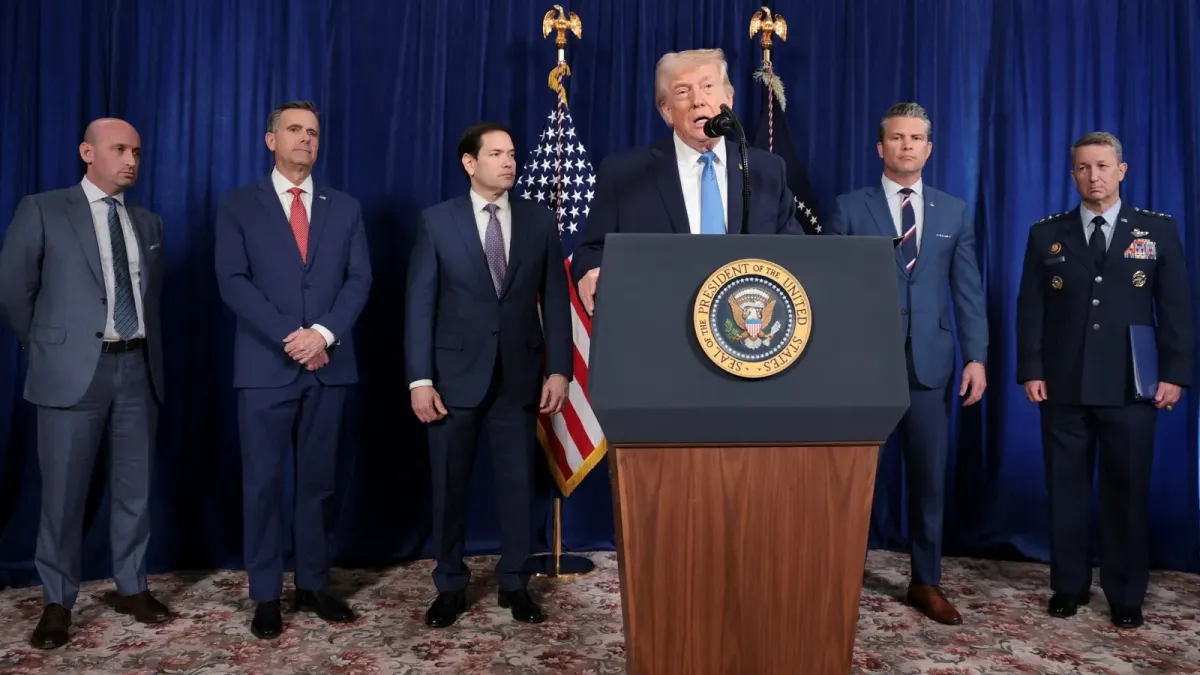
The U.S. Senate narrowly rejected a rare war powers resolution this week that would have restricted President Donald Trump’s ability to undertake further military action regarding Venezuela without explicit congressional approval. The final vote ended 50–50, with Vice President J.D. Vance casting the tie-breaking vote to defeat the measure.
The resolution was initially advanced in early January with bipartisan support after the Trump administration’s surprise military raid in Venezuela earlier this month — an operation that resulted in the capture of Venezuelan leader Nicolás Maduro. Opponents of the resolution argued that there were currently no U.S. troops on the ground and that the measure was unnecessary. Key Republican senators Josh Hawley and Todd Young reversed their support under pressure from the White House and assurances from administration officials that there were no plans for further ground engagements.
Supporters of the resolution, including some Senate Democrats and a handful of Republicans, had framed the effort as an important constitutional check on executive military authority. They argued that even limited or undefined military action overseas still requires congressional oversight, especially after an operation of such consequence. Critics countered that the action in Venezuela was legally justified and not equivalent to a full-scale war needing formal authorization.
The failed resolution highlights deepening tensions over the balance of war powers between the executive and legislative branches of the U.S. government — a debate that could have implications for future conflicts and foreign policy decisions beyond Venezuela.