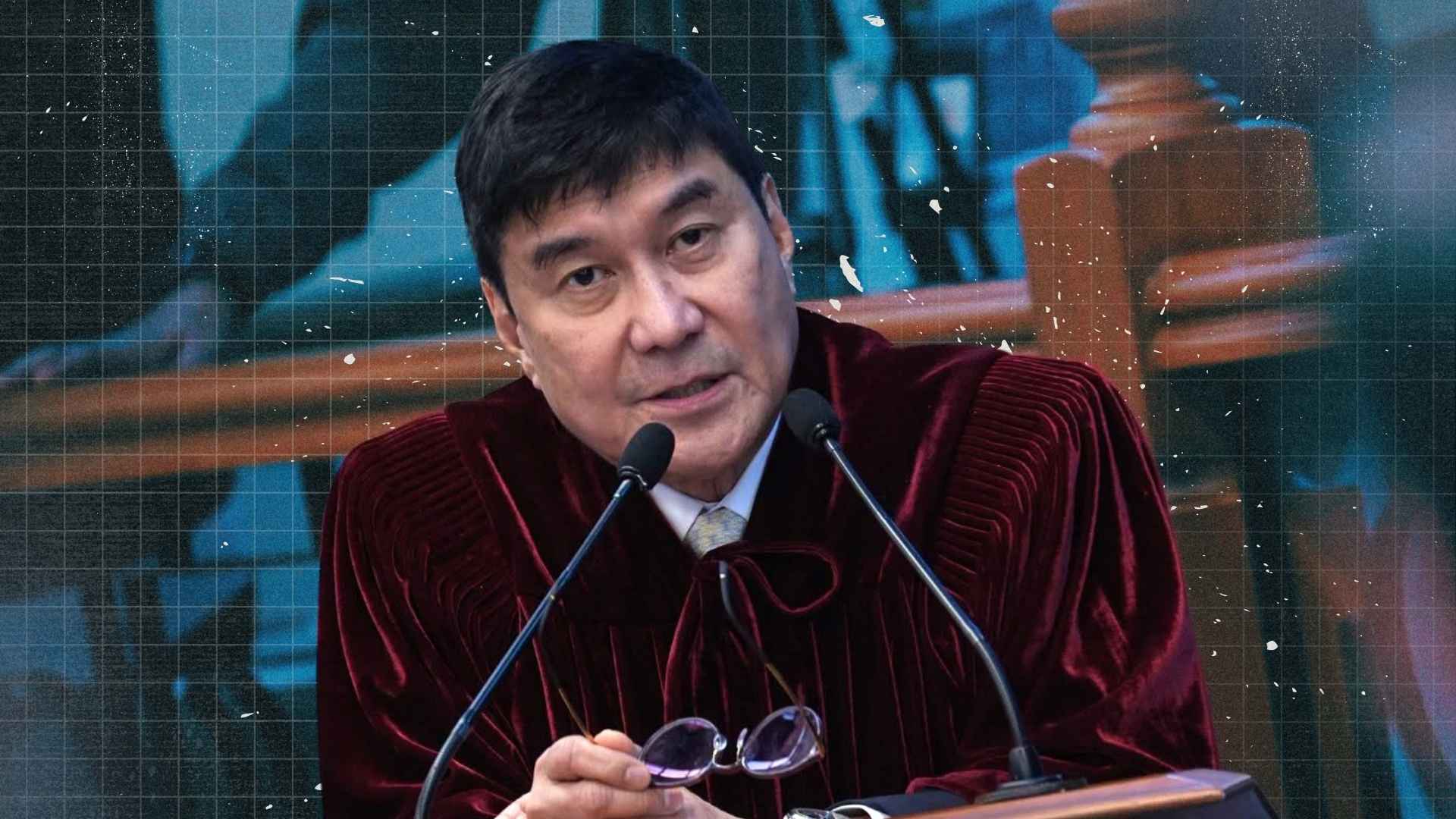
“NAKAKAHALATA NA KAMI!” — RAFFY TULFO QUESTIONS UNEQUAL SPEAKING TIME IN IMPEACHMENT COURT
“NAKAKAHALATA NA KAMI!” — RAFFY TULFO QUESTIONS UNEQUAL SPEAKING TIME IN IMPEACHMENT COURT
Senator Says Two-Minute Limit Should Apply Equally to Majority and Minority Senator-Judges
A new point of tension emerged inside the Senate impeachment court as Sen. Raffy Tulfo questioned what he described as an apparent difference in the amount of time given to senator-judges from the majority and minority.
Tulfo raised the issue during the ongoing impeachment trial of Vice President Sara Duterte, saying he had noticed that some senator-judges appeared to be given more time to speak beyond the prescribed two-minute limit.
“Nakakahalata na kami.”
Tulfo further questioned why the two-minute limit appeared to be enforced more strictly on some members while others were allowed to continue speaking.
“Pag sa majority, 2 minutes pinipindot na nang pinipindot nito... pag sa minority, umaabot na ng 5 minutes, 10 minutes. Dapat pag 2 minutes, 2 minutes!”
The senator's remarks immediately put the spotlight back on one of the most sensitive issues surrounding the impeachment proceedings: whether the rules are being applied consistently to all senator-judges.
In any proceeding involving the highest officials of the country, rules are not merely technical details.
They are supposed to provide structure.
They are supposed to protect fairness.
And most importantly, they are supposed to ensure that every participant is treated under the same standard.
Tulfo's complaint raises a straightforward question:
If the rule says two minutes, should everyone be limited to two minutes?
From the perspective of procedural fairness, consistency matters.
If one senator is repeatedly reminded that time has expired while another is allowed to continue for several more minutes, it can create the perception that the rules are being applied differently.
But perception and proof are two different things.
Whether there was actually unequal enforcement of the time limit is ultimately something that can be determined by reviewing the proceedings and the rulings of the presiding officer.
The impeachment court, meanwhile, has the responsibility to maintain order while allowing senator-judges enough opportunity to raise questions and make relevant manifestations.
That balance is not always easy.
An impeachment trial is unlike an ordinary legislative session.
The stakes are extraordinarily high.
The public is watching.
And every statement made inside the chamber can potentially influence how the proceedings are understood outside the Senate.
But precisely because the stakes are so high, the appearance of fairness becomes just as important as fairness itself.
The rules must not only be followed.
They must also be seen to be followed consistently.
Tulfo's remarks therefore raise an issue that goes beyond his personal frustration.
The bigger question is whether every senator-judge—regardless of political affiliation or position—is being given the same opportunity to speak within the same procedural limits.
Because if the clock says two minutes, then the public may reasonably ask:
Shouldn't two minutes mean two minutes for everyone?
As the impeachment trial continues, the Senate impeachment court faces the difficult task of maintaining order, protecting due process, and ensuring that the proceedings remain focused on the allegations against the Vice President.
The challenge is not simply to finish the trial.
It is to conduct it in a manner that leaves the public confident that the rules were applied fairly.
Because when the issue is accountability, the process itself must also be accountable.
📖 EXEGESIS BIBLE VERSE
“You shall not show partiality in judgment. You shall hear both small and great alike.”
— Deuteronomy 1:17
This principle speaks directly to the importance of impartiality.
Justice cannot be based on who is speaking.
It cannot depend on political affiliation.
And it cannot change depending on whether someone belongs to the majority or minority.
The standard should be the same.
In the context of the impeachment trial, this principle reminds us that rules should be applied consistently.
If the proceedings have established a time limit, every senator-judge should understand what that limit means.
At the same time, fairness also requires that legitimate questions be given proper consideration.
The goal should never be to silence one side or favor another.
The goal should be to ensure that the truth has a fair opportunity to be heard.
Because when people believe that the rules are being applied equally, they are more likely to trust the process.
Impartiality is not merely about what is fair. It is about making fairness visible.
📌 EDITOR'S NOTE
This article reports Sen. Raffy Tulfo's comments regarding the enforcement of speaking-time limits during the impeachment trial. His characterization of the time given to majority and minority senator-judges reflects his statement and has not been independently verified in this report. The presiding officer's rulings and the official record of proceedings remain the proper basis for determining whether the time limits were applied inconsistently.
Hontiveros Visits Pag-asa Island Ahead of Birthday, Brings Services to Residents
February 21, 2026•1 min read

Senator Risa Hontiveros traveled to Pag-asa Island in Kalayaan, Palawan, ahead of her birthday, describing the visit as an “advance blowout” for residents of the remote community.
Instead of a traditional celebration, Hontiveros said she chose to spend time with locals on Pag-asa Island, bringing various government services and assistance to the island’s residents.
Pag-asa Island, part of the Kalayaan municipality, lies within the contested West Philippine Sea region and is home to a small civilian population, alongside military personnel stationed there.
Bringing Services to a Remote Community
During the visit, Hontiveros reportedly facilitated:
Medical services and consultations
Basic social assistance
Outreach programs for residents
Public officials visiting Pag-asa often emphasize the importance of supporting Filipino civilians living in geographically isolated and disadvantaged areas.
Symbolism of the Visit
Pag-asa Island holds both strategic and symbolic importance for the Philippines due to its location in disputed waters.
Visits by national leaders and lawmakers typically underscore:
Civilian presence in the area
Government support for residents
Commitment to national sovereignty
While framed as a birthday-related outreach, the visit also reinforces the presence of Philippine officials in the region.
Governance and Optics
Political outreach in remote territories can serve dual purposes:
Delivering tangible public services
Demonstrating engagement with frontline communities
In areas like Pag-asa, where residents face logistical challenges and limited access to services, such visits can provide immediate assistance while drawing public attention to local needs.
The Bigger Context
Pag-asa Island is one of the few Philippine-held features in the Spratly Islands with a civilian population.
Ensuring continued civilian support and infrastructure development remains a long-term government objective amid broader regional maritime tensions.
Hontiveros’ visit adds to a pattern of officials conducting on-the-ground engagements in strategic areas.
For residents, however, the immediate concern remains practical:
Access to healthcare, livelihood, and basic services.