No Work, No Pay? Senate Ethics Issue Puts Spotlight on Bato
A new development inside the Senate is raising questions not just about accountability—but about standards in public service.
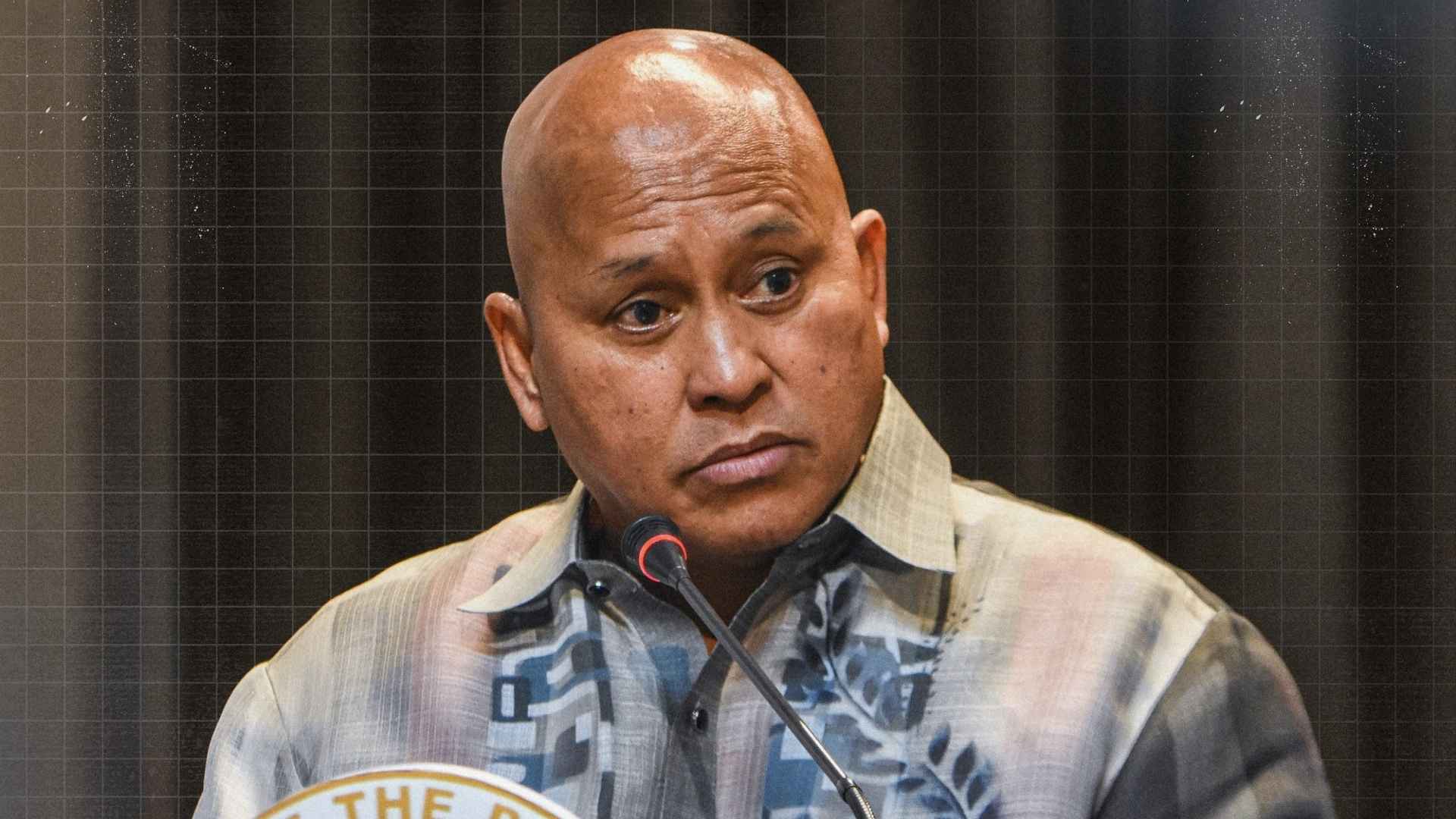
According to Senate ethics committee chair JV Ejercito, Senator Bato dela Rosa is now considering waiving his salary and allowances. The information reportedly came from Dela Rosa’s camp following discussions surrounding his extended absence and a pending ethics concern.
Here’s what this really means…
At first glance, the idea of voluntarily giving up compensation may appear as a gesture of accountability. In a system where public officials are expected to serve actively, the concept of “no work, no pay” resonates strongly with many citizens.
But this raises a bigger issue…
Should accountability be voluntary—or automatic?
The call for Dela Rosa to forgo his compensation didn’t come out of nowhere. It followed concerns tied to his months-long absence, prompting questions about whether existing mechanisms are strong enough to enforce responsibility without relying on personal decisions.
Why this matters…
Public trust is built not only on actions taken—but on consistency. When standards are applied unevenly, it creates a perception gap that can erode confidence in institutions.
At the same time, the willingness to consider such a move can also be seen differently.
Supporters may interpret it as a sign of humility or recognition of public sentiment. Critics, on the other hand, may argue that such decisions should not be optional in the first place.
Public reaction has been divided.
Some netizens argue that accountability should be institutional, not situational. Others believe that personal initiative still holds value, especially in a political landscape often criticized for lacking it.
Here’s where the conversation deepens…
The situation highlights an ongoing tension between legal obligation and moral responsibility. While laws define what must be done, public expectations often go further—demanding what should be done.
And in moments like this, the gap between the two becomes visible.
Whether this leads to formal action, policy changes, or remains a symbolic gesture, one thing is clear:
The spotlight is no longer just on one individual—but on the system itself.
✝️ EXEGESIS BIBLE VERSE (WITH REFLECTION)
Luke 16:10
“Whoever can be trusted with very little can also be trusted with much…”
🧠 Exegesis:
This verse highlights the importance of faithfulness and integrity, even in small matters. Accountability is not measured only in major actions—but in everyday responsibilities.
🙏 Reflection:
Whether in leadership or ordinary life, consistency defines character. What we do when no one is watching often speaks louder than what we say in public.
Sotto Dismisses Claims of District Budget Cuts as “Black Propaganda” — But Questions Linger
November 29, 2025•5 min read
In the middle of heated Senate debates over the 2026 national budget, Senate President Vicente “Tito” Sotto III firmly denied allegations that he and Senate President Pro Tempore Ping Lacson were cutting or slashing district budgets.

Sotto called the accusations “pure black propaganda,” insisting that no reductions were made and that the Department of Finance chair can verify this.
According to Sotto, several district representatives from the House of Representatives have expressed uneasiness, believing their allocations were being trimmed at the Senate level. But Sotto clarified that this is simply a misunderstanding tied to the budget interpellation period — not evidence of a real cut.
“There is nothing happening here. We didn’t make cuts in any district. This is just part of interpellation,” Sotto said.
He also pointed out that those worried about their district allocations should consult the House appropriations chair instead of blaming the Senate leadership.
However, Sotto did not identify which House members were allegedly spreading the claims.
The controversy comes at a time when scrutiny of the national budget is intensifying — from duplicate DPWH projects to ballooning allocations in specific programs. With public distrust rising, even minor allegations can trigger major political storms.
As the Senate continues to fine-tune the 2026 General Appropriations Bill, Sotto maintains that the narrative of budget cuts is nothing more than politically motivated noise.
Bato’s Senate Absence Sparks New Questions as ICC Warrant Rumors Intensify
Senator Ronald “Bato” dela Rosa has been absent from the Senate since Nov. 10, missing hearings and foregoing his role as sponsor of the 2026 national budget for key security and defense agencies. His absence comes as rumors swirl that the International Criminal Court (ICC) has issued a warrant for his arrest over alleged crimes against humanity tied to the Duterte administration’s war on drugs.

Dela Rosa was expected to defend the budgets of the DND, DILG, NICA, and other major agencies, but Senate Finance Chair Sen. Sherwin Gatchalian took over the discussions. Gatchalian said he received a message from Dela Rosa’s staff saying the senator “could not defend” the agencies but offered no explanation.
The ICC has publicly stated that it has only “confirmed” one warrant — unrelated to the Philippines — yet officials like Ombudsman Samuel Martires and Justice Secretary Jesus Crispin Remulla previously acknowledged receiving inquiries about a supposed warrant for Dela Rosa.
The DFA has also noted that any warrant “may be sent directly to law enforcement agencies,” fueling further speculation.
Dela Rosa’s legal team maintains that no warrant has been officially served to him. The senator previously elevated the issue to the Supreme Court seeking a temporary restraining order to prevent any unverified enforcement — a petition the Court ultimately denied without confirming nor denying the alleged warrant.
For now, Dela Rosa remains out of the public eye, raising questions on whether his absence is precautionary, strategic, or simply coincidental. With budget hearings ongoing and public interest rising, both supporters and critics await clarity.
Judging by the political climate — and the ICC’s notoriously confidential procedures — silence does not necessarily mean safety nor guilt. What it guarantees is uncertainty.
Lacson: Bonoan Is the “Missing Link” That Can Tie Ex-Executive Secretary Bersamin to Flood-Control Mess
November 28, 2025•2 min read
MANILA, Philippines — Senator Panfilo “Ping” Lacson has identified former Public Works Secretary Manuel Bonoan as the “missing link” needed to clarify whether former Executive Secretary Lucas Bersamin played any role in the ballooning flood-control anomalies now under Senate investigation.

According to Lacson, Bonoan is the crucial figure who can verify if questionable fund releases, project approvals, and alleged irregular endorsements that happened under the Office of the Executive Secretary were ever connected to the flood-control allocations that lawmakers now call “the dirtiest playground in the budget.”
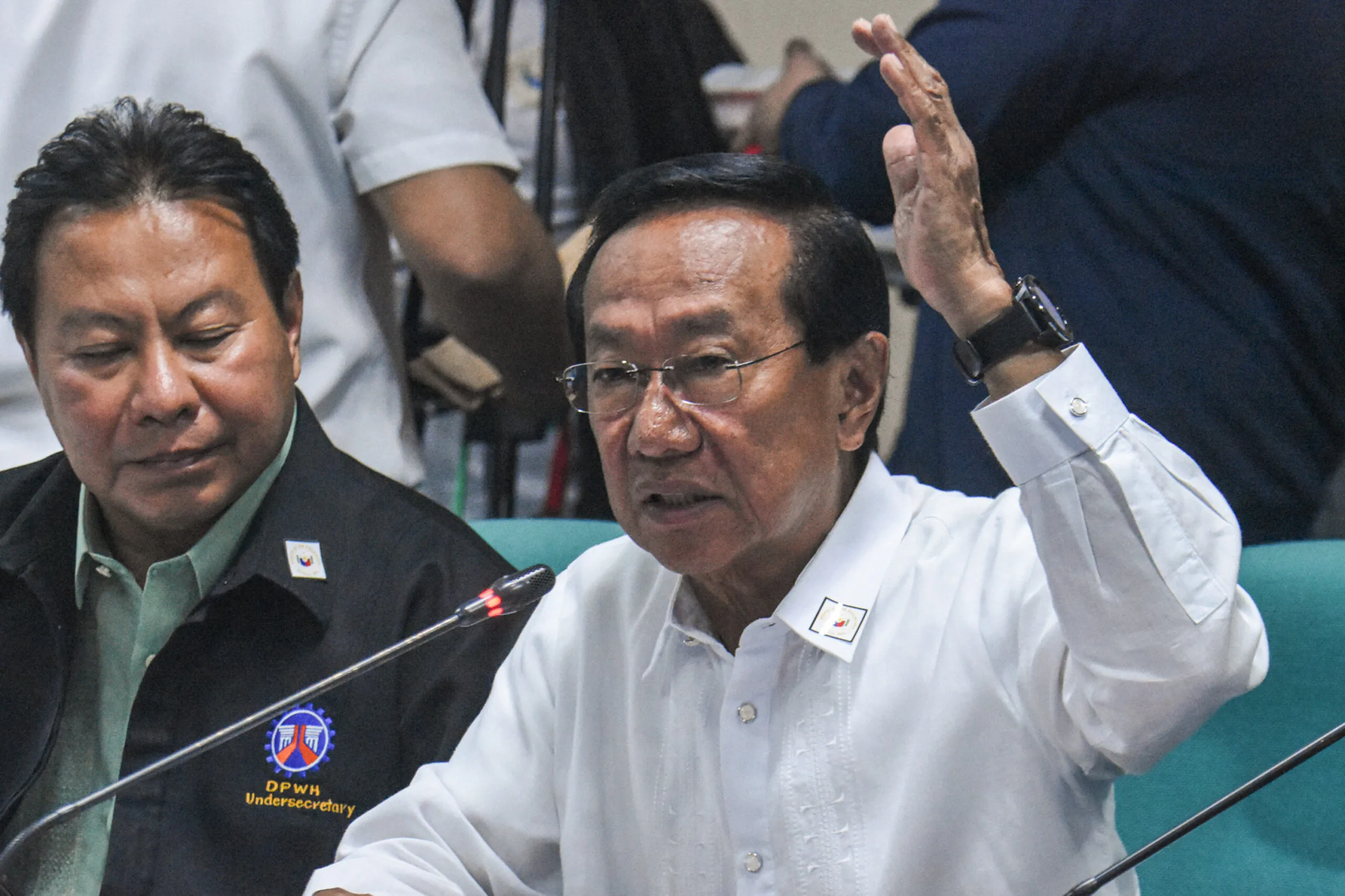
Bonoan previously sat at the top of DPWH when billions in flood-control funds surged across multiple regions — and when “duplicate projects,” “ghost works,” and mysteriously identical programs began appearing in congressional insertions.
Lacson stressed that only Bonoan can confirm whether Bersamin had any involvement or whether the anomalies were orchestrated solely within the DPWH chain of command.
But here’s the twist:
Bonoan has yet to testify.
And without his statement, the full picture remains incomplete.
Flood-Control Corruption: A Consistent Pattern
The Senate has so far uncovered patterns such as:
duplicate road & flood projects across multiple districts
identical project titles but different funding amounts
insertions funneled to specific contractors
sudden budget ballooning despite unchanged scopes
and ghost flood-control structures with no trace on-site
Billions of pesos remain unaccounted for — and investigators now believe the Office of the Executive Secretary may have been used as either a gateway… or a shield.
Lacson, known for dissecting budget anomalies down to the last centavo, said:
“Bonoan is the only one who can bridge these inconsistencies.”
Kung totoo ang sinasabi ni Lacson, may “link” talaga — pero kung hindi magsasalita si Bonoan, mananatiling ligaw na puzzle piece ang papel ni Bersamin.
Flood control ang pinakamaruming budget sector ngayon.
Paulit-ulit, taon-taon, bilyon-bilyon.
At kapag ganito kalaki ang pera, hindi lang engineer ang sangkot — may mas mataas na level na nag-aapruba, nagtatakip, at kumikita.
“For nothing is hidden that will not be disclosed.” — Luke 8:17
Sa huli, kahit gaano pa kalalim ang flood-control mafia, may araw din ang katotohanan.
Lacson calls Bonoan the “missing link” connecting Bersamin to flood-control anomalies.
Billions in questionable DPWH flood-control projects now under scrutiny.
Duplicate projects and ghost works repeatedly found across regions.
Bonoan’s testimony expected to clarify who approved or benefited from insertions.
Flood-control said to be “the dirtiest budget playground” today.
Senate investigators push for accountability at both DPWH and OES level.