
Ping Lacson Fires Another Sharp Remark Amid Senate Tensions
The ongoing Senate conflict took another dramatic turn after Senator Ping Lacson posted a statement that many online interpreted as a direct swipe at personalities involved in the escalating legitimacy battle inside the chamber.
On Sunday, Lacson referenced a well-known legal quote:
“When you’re strong on the law, pound the law. When you’re strong on the facts, pound the facts. When you’re weak on both… mag-Facebook live ka na lang.”
That final line instantly exploded online.
Because while Lacson did not directly mention names, many Filipinos quickly connected the remark to recent livestreams, public broadcasts, and online political exchanges dominating the Senate controversy.
And in typical Ping Lacson fashion, the message was brief —
but razor sharp.
Why The Quote Went Viral So Quickly
Part of what made the statement spread rapidly online was its timing.
For days, the Senate conflict has increasingly played out not only inside formal sessions —
but also through:
Facebook Lives,
press conferences,
online videos,
and public social media exchanges.
So when Lacson posted a quote suggesting that people “weak on both law and facts” resort to livestreams instead, many immediately interpreted it as political shade aimed at rival narratives surrounding the Senate leadership battle.
And because the quote mixed legal language with modern internet culture, it became highly shareable almost instantly.
Here’s What This Really Means…
This Senate conflict is no longer confined to institutional procedure.
It has now fully entered the age of political media warfare.
Every camp is battling not only through constitutional arguments —
but also through:
public perception,
viral clips,
livestream narratives,
and social media influence.
And Lacson’s statement reflects growing frustration among some political figures regarding how legal and constitutional disputes are increasingly being fought through online spectacle instead of purely formal institutional channels.
At the same time, the post also reveals how modern politics has changed dramatically.
Today, a Facebook Live can influence public opinion almost as powerfully as a formal Senate speech.
And politicians know it.
The Senate Conflict Is Becoming More Public Than Institutional
Traditionally, internal Senate disputes happened mostly behind closed doors or through official proceedings.
But the current crisis is unfolding almost entirely in public view.
Filipinos are now watching senators:
debate constitutional law online,
accuse each other publicly,
livestream their positions,
and fight for narrative dominance across social media.
That visibility has transformed the Senate conflict into something larger than parliamentary procedure.
It has become political entertainment, legal debate, and public relations warfare all at once.
And Lacson’s latest remark perfectly captured that reality.
The Undercurrent Quietly Present
Supporters aligned with the Duterte-friendly bloc online reacted differently to Lacson’s statement.
Some viewed it as an indirect attack against personalities defending the 13-vote legitimacy argument through livestreams and online explanations.
Others dismissed the remark as political sarcasm meant to undermine public constitutional discussion happening outside traditional institutions.
Meanwhile, neutral observers mostly focused on how openly personal and public the Senate conflict has now become.
And honestly, that may be the biggest story of all.
Public Reaction Online
Social media reactions exploded quickly:
“That was definitely aimed at someone.”
“Ping Lacson’s sarcasm is next level.”
“The Senate conflict has become social media warfare.”
“That Facebook Live line went viral instantly.”
“Politics now runs through livestreams.”
Others argued that public livestreams are legitimate tools for transparency and direct communication with citizens, especially during controversial political disputes.
Still, Lacson’s remark succeeded in dominating online conversation almost immediately.
Why This Matters Beyond Politics
Modern political power is no longer controlled only inside institutions.
It is also shaped online.
And the Senate conflict is becoming a perfect example of how constitutional debates, institutional crises, and public opinion now collide in real time through digital platforms.
That creates both opportunity and danger.
Because while social media can increase transparency and public engagement, it can also turn serious constitutional disputes into emotional spectacle driven by viral narratives instead of careful understanding.
And right now, the Philippines is watching that transformation happen live.
Exegesis Bible Verse
Proverbs 18:17
“The first to present his case seems right, till another comes forward and questions him.”
Exegesis Reflection
This verse reminds believers that truth requires careful examination, wisdom, and discernment.
Public arguments, emotional rhetoric, and viral statements may sound convincing at first, but justice and understanding demand patience, evidence, and accountability from all sides.
In moments of conflict, wisdom comes from seeking truth beyond noise and spectacle.
Senate Watch | Go Welcomes ₱700M Budget for Mati Airport Upgrade
January 15, 2026•2 min read
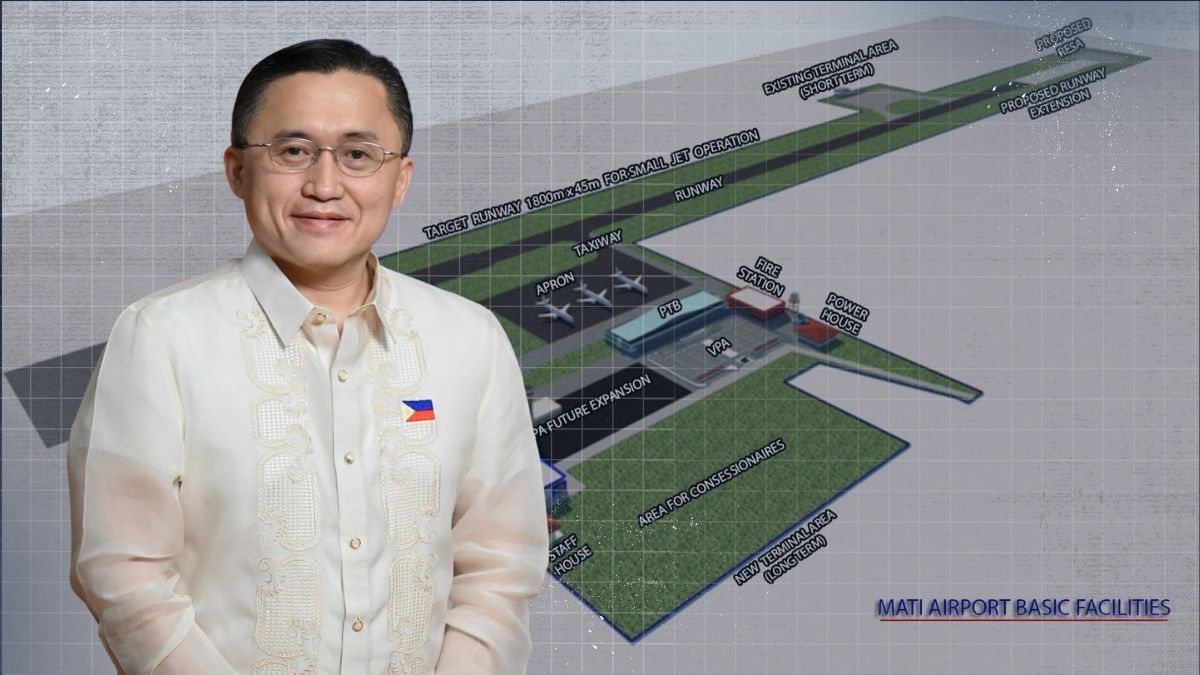
Senator Bong Go welcomed the proposed ₱700-million budget allocation for the improvement of Mati Airport, describing the move as a boost for regional connectivity and local development.
Go said upgrading the airport would strengthen access to Davao Oriental, improving mobility for residents, tourists, and emergency services. He noted that infrastructure outside major urban centers often determines how quickly communities can respond to health emergencies, disasters, and economic opportunities.
The funding is expected to cover runway upgrades, safety improvements, and facilities modernization—steps aimed at accommodating larger aircraft and increasing flight reliability. Supporters say these changes could help unlock tourism potential while making travel safer and more efficient.
For the senator, the allocation reflects a broader development approach: investing in provincial gateways to balance national growth. He stressed that infrastructure spending should not be Manila-centric and that airports in the regions play a critical role in inclusive progress.
As the budget process continues, the proposal highlights how targeted infrastructure funding can translate into long-term gains for communities often at the periphery of national planning.
Quiet takeaway: When regional gateways improve, opportunity travels farther.

Senate Watch | Go Pushes Expanded Access to Health Care
Senator Bong Go is renewing his push to expand access to health care, calling for stronger systems that bring medical services closer to ordinary Filipinos—especially those in remote and underserved communities.
Go’s advocacy centers on improving access to hospitals, specialty care, and government medical assistance programs. He argues that health care should not depend on geography or income, noting that many Filipinos still travel long distances or wait extended periods just to receive basic treatment.
The senator has consistently supported the expansion of public hospitals and the strengthening of programs that subsidize medical costs. According to Go, preventive care, early diagnosis, and timely treatment not only save lives but also reduce long-term health spending for both families and the government.
The proposal aligns with broader discussions in the Senate on health system resilience, particularly after the strain exposed by recent public health crises. Lawmakers have acknowledged that while legislation exists, implementation gaps—such as hospital capacity, staffing, and access to equipment—remain a challenge.
As debates continue, Go’s position underscores a simple policy direction: make health care reachable, affordable, and practical for everyday citizens—not just available on paper.
Quiet takeaway: Health care works best when it’s closest to the people who need it most.