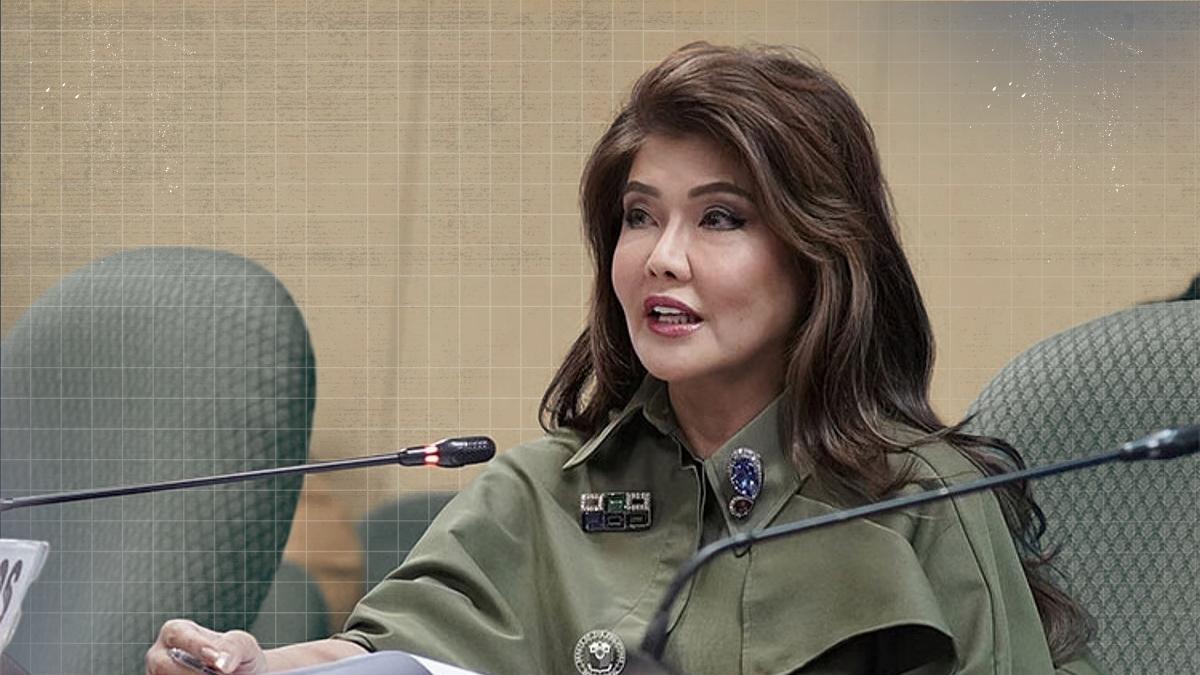
🚨 Political Watch | Sotto: Imee Marcos’ Removal as Foreign Relations Chair Triggered Ouster Plot
When Committee Chairs Become Flashpoints: How Imee Marcos’ Removal Sparked Senate Turmoil
Senate President Tito Sotto revealed that the removal of Senator Imee Marcos as chair of the Senate Committee on Foreign Relations served as a trigger for what he described as an ouster plot within the upper chamber.
Sotto’s disclosure adds a crucial piece to the puzzle behind recent leadership rumors, coup chatter, and behind-the-scenes maneuvering in the Senate. According to him, the leadership tension did not emerge in a vacuum—it followed a concrete decision that altered internal power dynamics.

Why Committee Chairmanships Matter
In the Senate, committee chairmanships are not ceremonial. They come with:
Agenda-setting power
Oversight authority
Visibility and influence
Control over hearings and reports
Foreign Relations, in particular, is a high-stakes portfolio, covering diplomacy, treaties, security issues, and relations with major powers. Losing that post is not just a demotion—it’s a redistribution of influence.
By pointing to Marcos’ removal as a catalyst, Sotto framed the leadership unrest as a reaction to institutional displacement, not mere personal ambition.
From Committee Shift to Leadership Question
Following the committee reshuffle, whispers began circulating about:
destabilizing the current Senate leadership,
floating alternative Senate presidents,
and even term-sharing proposals.
Sotto said these moves gained momentum after Marcos lost the Foreign Relations chair, suggesting that discontent over committee assignments quickly escalated into a broader power struggle.
Importantly, Sotto maintained that no formal ouster move succeeded, emphasizing that leadership changes require numbers—not narratives.
Imee Marcos’ Position in the Senate
Imee Marcos is a seasoned lawmaker with strong political lineage and vocal positions, particularly on foreign policy and sovereignty issues. Her tenure as Foreign Relations chair placed her at the center of diplomatic discourse.
Her removal, therefore, was bound to reverberate—not only within her political circle, but across Senate blocs attentive to balance-of-power signals.
While Marcos herself has not publicly framed the issue as an ouster trigger, Sotto’s remarks reveal how internal reactions can spiral beyond the original decision.
Not a Coup—But a Pressure Point
Sotto stopped short of calling the situation a full-blown coup. Instead, his description suggests a pressure campaign—a sequence where dissatisfaction over one issue snowballed into broader leadership agitation.
Political analysts note that in parliamentary-style institutions, this is a familiar pattern:
Committee reshuffle
Disaffected bloc tests support
Leadership rumors surface
Compromise or stabilization follows
In this case, the Senate appears to have reached the stabilization phase—at least for now.
What This Reveals About Senate Politics
This episode highlights several realities:
Committee assignments are deeply political
Leadership stability depends on constant coalition management
Small shifts can have outsized ripple effects
It also underscores why Senate leaders often tread carefully with reshuffles. Every move sends a signal, intended or not.
What Happens Next
With leadership intact and the Foreign Relations committee already reconstituted, attention shifts to whether:
grievances fade, or
alliances quietly realign for future confrontations.
For now, Sotto’s disclosure reframes the narrative: this wasn’t random chaos—it was cause and effect inside a political institution.
Quiet takeaway: In the Senate, power rarely moves all at once—it shifts when a key chair is pulled.
Bible verse anchor:
Proverbs 20:18 — “Plans succeed with good counsel; with many advisers they succeed.”