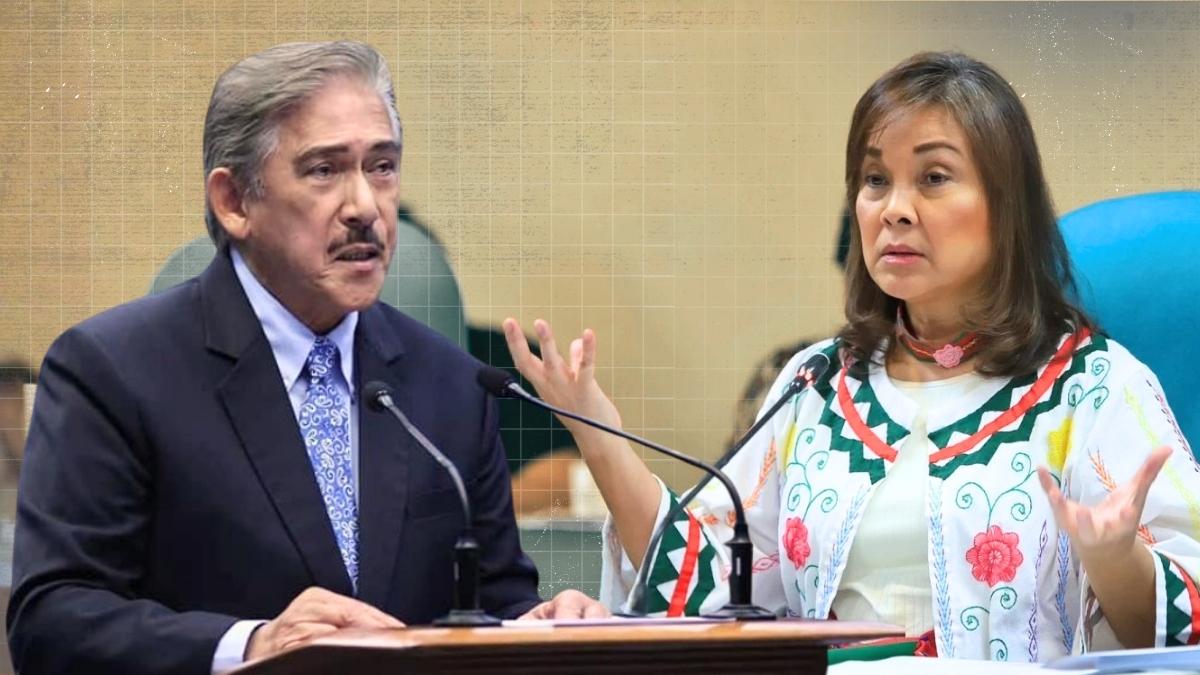
🚨 Political Watch | Term-Sharing Floated Between Sotto, Legarda Amid Coup Chatter
Power Plays in the Senate: Why Term-Sharing Is Even Being Talked About
Fresh whispers inside the Philippine Senate suggest a possible term-sharing arrangement between Tito Sotto and Loren Legarda, surfacing at the same time as rumors of leadership destabilization—often labeled, loosely, as “coup talks.”
While no formal move has been confirmed, the very fact that term-sharing is being floated reveals something deeper: the Senate is navigating internal fractures at a politically volatile moment.
What Is Term-Sharing—and Why Now?
Term-sharing is an informal power-sharing concept where leadership is divided across a fixed period to maintain unity, avoid open rebellion, or placate competing blocs. It is not illegal. It is not unprecedented. But it is always a signal of tension.
In this case, sources say the idea emerged as a way to:
Calm destabilizing rumors
Prevent an outright leadership challenge
Maintain operational continuity in the Senate
In plain language: when leaders feel secure, term-sharing is unnecessary.
Why Sotto Is at the Center
As sitting Senate President, Sotto has recently found himself responding to:
Coup rumors
Open criticism over impeachment-related remarks
Friction between majority and minority blocs
Despite publicly brushing off destabilization claims, the discussion of term-sharing suggests that numbers inside the chamber may be more fluid than they appear.
Sotto himself has consistently denied any effort to unseat him. Yet Philippine politics has taught us one lesson repeatedly: denials don’t stop maneuvering—they just push it behind closed doors.
Why Legarda’s Name Matters
Loren Legarda is not a random name in this equation.
She is:
A senior lawmaker
A consensus figure with cross-bloc appeal
Seen as less polarizing during moments of institutional strain
Floating her name signals a search for balance, not revolution. In coup scenarios, compromise candidates are often introduced to avoid escalation.
That alone tells us this isn’t just gossip—it’s political risk management.
Is This Really a “Coup”?
Calling it a coup may be dramatic. What’s more accurate is leadership recalibration.
There are no tanks. No mass defections. No emergency sessions.
But there is:
Quiet counting of votes
Testing of loyalty
Strategic leaks to gauge reaction
In parliamentary politics, power rarely shifts loudly at first.
The Bigger Picture: Senate Stability vs National Uncertainty
This discussion is unfolding amid:
Multiple impeachment threats at the national level
Judicial-legislative friction
Heightened political polarization
The Senate, traditionally the stabilizing chamber, now finds itself absorbing pressure from every direction. Term-sharing, in this context, is less about ambition—and more about institutional survival.
What Happens Next
Three likely scenarios:
Status Quo Holds
The term-sharing idea quietly dies after serving its purpose: flushing out dissent.Backroom Compromise
A time-bound leadership deal prevents a messy floor fight.Leadership Test
A formal challenge emerges, forcing senators to show their numbers publicly.
For now, the talk itself is the story.
Because in politics, you don’t float ideas unless you need them.