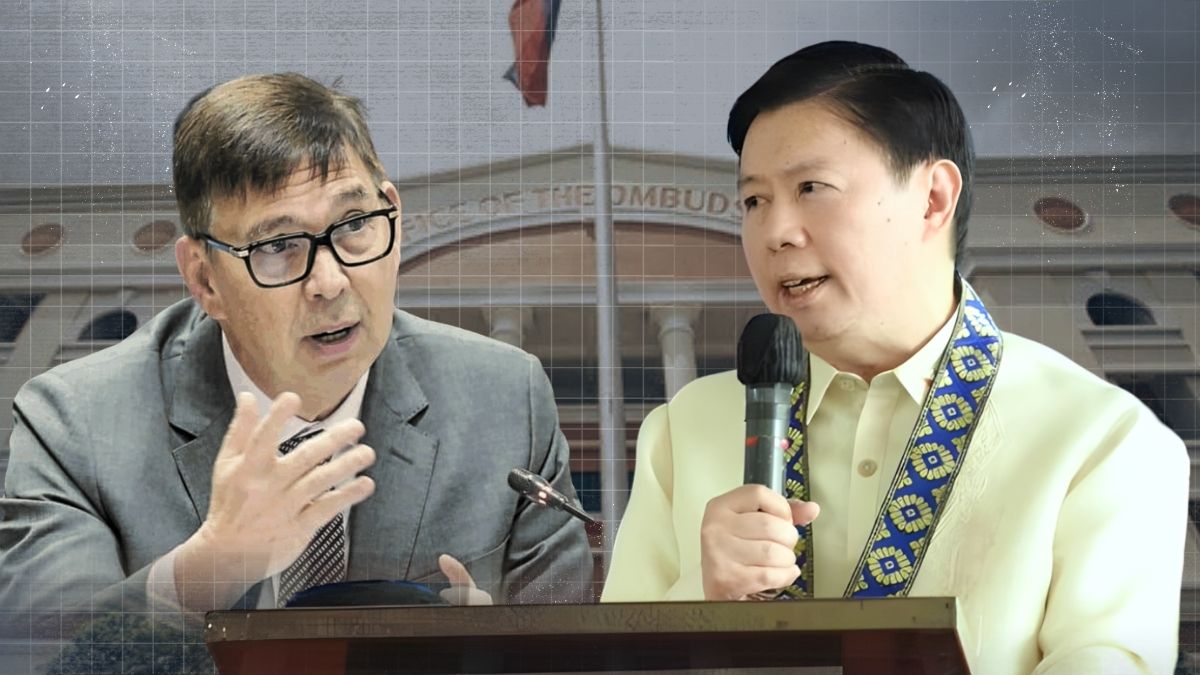
Recto, Ex-PhilHealth Executive Sued Over ₱60B Fund Transfer
A Duterte-aligned civil society coalition has filed a plunder and technical malversation complaint against Executive Secretary Ralph Recto and former PhilHealth president Emmanuel Ledesma Jr., intensifying the legal battle over the controversial ₱60-billion transfer of PhilHealth reserve funds to the national treasury.

The complaint was lodged before the Office of the Ombudsman, alleging violations of the Anti-Graft and Corrupt Practices Act, technical malversation, and abuse of discretion in connection with the April 2024 remittance of PhilHealth’s unused subsidies.
Allegations raised
According to the 15-page affidavit, the complainants argue that Recto, then serving as Finance Secretary, “knowingly and unlawfully” ordered the transfer of PhilHealth reserve funds to finance unprogrammed appropriations under the 2024 national budget.
They further allege that former PhilHealth president Ledesma complied with what they described as an unlawful directive, thereby making both officials liable for technical malversation and plunder.
The complaint cites provisions of the National Health Insurance Act of 1995, which state that PhilHealth’s reserve funds should not revert to the national treasury and must be used exclusively for health insurance benefits and institutional stability.
Supreme Court ruling and legal context
The controversy stems from a December 2024 Supreme Court ruling that ordered the return of ₱60 billion previously transferred from PhilHealth to the national treasury and permanently barred the remittance of the remaining ₱29.9 billion without new legislative authorization.
However, the High Court did not rule on criminal liability, emphasizing that the consolidated petitions before it were limited to determining grave abuse of discretion, not criminal culpability.
Several justices explicitly noted that Recto incurred no criminal liability for ordering the remittance, as it was done pursuant to existing budgetary authority and congressional mandates at the time.
Recto’s response: “No criminal liability”
Recto welcomed the filing of the complaint, stating that it provides an opportunity to once again clarify the legality of his actions.
He cited the Supreme Court’s opinion that, as Finance Secretary, he acted in good faith and in accordance with congressional authority in ordering the transfer of unused PhilHealth subsidies.
“I respect every citizen’s right to seek redress before the courts,” Recto said, adding that he will fully cooperate with the Ombudsman’s investigation.
He reiterated that the funds transferred were unused government subsidies, not member contributions, and that PhilHealth’s benefit packages and operations were not compromised by the remittance.
Not the first legal challenge
This is not the first case filed against Recto in relation to the PhilHealth fund transfer. Previous petitions questioning the same transaction were dismissed or limited in scope by the Supreme Court.
Legal experts note that while administrative and civil accountability may still be examined by oversight bodies, the High Court’s pronouncements significantly narrow the scope for criminal prosecution.
Broader implications
The case has reignited public debate on fiscal discipline, healthcare funding, and accountability at the highest levels of government.
Critics warn that replacing returned funds through new budget allocations could place additional pressure on taxpayers, while supporters argue that the remittance corrected inefficiencies and reinforced congressional control over public funds.
As the Ombudsman’s preliminary investigation proceeds, the case is expected to test how far accountability mechanisms can go when executive actions intersect with congressional authority and Supreme Court rulings.
For now, Recto maintains his stance: the law was followed, the courts have spoken, and due process should take its course.

Plunder Complaint Filed Over ₱60B PhilHealth Funds: Questions Mount Under BBM Administration
A new plunder complaint has been filed at the Office of the Ombudsman, intensifying public scrutiny over the handling of billions in public health funds under the administration of President Ferdinand Marcos Jr..

The complaint names Executive Secretary Ralph Recto and former PhilHealth President Manny Ledesma in connection with the alleged illegal transfer of ₱60 billion in PhilHealth funds to the National Treasury. The filing was initiated by the Save the Philippines Coalition and formally lodged on December 22, 2025, according to reports by SMNI Integrated News.
At the heart of the issue is the claim that funds specifically earmarked for healthcare services were moved without proper authority or justification. Critics argue that PhilHealth contributions are not surplus funds but pooled resources meant to directly support Filipinos—especially the poor, elderly, and vulnerable—during medical emergencies.
Why This Matters
PhilHealth serves as the backbone of the country’s public healthcare system. Any perceived misuse of its funds raises serious ethical and governance concerns. For many Filipinos, PhilHealth is not optional—it is their last line of defense against crippling medical expenses.
Legal experts note that plunder cases carry a high threshold, requiring proof of ill-gotten wealth amounting to at least ₱50 million. The inclusion of such a charge signals the gravity of the allegations and reflects the coalition’s belief that this was not a mere procedural lapse but a systemic failure.
Public Trust at Stake
The Marcos administration has repeatedly emphasized economic recovery, fiscal discipline, and good governance. However, controversies surrounding healthcare funds strike a sensitive nerve. At a time when hospitals remain overcrowded and out-of-pocket medical costs continue to rise, any diversion of health resources fuels public frustration.
Advocacy groups stress that this case is not about politics alone but about accountability. They argue that transparency in public fund management is essential to restoring trust in government institutions—particularly those handling social services.
What Happens Next
The Ombudsman will determine whether the complaint has sufficient merit to proceed to formal investigation. While filing a case does not equate to guilt, it does open the door to deeper legal scrutiny and potential administrative or criminal liability.
As this case develops, Filipinos are watching closely—not just for legal outcomes, but for signals on how the government treats accountability, responsibility, and public welfare.
In the end, the controversy underscores a recurring question in Philippine governance:
When public funds are moved, who truly benefits—and who pays the price?