Religious Leaders Unite: Why This ‘Undivided Support’ for VP Sara Is Turning Heads
In the middle of rising political tension, a different kind of voice stepped forward—not from the Senate floor, not from Malacañang—but from the pulpit.
And what they said… is now echoing across the national conversation.
VIRAL SUMMARY (What Happened)
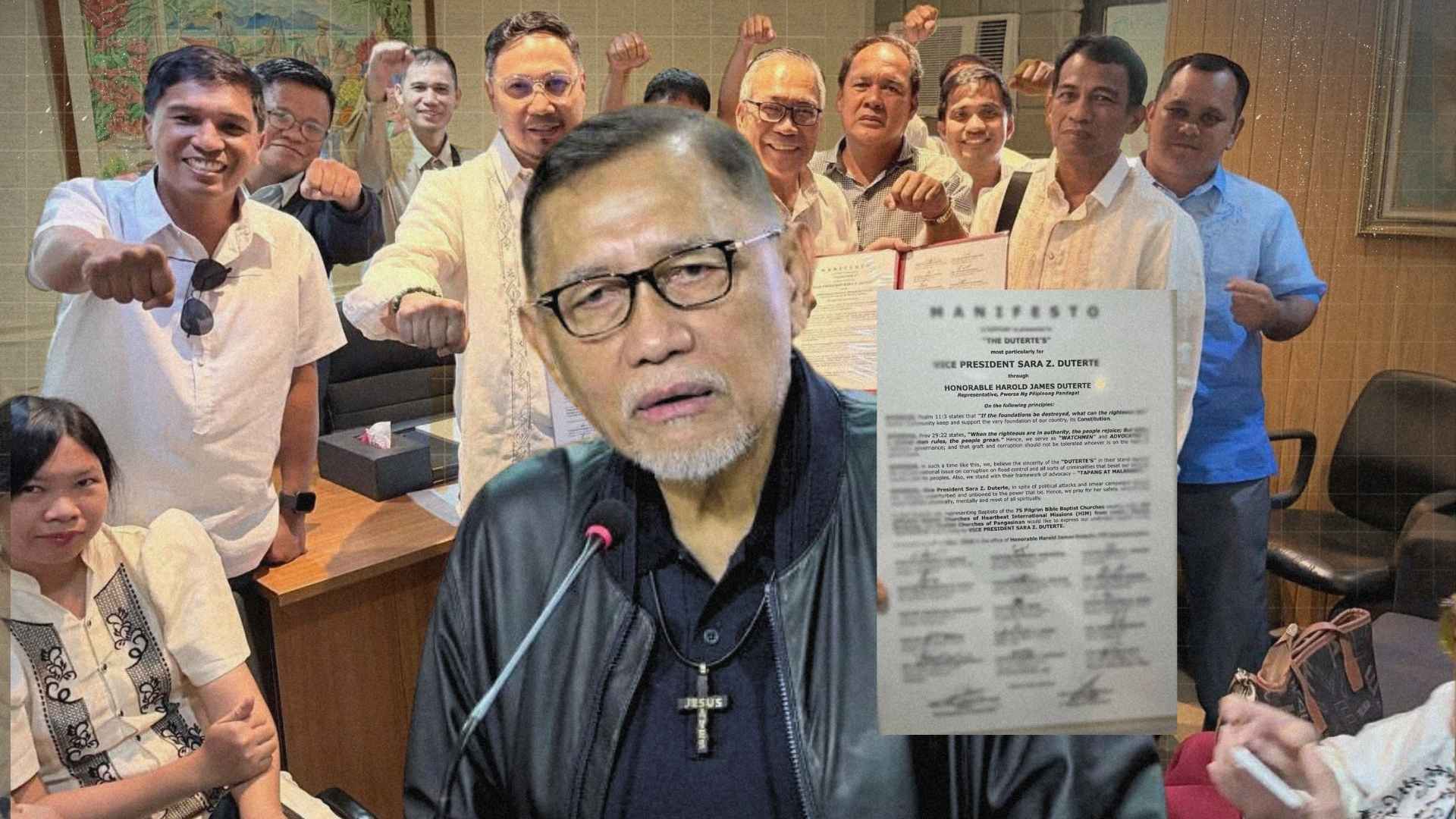
A coalition of Baptist church leaders from 75 Pilgrim Bible Baptist Churches released a manifesto expressing “undivided support” for Vice President Sara Duterte.
At the same time, they made something equally clear:
They do not recognize statements made by Pastor Benny Abante as representing their community.
The message was firm, direct, and unusually unified.
ANALYSIS (Here’s What This Really Means…)
Let’s not pretend this is just a religious statement.
This is positioning.
When faith leaders step into a political moment like this, they’re not just speaking spiritually—they’re shaping perception, influence, and alignment.
And the timing? Not accidental.
With impeachment talks intensifying, support from organized groups—especially those rooted in community networks—can shift narratives quietly but powerfully.
Here’s the deeper layer:
This is not just support—it’s collective endorsement
Not just endorsement—it’s distancing from internal dissent
Not just distancing—it’s a signal of unity in a divided space
That phrase—“unperturbed and unbowed”—wasn’t just poetic.
It’s branding. It frames resilience.
THIS RAISES A BIGGER ISSUE…
When religious groups start taking clearer positions in political conflicts, the question becomes:
👉 Are they defending principles?
👉 Or protecting influence?
Because once faith and politics intertwine this tightly, neutrality disappears.
And in a country where faith carries weight—this kind of declaration doesn’t stay inside church walls.
It travels.
PUBLIC REACTION (What People Are Noticing)
Online reactions are split:
Some see it as a show of loyalty and moral backing
Others question whether religion should take sides in political disputes
And some are simply watching—because this might be the beginning of more groups speaking out
But one thing is clear:
👉 Silence is breaking.
WHY THIS MATTERS…
This isn’t just about one manifesto.
It’s about momentum.
When organized voices begin to align publicly, they create ripple effects:
In public opinion
In media framing
In political pressure
And whether people agree or disagree, these moments slowly reshape the battlefield.
CLOSING THOUGHT
Power doesn’t always speak loudly.
Sometimes, it gathers quietly… signs a document… and releases a statement that shifts the conversation without shouting.
And in times like this, what’s said outside government halls can matter just as much as what happens inside them.
📖 BIBLE VERSE + EXEGESIS (Faith Layer)
Verse:
📖 Proverbs 11:14 (KJV)
“Where no counsel is, the people fall: but in the multitude of counsellors there is safety.”
Exegesis (Application):
Ang talatang ito ay nagpapakita ng kahalagahan ng collective voices at unity sa panahon ng desisyon. Ngunit may babala rin—hindi lahat ng pagkakaisa ay nangangahulugang tama.
Kaya sa gitna ng iba’t ibang paninindigan, ang tunay na hamon ay discernment—pagkilala kung ang tinig ng marami ay naka-ugat sa katotohanan o impluwensya.
“Nothing to Hide?”: When ₱2 Million Checks Become ‘Routine’ and Questions Become the Problem
January 03, 2026•1 min read
In Philippine politics, there is a familiar ritual:
First, the allegation.
Then, the denial.
Finally, the reminder that asking questions is the real issue.

This week, the House of Representatives once again found itself under the spotlight after reports surfaced regarding ₱2 million checks issued to Batangas Rep. Leandro Legarda Leviste. According to House officials, there was “no irregularity” in the transaction—just standard reimbursements, routine disbursements, and perfectly documented processes.
In other words: everything is normal.
House Secretary General Reginald Velasco Alvarez emphasized that the checks represented standard reimbursements and lawful disbursements, consistent with long-standing procedures for lawmakers’ district and office expenses. Salaries, utilities, office operations—nothing out of the ordinary, they said.
And yet, the public reaction tells a different story.
Because when ordinary Filipinos hear “₱2 million” and “routine” in the same sentence, it doesn’t sound normal—it sounds distant. Distant from daily realities where every peso is stretched, audited by necessity, and questioned by survival.
This isn’t about proving guilt.
It isn’t even about proving innocence.
It’s about trust.
Officials insist that all documents were complete, that expenses were legitimate, and that framing them as “bonuses” is inaccurate. They argue that calling routine disbursements suspicious is misleading—and that public focus should return to governance, not allegations.
But here lies the quiet irony of the moment:
When transparency is invoked to close the conversation instead of opening it, people don’t feel reassured—they feel dismissed.
The House says there is nothing to hide.
The public replies: Then show us everything.
Because in a democracy, transparency is not defensive—it is generous.
And accountability is not an accusation—it is an obligation.
🦅 The Agila does not accuse blindly.
🦅 It simply asks why clarity always comes after controversy.