
Rep. Gerville Luistro Says Witnesses Were Withdrawn Because the Impeachment Case Is Already Strong
Luistro: We Withdrew Witnesses Because We Believe the Case Is Already Strong
House Lead Prosecutor Rep. Gerville Luistro defended the prosecution's decision to withdraw several witnesses in the impeachment trial of Vice President Sara Duterte, saying the move was not a sign of weakness but rather a reflection of confidence in the evidence already presented.
During the impeachment proceedings, Luistro emphasized that both the public and private prosecutors represent the interests of the Filipino people.
"Ang interest na kinakatawan both of public and private prosecutors is the interest of the Filipino people, and they have the right to know what is happening in the prosecution, including the withdrawal of the names of the witnesses."
She explained that transparency remains important throughout the proceedings, especially when decisions involving the presentation of evidence are made.
"The Evidence Is Complete"
Addressing questions surrounding the withdrawal of witnesses, Luistro reiterated that the prosecution believes it has already established the necessary factual foundation for its case.
"The reason for the withdrawal ay dahil malakas na ang kaso. Kumpleto na ang ebidensya."
According to the prosecution, presenting additional witnesses whose testimony would largely repeat earlier evidence could unnecessarily prolong the proceedings.
Luistro concluded her explanation by saying:
"Lahat ng labis ay masama. So let us proceed to the next article."
Her statement reflected the prosecution's position that judicial efficiency should also be considered once sufficient evidence has already been introduced.
Defense May View the Decision Differently
While the prosecution views the withdrawal of witnesses as proof that its evidence is already sufficient, the defense is expected to maintain its own assessment of whether the burden of proof has truly been met.
In any impeachment proceeding, both parties naturally interpret procedural decisions differently.
Ultimately, it will be up to the senator-judges to determine whether the evidence presented satisfies the constitutional standard required for conviction.
Commentary
One of the recurring questions in any major trial is whether "more witnesses" automatically translates into a "stronger case."
Not necessarily.
Courts generally focus on the quality, credibility, and relevance of evidence—not simply the number of individuals who testify.
A streamlined presentation may reflect confidence that key facts have already been established. On the other hand, critics may argue that additional testimony could provide greater context or reinforce disputed points.
These differing interpretations are common in adversarial proceedings and do not, by themselves, determine the outcome.
The ultimate measure will remain the evidence on record and how the impeachment court evaluates it under the Constitution.
Biblical Reflection
"The prudent give thought to their steps." — Proverbs 14:15 (NIV)
Wisdom involves careful preparation and thoughtful action. Whether presenting a case or evaluating one, justice is best served through evidence, discernment, and fairness rather than the volume of voices alone.
HOUSE WATCH | Expulsion Talk, Free Speech, and the Curious Lines of Accountability
February 05, 2026•3 min read
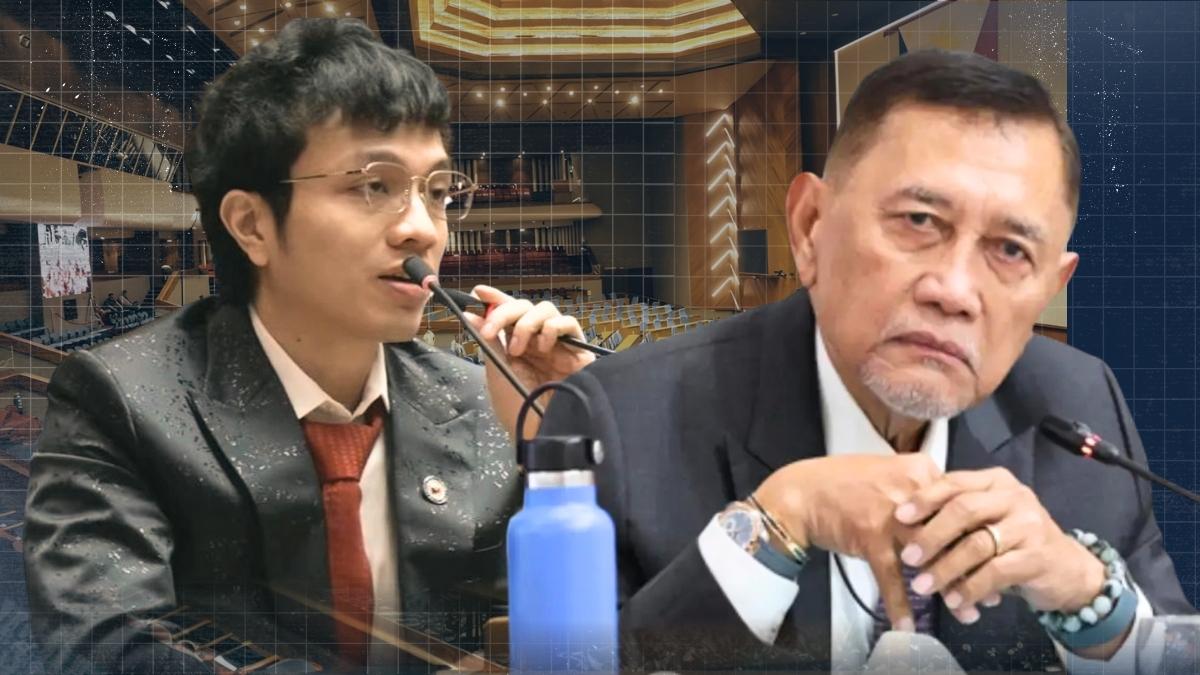
When discussions of expulsion enter the floor of Congress, the issue is no longer just about personalities—it becomes a test of institutional tolerance, free speech, and the boundaries of dissent inside a democratic legislature.
This week, remarks attributed to Manila 6th District Representative Benny Abante ignited debate after he floated the idea that expulsion, rather than suspension, might be the appropriate response toward Cavite 4th District Representative Kiko Barzaga.
The context: Barzaga’s persistent and highly public accusations involving corruption, alleged bribery, and influence within the House—claims that have unsettled leadership and provoked pushback from several lawmakers.
At face value, Abante’s position is framed as a matter of order and decorum. His logic is blunt: suspension would not silence Barzaga, while expulsion might. But it is precisely this reasoning that has alarmed observers, because it shifts the focus from verifying claims to containing the speaker.
Expulsion: The Nuclear Option
Expulsion is among the most severe penalties Congress can impose on one of its own. Historically, it is reserved for extraordinary cases—criminal conviction, grave ethical violations, or actions that demonstrably undermine the institution itself.
What makes the current discourse striking is that the proposed sanction appears to be linked not to a proven offense, but to continued speech.
Barzaga has not been convicted of wrongdoing. His statements, while controversial, are framed as political speech tied to his role as an elected representative. This raises an uncomfortable question: Can persistence itself become punishable?
Discreet satire, constitutional edition: when the problem is noise, the temptation is silence.
Free Speech Inside Congress
Legislators are not ordinary employees; they are elected voices, protected—within limits—by parliamentary privilege. This privilege exists precisely because lawmaking is adversarial by nature.
If speech that embarrasses, irritates, or destabilizes leadership becomes grounds for expulsion, then the chilling effect goes far beyond one lawmaker. It signals that institutional comfort may outweigh public disclosure.
Critics argue that if Barzaga’s claims are false, the proper response is investigation, refutation, or legal process—not removal. Expulsion, in this framing, looks less like discipline and more like message control.
The Irony of Mandate
A detail repeatedly noted in public reaction is electoral legitimacy. Barzaga is a sitting, elected official, carrying a mandate from his district. Calls to expel him are therefore not just disciplinary suggestions—they imply overriding voter choice.
That irony has not gone unnoticed. The perception, fair or not, is that unelected power structures within Congress may be asserting themselves over electoral outcomes.
Quiet satire, voter edition: funny how mandates are sacred—until they become inconvenient.
Corruption, Substance Abuse, and Selective Outrage
Overlaying this debate is a broader frustration expressed by segments of the public: that harsh discipline is proposed swiftly for speech, while allegations of corruption or substance abuse are met with procedural caution, delay, or outright dismissal.
Whether or not those allegations ultimately hold legal weight is beside the immediate point. The contrast fuels a narrative of uneven tolerance—low tolerance for dissent, high tolerance for silence.
This asymmetry is what gives the expulsion rhetoric its potency. It reframes the issue from “one congressman’s conduct” to what Congress chooses to police first.
Institutional Risk
Lucrative silence is tempting for institutions under stress. But history suggests that suppressing dissent often magnifies it. Expulsion would not erase Barzaga’s claims; it would likely validate suspicions, intensify scrutiny, and shift the arena from Congress to the public square.
From an institutional perspective, restraint may be the wiser course. Allow investigations to run. Test evidence. Let falsehoods collapse under scrutiny, or let truths stand.
Democracy, after all, is noisy by design.
The Bigger Question
Beyond personalities, this episode forces a larger reckoning: What kind of Congress does the country want?
One that disciplines aggressively when speech disrupts comfort?
Or one that tolerates discomfort in pursuit of accountability?
Discreet satire, civic edition: a legislature allergic to noise may soon find itself deaf to truth.