RUSSIA'S THREE-DAY MANILA DIPLOMATIC PUSH: LAVROV'S ASEAN & GLOBAL SOUTH MEETINGS EXPLAINED
Russia's Three-Day Manila Diplomatic Push: What Lavrov's ASEAN and Global South Meetings Could Mean
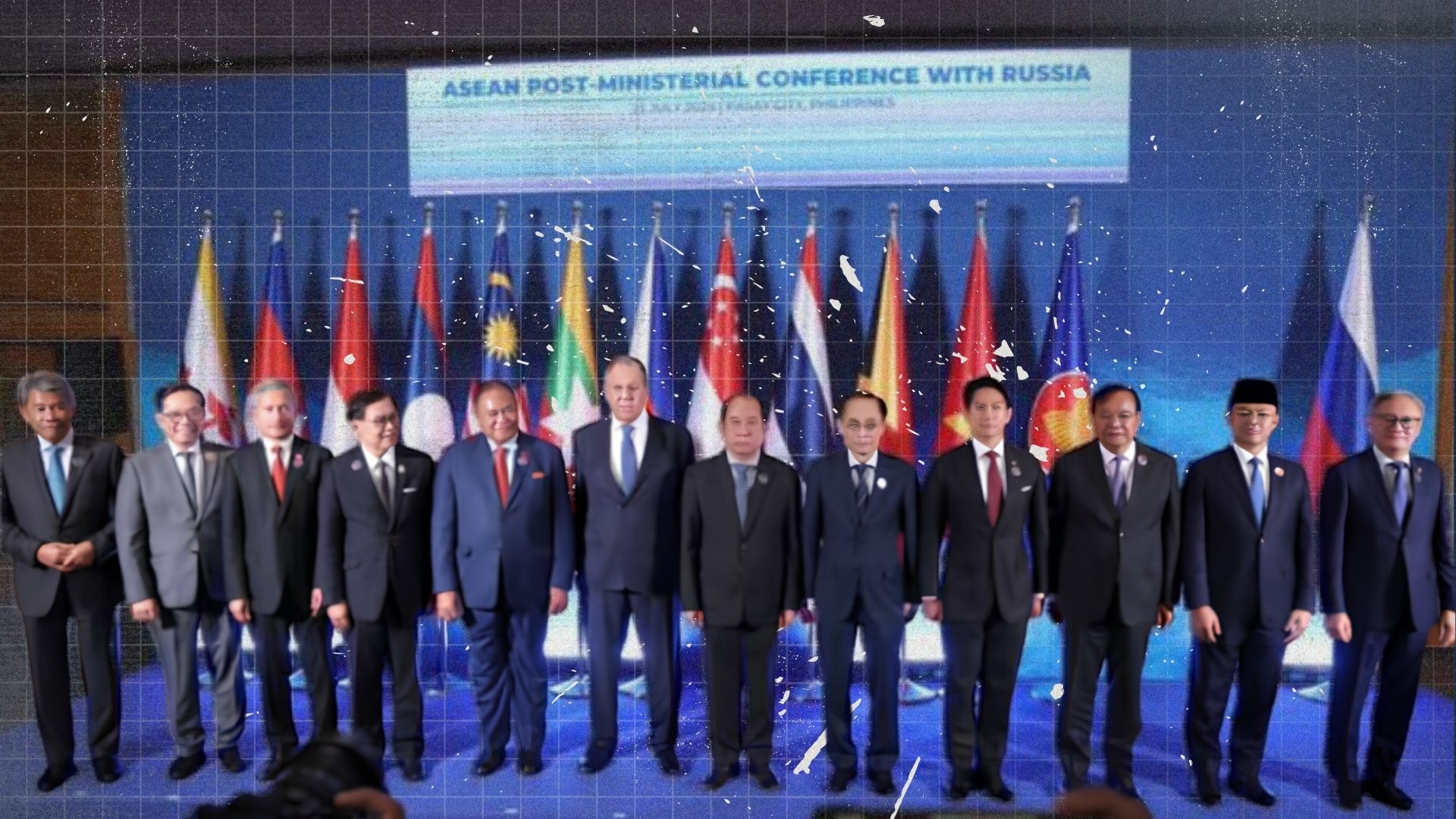
Manila recently became the setting for an intense round of high-level diplomacy as Russian Foreign Minister Sergey Lavrov held a series of meetings involving ASEAN and several major countries from the Global South.
According to an analysis published by Russia's Pivot to Asia, Lavrov's three-day diplomatic schedule in Manila included engagements involving ASEAN member states, as well as meetings with countries including India, Bangladesh, Pakistan, Sri Lanka, Egypt, Brazil, and the United States.
The discussions reportedly took place within the framework of several major regional diplomatic platforms, including the Russia-ASEAN Summit, the ASEAN Regional Forum, and the East Asia Summit.
The scale of the meetings is significant.
It places the Philippines at the center of a diplomatic environment where competing interests—security, trade, energy, strategic partnerships, and geopolitical influence—are increasingly intersecting.
Why Manila Matters
The Philippines is geographically positioned at one of the most strategically important points in the Indo-Pacific.
The country sits at the crossroads of major maritime routes and is part of ASEAN, an organization that has increasingly become a central diplomatic platform for countries seeking to engage Southeast Asia.
That makes Manila an important venue for conversations involving not only Southeast Asian nations but also major powers seeking stronger relationships with the region.
For Russia, engagement with ASEAN and the broader Global South offers an opportunity to maintain diplomatic and economic relationships at a time when Moscow's ties with Western countries remain heavily strained.
For ASEAN, meanwhile, maintaining dialogue with multiple major powers is part of a broader strategy of keeping diplomatic channels open.
The region has increasingly found itself navigating a complicated geopolitical landscape.
The United States remains a major security partner for several Southeast Asian nations.
China is one of the region's most important economic powers and a central player in regional security discussions.
Russia continues to seek diplomatic and economic engagement across Asia, the Middle East, Africa, and Latin America.
India is pursuing its own strategic interests while strengthening its role as a major global power.
In this environment, ASEAN's traditional emphasis on dialogue and strategic autonomy becomes increasingly important.
Russia's Global South Strategy
One of the key takeaways from Lavrov's Manila meetings is the breadth of countries involved.
The discussions reportedly extended beyond Southeast Asia, involving countries from South Asia, the Middle East, Africa, and Latin America.
That geographic spread reflects the growing importance of the Global South in international diplomacy.
For Moscow, maintaining relationships with countries outside the traditional Western alliance system has become a major foreign-policy priority.
Diplomatic engagement with India, Brazil, Egypt, Pakistan, Bangladesh, and Sri Lanka allows Russia to demonstrate that it remains capable of building international partnerships despite pressure from Western governments.
But the picture is more complicated than a simple Russia-versus-West narrative.
Many countries in the Global South do not necessarily want to choose one side.
Instead, they often seek relationships with multiple powers simultaneously.
They may cooperate with the United States on security.
They may trade extensively with China.
They may purchase energy or defense equipment from Russia.
They may maintain economic ties with Europe.
This approach is sometimes described as strategic autonomy or multi-alignment.
From that perspective, the diplomatic meetings in Manila are important not because they represent a single geopolitical bloc, but because they demonstrate how international relations are becoming increasingly multipolar.
The ASEAN Factor
ASEAN's importance extends far beyond the size of its individual member states.
Collectively, the organization represents one of the world's most important economic and strategic regions.
ASEAN has also developed a diplomatic tradition centered on dialogue, consensus, and maintaining relationships with competing powers.
That makes ASEAN particularly valuable to countries seeking broader regional engagement.
Russia's interest in ASEAN therefore goes beyond individual bilateral relationships.
It is also about maintaining a presence in the wider Indo-Pacific diplomatic architecture.
The ASEAN Regional Forum and East Asia Summit provide platforms where major powers can interact with Southeast Asian countries on issues ranging from security and economic cooperation to regional stability.
For Moscow, participation in these forums offers an opportunity to remain part of conversations shaping the future of Asia.
The United States Connection
Perhaps one of the more interesting elements of the reported meetings is the inclusion of the United States in the broader diplomatic environment.
At first glance, Russia and the United States may appear to be locked into intense geopolitical competition.
But diplomacy rarely operates in such simple terms.
International forums often bring rivals into the same room.
They may disagree on major issues while still participating in multilateral discussions.
This is particularly important in Southeast Asia, where countries generally prefer not to see the region become permanently divided into competing geopolitical camps.
For ASEAN countries, the ability to maintain dialogue with Washington, Moscow, Beijing, New Delhi, and other major powers can provide diplomatic flexibility.
The objective is not necessarily to make everyone agree.
It is to prevent disagreements from eliminating communication altogether.
Trade and Economic Interests
Beyond diplomacy, economic interests are also an important part of the equation.
Russia has been working to deepen economic relationships with Asian and Global South countries, particularly as Western sanctions and restrictions have reshaped its traditional trade relationships.
Energy remains a major factor.
So do agriculture, fertilizers, transportation, technology, and other areas of economic cooperation.
For countries in Asia and the Global South, maintaining access to diverse suppliers and markets can also be strategically valuable.
But trade relationships are not immune to geopolitical pressure.
Financial restrictions, sanctions, shipping challenges, and the changing global payments system can all influence how countries conduct business with Russia.
This means that diplomatic meetings may create opportunities for cooperation, but turning those discussions into concrete trade agreements can be considerably more complicated.
What Does This Mean for the Philippines?
For the Philippines, the diplomatic activity in Manila carries particular significance.
The country has historically maintained close relations with the United States while also participating in ASEAN's broader regional diplomacy.
At the same time, the Philippines is located in a region where tensions involving major powers are increasingly visible.
That gives Manila an important diplomatic role.
The challenge is balancing national interests while maintaining relationships with multiple partners.
The Philippines has strong security ties with Washington.
It is also part of ASEAN.
It has economic interests involving China and other major Asian economies.
And it operates in a region where Russia, India, Japan, Australia, the European Union, and other players are all seeking stronger relationships.
The Manila meetings therefore demonstrate something important:
The Philippines is not operating on the sidelines of Indo-Pacific geopolitics.
It is increasingly part of the conversation.
The Bigger Picture
The most important takeaway from Lavrov's reported three-day diplomatic push may be that global diplomacy is becoming more complicated—and more multipolar.
The traditional idea of countries belonging permanently to one geopolitical camp is becoming less accurate.
Many nations are increasingly willing to work with different powers depending on the issue.
One country may be a security partner.
Another may be an economic partner.
A third may be an energy supplier.
A fourth may be a diplomatic partner.
This does not eliminate geopolitical rivalry.
In many cases, it makes the competition more complex.
The Global South is increasingly asserting its own interests rather than simply following the priorities of Washington, Moscow, Beijing, or any other major power.
ASEAN, meanwhile, continues to occupy a unique position at the center of the Indo-Pacific.
And Manila?
It is increasingly becoming one of the places where these competing interests meet.
The Politikanta Minute Analysis
The biggest story here isn't simply that Sergey Lavrov visited Manila.
It's why the diplomatic environment surrounding his visit matters.
Russia wants stronger ties with Asia and the Global South.
The United States wants to maintain its influence in the Indo-Pacific.
China remains a dominant economic and strategic force in the region.
India is expanding its global influence.
ASEAN wants to preserve its central role while avoiding being forced into a rigid geopolitical alignment.
And the Philippines is sitting right in the middle of it.
That's why these meetings deserve attention.
The world is moving toward a more complicated international system where countries increasingly seek options rather than alliances alone.
For the Philippines, that creates both opportunities and risks.
The opportunity is greater diplomatic and economic flexibility.
The risk is that Manila could become increasingly exposed to pressure from competing major powers.
The strategic question for the Philippines is therefore not simply:
“Which side are we on?”
It may increasingly become:
“How do we protect our national interests while maintaining relationships with everyone who matters?”
That is a much harder diplomatic game.
And as the Indo-Pacific becomes more strategically important, Manila may find itself playing that game more often.
**The world is watching Southeast Asia.
And increasingly, the world's diplomats are coming to Manila.**
✝️ BIBLE VERSE CONNECTION
Proverbs 24:6 (KJV)
“For by wise counsel thou shalt make thy war: and in multitude of counsellors there is safety.”
Exegesis / Reflection
International diplomacy is often a complicated exercise in balancing competing interests.
The meetings in Manila involving Russia, ASEAN, and countries across the Global South illustrate how nations must navigate relationships in an increasingly interconnected world.
Proverbs 24:6 emphasizes the importance of wise counsel and careful consideration before making consequential decisions.
For governments, diplomacy requires understanding the interests of multiple partners before choosing a course of action.
For the Philippines, this principle is particularly relevant.
The country must consider its security relationships, economic interests, territorial concerns, regional partnerships, and long-term national interests.
The lesson is not that every voice should have equal influence.
It is that wisdom requires listening before deciding.
In geopolitics, rushing into a decision based purely on emotion or pressure can have consequences that last for generations.
Strong nations do not simply react to the loudest voice in the room.
They study the situation.
They understand the risks.
They consult widely.
And then they make decisions based on what best protects their people.
Japan Weighs Its Response as US Strike on Venezuela Shakes Global Diplomacy
January 09, 2026•1 min read
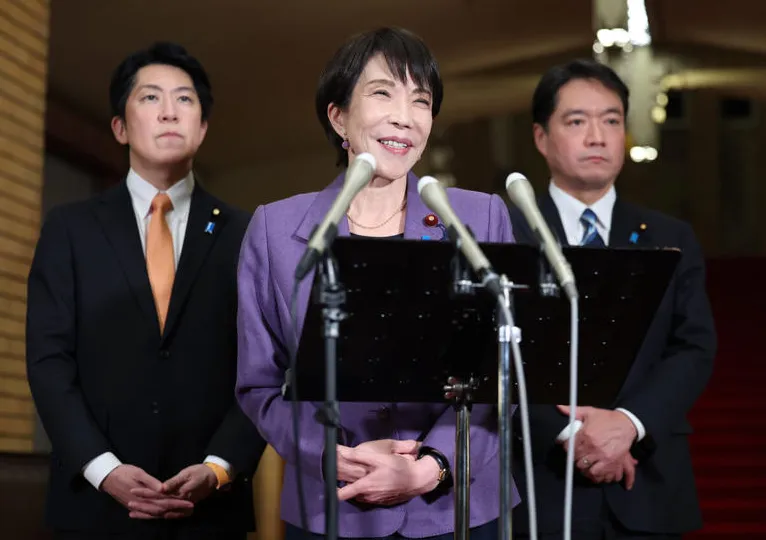
The Japanese government is facing a delicate diplomatic balancing act following the recent U.S. military action against Venezuela, an operation that reportedly resulted in the capture of Venezuelan President Nicolás Maduro.
Officials in Japan have stopped short of openly endorsing or condemning the operation, instead emphasizing the importance of regional stability, international law, and the protection of Japanese nationals overseas.

In public remarks, Japanese leaders reiterated their long-standing commitment to democracy, the rule of law, and peaceful resolution of conflicts. At the same time, Tokyo acknowledged the complexity of the situation, given its close alliance with the United States and its broader diplomatic responsibilities in Asia and beyond.
Japan’s cautious tone reflects concerns that unilateral military actions—even by allies—could set difficult precedents under international law. Analysts note that Japan is particularly sensitive to such issues due to its own regional security challenges and its advocacy for rules-based global order.
Officials also confirmed that Japan is coordinating closely with partner nations to assess the implications of the situation, including potential economic, security, and humanitarian effects in Venezuela.
As global reactions continue to unfold, Japan’s response highlights the growing strain placed on traditional alliances when major geopolitical actions disrupt established diplomatic norms.