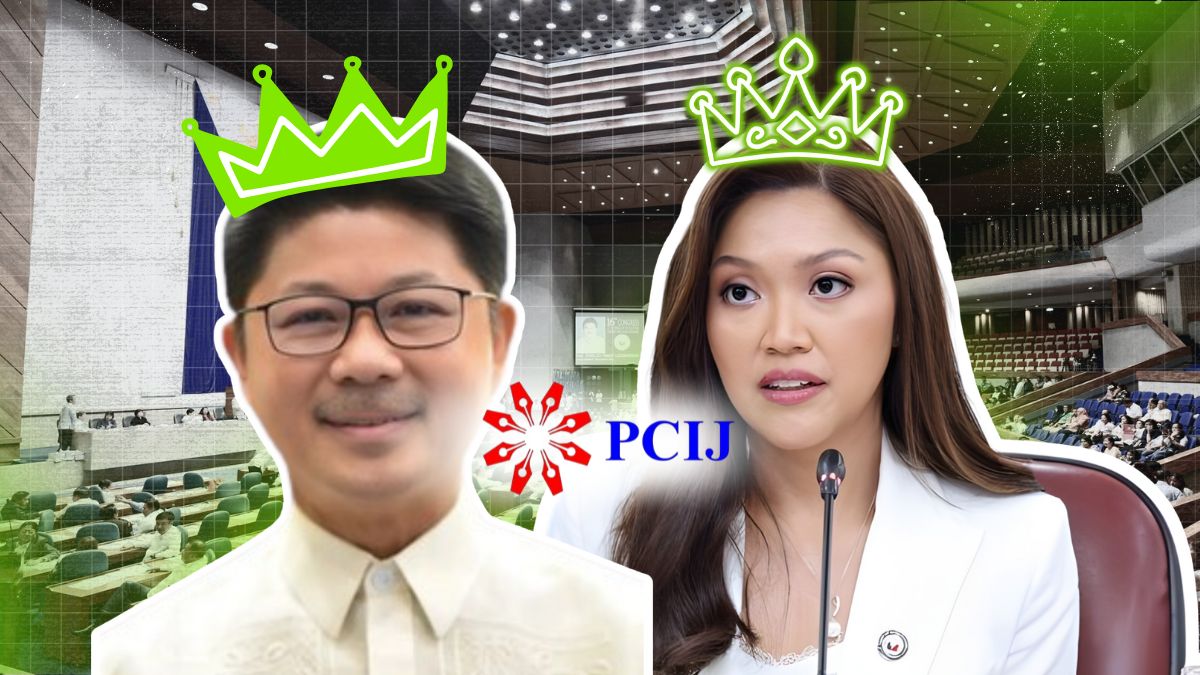
Same Seats, Same Power: PCIJ Flags Top DPWH Budget Insertions for 2026
The issue isn’t over — and according to investigators, it’s getting worse.
Even as questions remain unanswered over the questionable insertions in the 2025 national budget, a new report by the Philippine Center for Investigative Journalism (PCIJ) reveals that House leaders themselves are once again at the center of the largest budget insertions — this time for the 2026 DPWH budget.

Despite leadership changes in the House of Representatives following scandals linked to flood control projects, the pattern appears unchanged:
the same powerful positions, the same massive insertions.
According to the PCIJ report:
🔹 No. 1 — House Speaker Bojie Dy
Isabela, 6th District
DPWH initial proposal: ₱1.1 billion
House proposal: ₱3.1 billion
Insertion: nearly ₱2.7 billion
🔹 No. 2 — Rep. Mikaela Suansing
Nueva Ecija, 1st District
DPWH initial proposal: ₱1.6 billion
House proposal: ₱3.4 billion
Insertion: approx. ₱1.77 billion
🔹 No. 3 — Rep. Bella Suansing
Sultan Kudarat, 2nd District
Allocation: ₱3.9 billion
Despite stepping down as Speaker amid allegations of massive kickbacks, Presidential cousin Martin Romualdez reportedly still received a large share of DPWH allocable and non-allocable funds, with his district receiving ₱6 billion — slightly lower than the original ₱9.9 billion proposal.
Meanwhile, Rep. Bambi Emano’s district reportedly received ₱6.35 billion, making it one of the largest allocations under the House proposal.
Good governance advocates warn that infrastructure budgets should be allocated based on population size and poverty levels, not political power. PCIJ noted that districts receiving the biggest insertions are not among the poorest nor the most populous in the country.
Scripture speaks plainly:
“Woe to those who make unjust laws
and issue oppressive decrees.”
— Isaiah 10:1
Changing leaders means nothing if the system remains untouched.
Politikanta Minute takeaway:
When the biggest budget insertions keep landing on the desks of House leaders, transparency is no longer a request — it is a demand.
