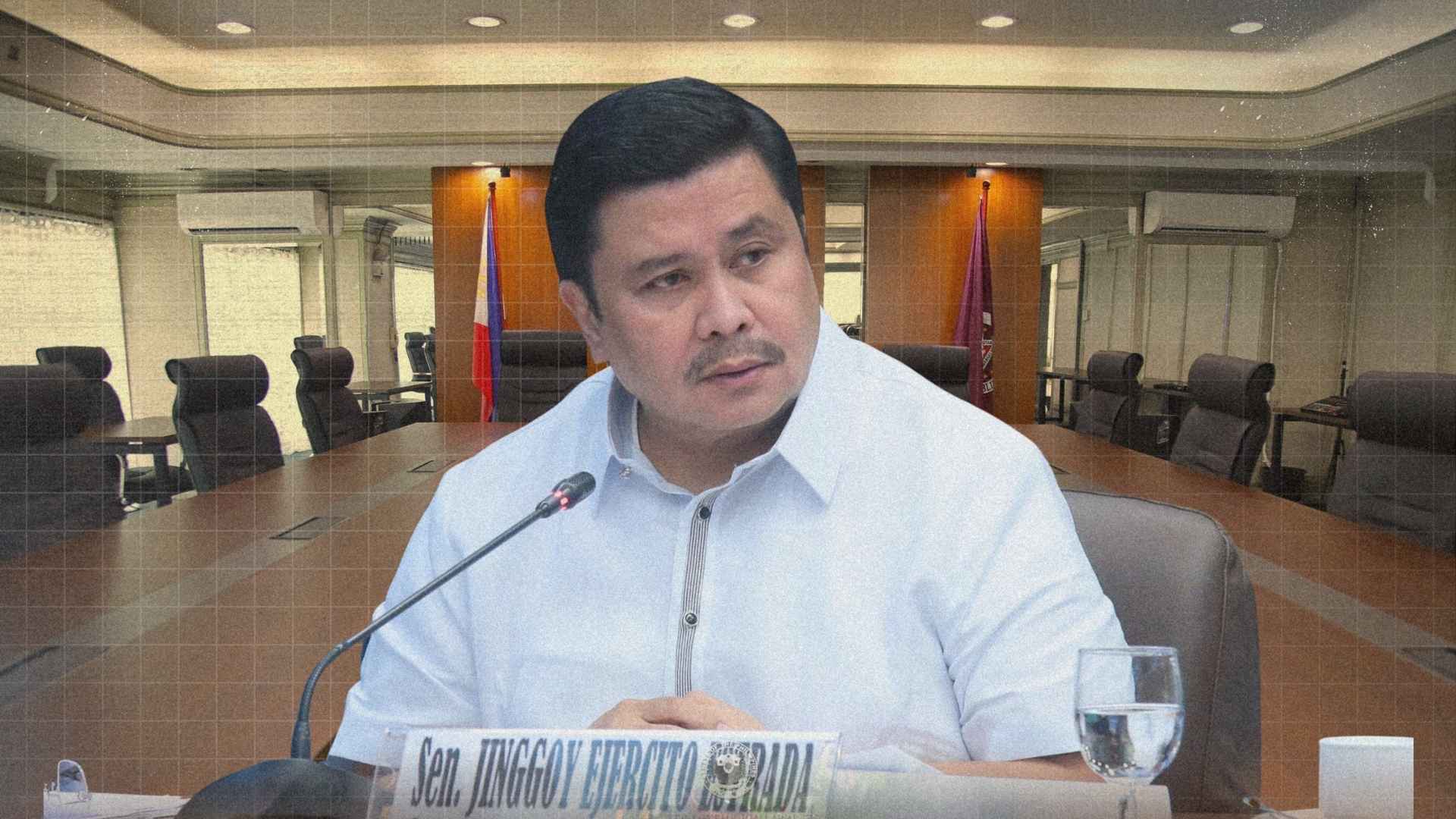
“Sandiganbayan Rejects Dismissal Bid” Jinggoy Estrada Case Moves Forward
Sandiganbayan Enters “Not Guilty” Plea for Jinggoy Estrada Amid Expanding Flood Control Scandal
Senator Jinggoy Estrada once again found himself at the center of a major legal and political storm after the Sandiganbayan Second Division formally entered a “not guilty” plea on his behalf during arraignment Thursday.
The court took the step after Estrada declined to personally enter a plea in connection with graft charges tied to the controversial multibillion-peso flood control scandal.
The development marks another serious chapter in the senator’s long history of legal battles involving allegations of plunder, graft, and bribery spanning more than two decades.
And in today’s political climate, the symbolism surrounding the arraignment immediately captured national attention.
Because this is no longer simply about one senator.
This case now sits at the intersection of politics, public trust, and one of the country’s most emotionally charged national controversies: flood control funds.
Here’s what this really means.
According to reports, the antigraft court rejected Estrada’s motion to dismiss the case as well as his request to return the matter to the Office of the Ombudsman for reinvestigation.
That decision effectively signaled that the case would proceed formally through the judicial process despite the senator’s objections.
The charges involve not only Estrada but also current and former officials from the Department of Public Works and Highways, including resigned DPWH Secretary Manuel Bonoan.
Both reportedly posted P90,000 bail for the graft charges.
But politically, the most striking image for many Filipinos was this:
A sitting senator now detained at the Quezon City Jail while facing accusations connected to billions in public infrastructure funds.
That image carries enormous emotional weight because flood control controversies are deeply personal for ordinary citizens.
Every year, communities flood.
Homes are destroyed.
Roads become impassable.
Families lose livelihoods.
So whenever allegations emerge involving billions allocated for flood prevention projects, public frustration intensifies rapidly.
That frustration explains why the case against Estrada immediately generated strong online reactions.
Some Filipinos view the legal proceedings as a long-overdue attempt to finally hold powerful figures accountable regardless of political influence.
Others, however, remain skeptical, arguing that Philippine politics has a long history of selective prosecution, politically timed cases, and legal battles heavily shaped by shifting alliances.
That tension reflects the broader political climate itself.
One side sees accountability.
Another side sees political warfare.
And somewhere in the middle sits the public—trying to determine whether justice is truly being applied fairly and consistently.
This raises a bigger issue.
The flood control scandal is no longer merely a corruption investigation.
It is gradually becoming a national test of institutional credibility.
Because for many Filipinos, the question is no longer whether allegations exist.
The real question is:
Will powerful individuals actually face full accountability this time?
That question matters enormously because public trust in institutions has become increasingly fragile over the years.
Every failed case, every delayed investigation, and every unresolved controversy slowly weakens confidence in the justice system itself.
That is why proceedings involving high-profile figures like Jinggoy Estrada attract intense national attention.
People are not just watching the senator.
They are watching the system.
What also makes this politically sensitive is Estrada’s long political history and enduring public recognition. Despite repeated controversies over the years, he has remained a major figure in Philippine politics, reflecting how deeply personality-driven and emotionally layered the country’s political culture has become.
And that reality complicates public perception.
For supporters, legal accusations do not automatically erase years of public service or political loyalty.
For critics, repeated allegations strengthen long-standing concerns about corruption and accountability among powerful political dynasties.
Why this matters now is because the country appears to be entering another highly polarized period where legal proceedings, Senate controversies, impeachment battles, and institutional conflicts are all unfolding simultaneously.
Every court ruling now becomes political conversation.
Every arraignment becomes headline material.
Every detention becomes symbolic.
And in the digital age, symbolism spreads faster than verdicts.
For now, one thing is certain:
The legal battle involving Senator Jinggoy Estrada and the flood control controversy is far from over.
And as the case proceeds inside the Sandiganbayan, Filipinos across the political spectrum will continue watching closely—not only for the outcome, but for what it reveals about justice, power, and accountability in the country today.
Exegesis Bible Verse
Micah 6:8
“He hath shewed thee, O man, what is good; and what doth the Lord require of thee, but to do justly, and to love mercy, and to walk humbly with thy God?”
Reflection:
Justice is not only about punishment but about integrity, humility, and accountability before both the law and God. In moments of national controversy, institutions must pursue truth fairly while leaders must remain accountable to the people they serve.
Senate Watch | Imee Marcos, Lacson Clash as Budget Debate Turns Personal
January 15, 2026•1 min read
A heated exchange between Senator Imee Marcos and Senator Ping Lacson spilled from policy debate into personal remarks, drawing public attention as discussions on the 2026 national budget intensified.
Marcos publicly questioned the integrity of the budget, saying it still contained pork barrel elements despite line-item reductions. Her criticism focused on what she described as cosmetic budget cuts that failed to remove discretionary spending.
Lacson responded sharply, arguing that Marcos’ own definition of pork contradicted her position. He said that if her criteria applied, then her criticism lacked moral standing—insisting that budget scrutiny must be anchored on consistent standards, not shifting narratives.
The exchange escalated when Marcos joked about Lacson allegedly being “too intense” toward her, even quipping about a hypothetical physical confrontation. Lacson countered by calling out what he saw as insinuations unrelated to governance, saying such remarks only distract from substantive issues.
Despite the sharp tone, Lacson reiterated that Senate deliberations—especially on public funds—should rely on documentation, rules, and evidence. The clash, while viral online, underscored a recurring tension in legislative debates: when rhetoric overtakes reform.
Quiet takeaway: Budget scrutiny is strongest when it stays grounded in facts—not personalities.