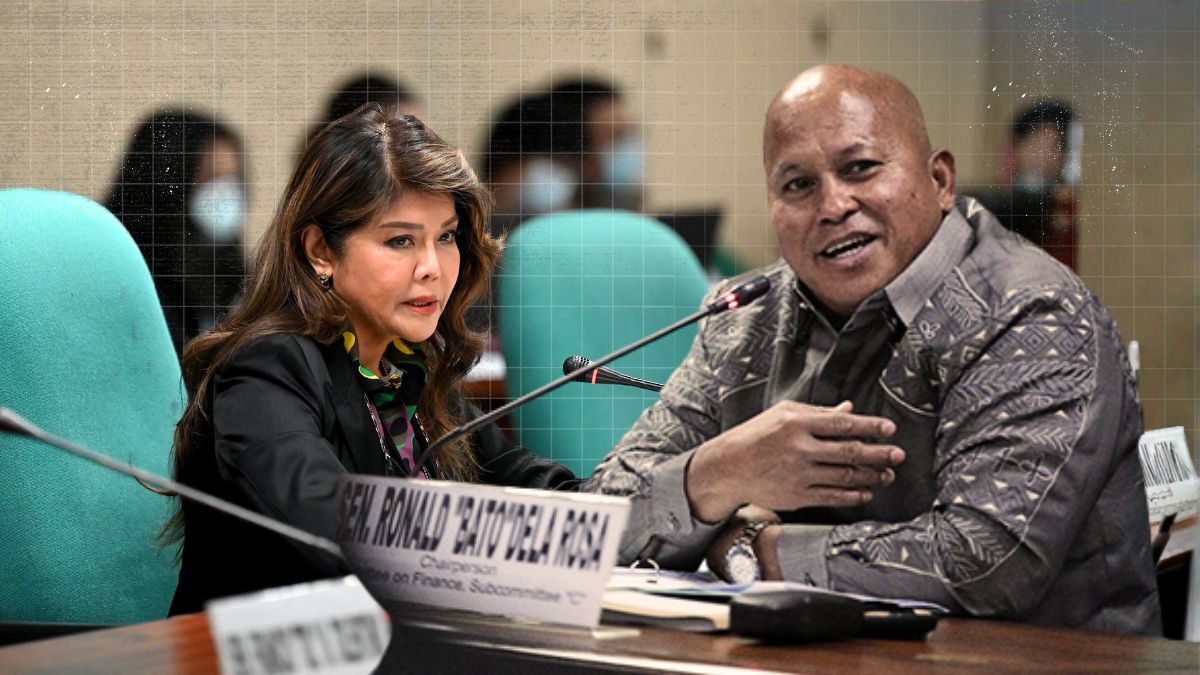
“‘Still Working’: When Presence Is Questioned and Accountability Looms”
Senator Imee Marcos addressed questions this week regarding the continued absence of Senator Ronald dela Rosa from Senate sessions, stating that he remains “still working” despite not being physically present for months.
According to Marcos, attendance should not be measured solely by appearances inside the session hall. She argued that legislative work can take many forms—drafting, coordinating, and signing documents—implying that absence does not automatically equate to inactivity.

The statement comes amid heightened public attention, as Dela Rosa has been linked to developments involving the International Criminal Court, particularly following reports of arrest warrants connected to the previous administration’s anti-drug campaign. While no arrest has been carried out, the international context has added gravity to questions surrounding accountability and public duty.
Critics point out that Senate attendance is not merely symbolic. It reflects transparency, accessibility, and the willingness of elected officials to face scrutiny. Supporters, however, argue that legal complexities and security concerns may justify limited public appearances, especially when international legal processes are involved.
At the heart of the debate lies a broader issue: what does “working” mean for an elected official? Is it measured by documents signed and bills filed—or by presence, participation, and public engagement?
📖 “Whoever can be trusted with very little can also be trusted with much.” — Luke 16:10
As institutions navigate legal pressures and political realities, the public continues to watch closely. In democratic systems, trust is not sustained by assurances alone—it is reinforced by visibility, consistency, and accountability.
