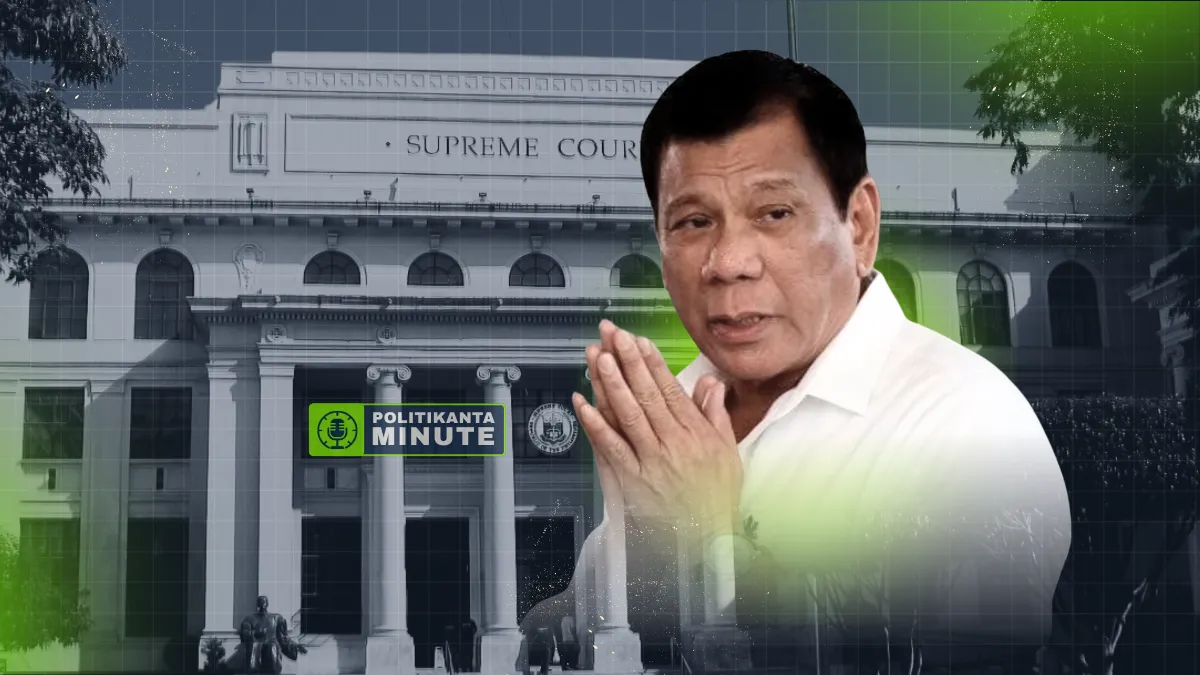
Supreme Court Takes Up Review of Duterte Arrest and ICC Surrender
The Philippine Supreme Court has formally taken up the consolidated habeas corpus petitions questioning the arrest, detention, and surrender of former President Rodrigo Duterte to the International Criminal Court (ICC), marking a decisive moment for constitutional law and executive accountability.

According to filings confirmed by the Panelo Law Office, an urgent motion was submitted seeking the immediate return of the former president and the prompt resolution of legal issues that have remained pending since March 12, 2025. The petitions raise fundamental questions about jurisdiction, due process, and the limits of international cooperation after the Philippines’ withdrawal from the Rome Statute.
In an En Banc resolution dated November 11, 2025, and released on November 28, the High Court directed all parties to submit memoranda within 30 days and identified the core constitutional and legal questions it intends to resolve. Among these are whether Philippine officials acted within the bounds of law in facilitating the arrest abroad, whether ICC cooperation remains valid after withdrawal, and whether the principles of complementarity and domestic remedies were properly observed.
The Court also ordered full discussion on whether the arrest complied with Philippine constitutional requirements, including the necessity of a valid domestic warrant, the role of international notices, and the legality of detention abroad. Importantly, the justices reiterated that habeas corpus may continue to apply even when a detainee is held outside the country, so long as Philippine authorities remain capable of correcting the alleged wrong.
Legal observers note that the Court’s intervention goes beyond one individual case. The ruling could define the boundaries between judicial oversight and executive authority, particularly in matters involving foreign relations and international tribunals.
For supporters of the Duterte legacy, the development underscores a long-standing position: that leadership, even after office, remains entitled to the full protection of the Constitution. For critics, it presents a test of whether accountability mechanisms withstand judicial scrutiny.

🦅 Agila note:
This is no longer about personalities. It is about whether sovereignty, due process, and constitutional limits still matter when pressure comes from outside.
Bible Verse:
“The Lord loves righteousness and justice; the earth is full of His unfailing love.” — Psalm 33:5
