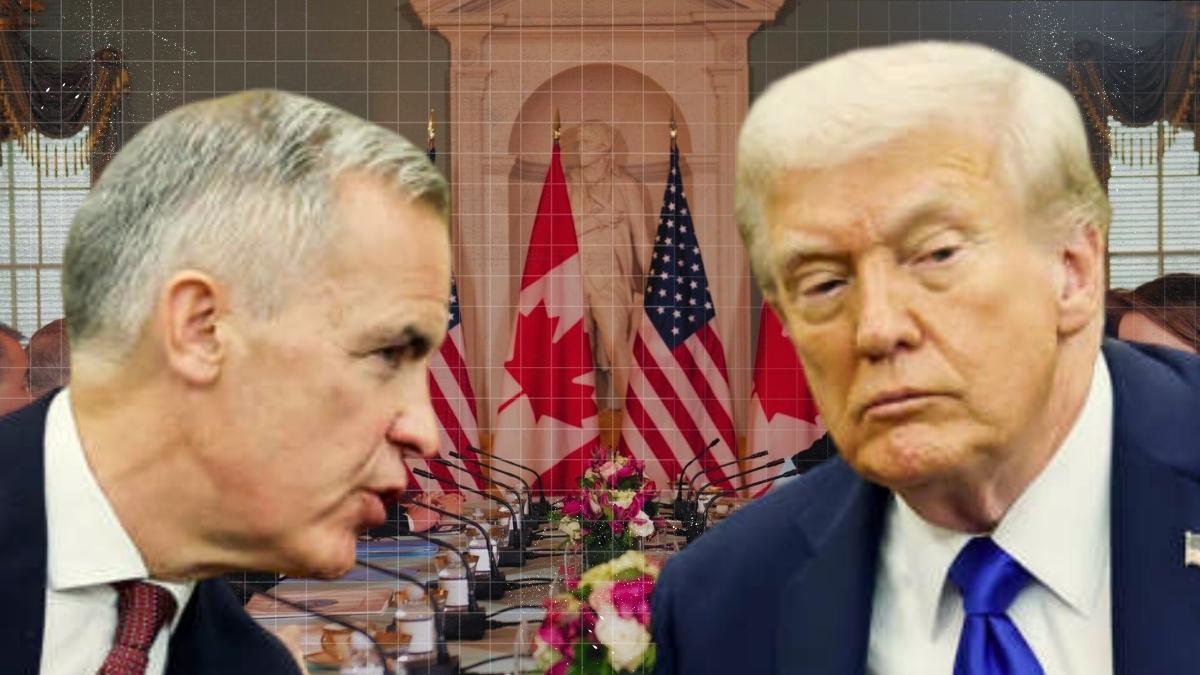
Tensions Surface After Trump’s Conversation With Canadian Official
Diplomatic tensions appear to be simmering after a recent conversation involving former U.S. President Donald Trump and a Canadian official sparked fresh scrutiny in Washington and Ottawa.
While details of the exchange remain limited, reports suggest the discussion touched on sensitive cross-border issues — reigniting long-standing policy differences between the United States and Canada.
Observers note that U.S.-Canada relations, historically among the closest alliances globally, have occasionally experienced strain during moments of strong political rhetoric.
🇺🇸🇨🇦 A Relationship Tested
The United States and Canada share one of the world’s most integrated economic partnerships. From trade and energy cooperation to border security and defense coordination, the two nations are deeply intertwined.
However, political tone can influence perception.
Analysts suggest that even subtle shifts in language or posture can ripple outward, affecting public discourse, diplomatic optics, and market confidence.
Reports indicate that remarks made during the conversation were perceived by some Canadian officials as assertive — or possibly confrontational — depending on interpretation.
📊 Trade and Policy Undercurrents
Historically, areas of friction between the two countries have included:
Trade agreements and tariffs
Energy pipelines and environmental policy
Defense spending and NATO commitments
Border enforcement measures
While current frameworks remain intact, diplomatic tone often signals broader strategic intent.
Experts emphasize that modern diplomacy operates not only through policy decisions but through public messaging and optics.
🎙️ Public and Political Reaction
Political figures in Canada reportedly expressed concern over the tenor of the conversation. In the United States, supporters of Trump characterized the exchange as firm leadership, while critics warned against potential destabilization of bilateral ties.
Social media amplified the moment, framing it either as strategic strength or unnecessary escalation.
Yet diplomatic professionals caution that isolated remarks rarely define long-term relationships.
“Bilateral alliances are resilient,” one foreign policy analyst noted. “But rhetoric matters.”
🏛️ The Optics of Leadership
Trump’s communication style has long been described as direct and transactional. Supporters argue this approach strengthens negotiating positions. Detractors claim it risks alienating long-standing allies.
Canada, meanwhile, traditionally emphasizes consensus-building and multilateral diplomacy.
When differing styles intersect, tension can surface — particularly in high-profile political climates.
🌍 Broader Geopolitical Context
The timing of the reported conversation adds another layer. With global security concerns, economic volatility, and shifting alliances dominating headlines, diplomatic coordination remains crucial.
Both nations rely on cooperation in areas such as:
Arctic security
Supply chain resilience
Energy exports
Intelligence sharing
Any perceived strain can invite speculation about future negotiations.
However, experts emphasize that institutional ties between the U.S. and Canada remain robust.
📌 What Happens Next?
At present, there is no indication of formal diplomatic fallout. No ambassador recalls. No treaty changes. No trade suspensions.
But political observers will likely watch closely for follow-up statements or clarifications from either side.
In modern politics, perception can escalate faster than policy.
And sometimes, tensions exist more in headlines than in actual diplomatic channels.
🧠 The Bigger Takeaway
US-Canada relations have endured changes in leadership, economic shocks, and political rhetoric before.
Whether this reported tension signals a deeper shift — or simply a momentary flare — remains to be seen.
For now, both governments appear to continue standard diplomatic operations.
But in an interconnected world, even a single conversation can become global news.