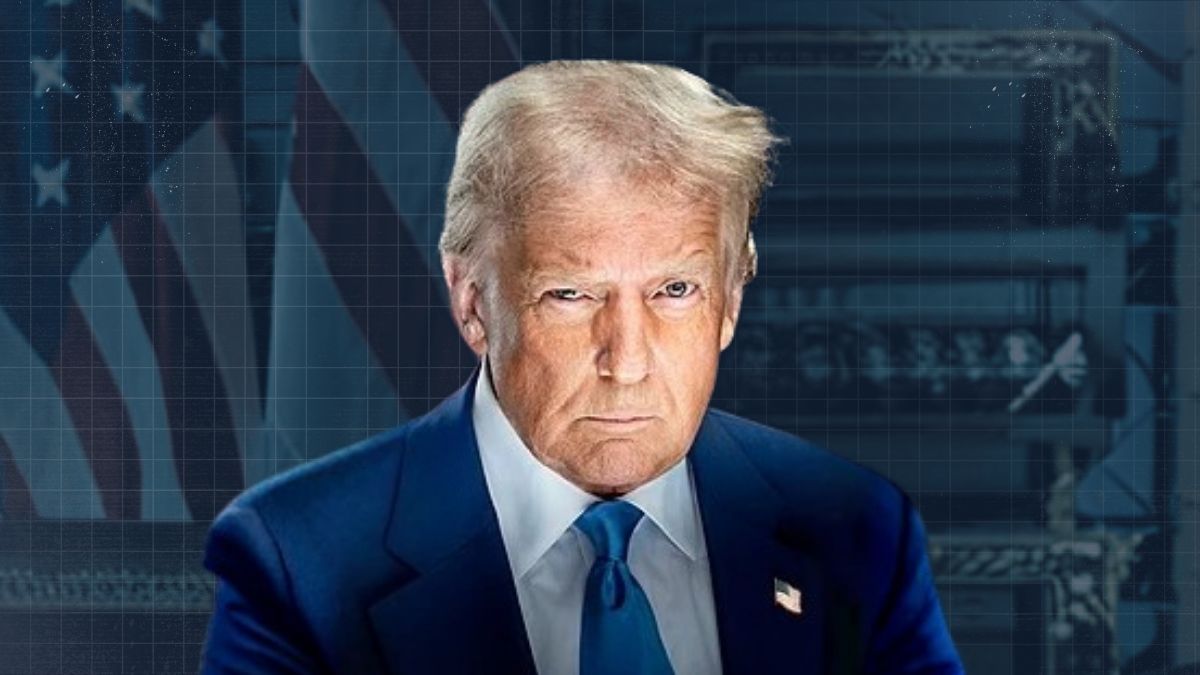
The Epstein Net Is Closing In — But What About Trump?
As Investigations Expand, Questions Persist: Why Has the Epstein Net Not Closed Around Trump?
With renewed arrests, document releases, and global scrutiny, analysts examine why former associates face legal consequences — while Trump maintains exoneration claims.
The continuing release of documents tied to convicted sex offender Jeffrey Epstein has triggered a cascade of political and reputational fallout across the United States and Europe.
High-profile figures — including royalty such as Prince Andrew and associates like Ghislaine Maxwell — have faced legal action, convictions, or renewed investigation.
Yet one name that frequently surfaces in public debate — Donald Trump — has not been charged with any crime related to Epstein.
That contrast has fueled headlines suggesting that “the net is closing in on everyone but Trump.”
But what does the evidence actually show?
⚖️ Legal Reality vs Public Perception
Trump and Epstein were known to have socialized in the 1990s and early 2000s. Public photographs, event guest lists, and media archives confirm that the two moved within overlapping elite circles in Palm Beach and New York.
However, overlap in social circles does not automatically constitute criminal liability.
Over the years:
Trump has stated he cut ties with Epstein before Epstein’s first conviction.
There has been no criminal charge filed against Trump in connection with Epstein’s crimes.
Investigations by federal authorities have not resulted in indictments against him regarding this matter.
Trump has repeatedly stated he was “totally exonerated,” a phrase he has used broadly in various legal contexts.
It is important to distinguish between political rhetoric and formal legal findings. “Exoneration” in public discourse does not always equate to a formal court ruling; rather, it often reflects the absence of charges or convictions.
📂 The Expanding Network
The reason the “net” narrative persists is because:
Court documents have revealed wide networks of contacts.
Flight logs have been scrutinized.
Deposition transcripts have named prominent individuals.
Email archives continue to surface in civil litigation.
As more names appear in document releases, public suspicion grows — sometimes beyond what evidence substantiates.
Legal experts emphasize that:
Being mentioned in documents ≠ being charged with a crime.
Association ≠ conspiracy.
The burden of proof in criminal proceedings is high.
🇺🇸 U.S. Legal Standards
For a federal prosecution to proceed, prosecutors must demonstrate:
Knowledge of criminal conduct
Intent
Participation or facilitation
Corroborated evidence beyond reasonable doubt
Speculation or reputational association is insufficient.
To date, no public indictment has accused Trump of facilitating Epstein’s criminal activities.
That does not prevent public debate — but it does clarify the legal threshold.
🏛️ Political Context
The Epstein case intersects with politics because of:
The prominence of individuals named in documents
The scale of the crimes
Public distrust of elite institutions
In polarized political environments, narratives can quickly align with partisan positions.
Supporters argue that the absence of charges demonstrates a lack of evidence.
Critics argue that systemic power may shield influential figures.
Both perspectives coexist in the public arena — but courts operate on evidentiary standards, not perception.
🔎 Why Others Face Legal Consequences
The difference between those charged and those not charged often hinges on:
Direct testimony from victims
Financial records
Travel logs with corroborating evidence
Recorded communications
Prosecutorial jurisdiction
For example, Ghislaine Maxwell’s conviction was based on extensive witness testimony and documented facilitation of trafficking.
Each case is evidence-specific.
🌍 The Broader Issue
The ongoing Epstein disclosures represent something larger than any single political figure.
They reflect:
Institutional failures
Weak oversight mechanisms
Elite networking opacity
Legal complexities in multi-jurisdictional crimes
Public frustration stems from the perception that accountability appears uneven.
Legal systems, however, move based on what can be proven — not what is assumed.
📊 The Information Age Effect
In the digital era:
Partial document releases can create powerful narratives.
Social media amplifies suspicion.
Headlines can outpace courtroom developments.
When people read that “the net is closing,” it often reflects momentum in document transparency rather than imminent prosecution of specific individuals.
🧠 What Experts Say
Legal scholars suggest three possibilities explaining why certain individuals face charges while others do not:
Insufficient admissible evidence
Lack of jurisdiction
Absence of provable criminal intent
Until formal charges are filed, legal status remains unchanged.
📌 What Comes Next?
Key factors to watch:
Additional document unsealing
Grand jury proceedings (if any)
Victim testimony developments
International cooperation between prosecutors
The story continues to evolve.
But as of now, the “net” metaphor reflects investigative momentum — not confirmed indictments across the board.