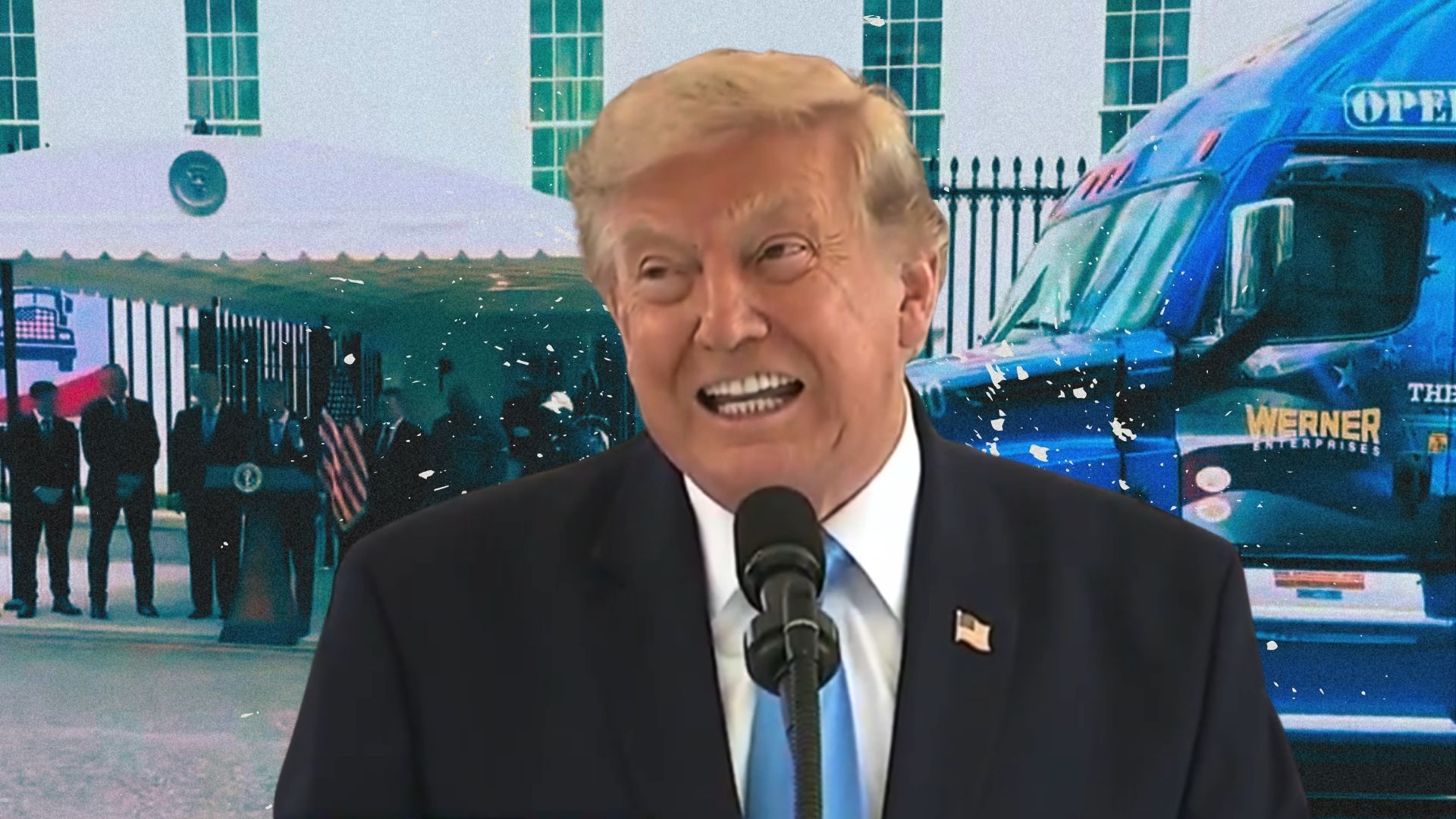
Trump Expands English-Language Enforcement for Truck Drivers, Prioritizes Veterans
Trump Announces Expansion of Trucking Enforcement Program
President Donald Trump announced an expansion of his administration's efforts to enforce English-language requirements for commercial truck drivers while promoting new opportunities for U.S. military veterans seeking careers in the trucking industry.
Speaking during an event, Trump said:
"We've already removed more than 24,000 non-English speakers from behind the wheel."
He also claimed:
"We've also forced states to cancel more than 28,000 commercial driver's licenses unlawfully issued to illegal aliens."
The figures were presented by the president as part of his administration's transportation and immigration enforcement agenda. The White House's reported numbers and implementation of these policies may be subject to further review and reporting.
Veterans at the Center of the Initiative
Trump said the administration aims to replace drivers removed under the program with qualified American veterans.
He stated:
"As we get illegal aliens off the roads today, we're also taking action to replace these unqualified migrant truck drivers with highly qualified American veterans."
The president announced that military personnel with experience operating heavy vehicles would have an expedited path toward obtaining a Commercial Driver's License (CDL).
According to Trump:
"Any American who has driven a heavy truck for our military will automatically be eligible for a commercial driver's license."
He added that veterans without prior trucking experience would receive accelerated training designed to prepare them for commercial driving careers.
Focus on Highway Safety and Workforce Development
The administration says the initiative serves two primary objectives:
Enforcing existing English-language proficiency requirements for commercial drivers.
Expanding employment opportunities for U.S. military veterans.
Supporters argue that English proficiency can improve communication with law enforcement, emergency responders, and highway signage, while veteran-focused hiring recognizes military driving experience and eases the transition into civilian employment.
Critics, meanwhile, have questioned aspects of the policy's implementation, the characterization of affected drivers, and the legal basis for some enforcement actions. Those discussions continue as the program moves forward.
Why the Announcement Is Drawing Attention
The trucking industry remains vital to the U.S. economy, transporting a significant share of the nation's freight.
As a result, changes involving commercial licensing, immigration enforcement, or workforce development often generate national attention because they can affect transportation, logistics, and employment.
Trump's announcement has therefore become part of broader debates surrounding border policy, labor shortages, public safety, and support for military veterans.
Final Thoughts
President Trump's latest announcement combines immigration enforcement with workforce development, placing veterans at the center of a new trucking initiative.
As implementation continues, the policy is expected to remain a topic of discussion among transportation officials, trucking organizations, veteran advocacy groups, employers, and policymakers.
Bible Reflection
"Whatever you do, work heartily, as for the Lord and not for men." — Colossians 3:23 (ESV)
Work carries dignity when carried out with integrity, competence, and service to others. Public policy debates may differ, but the value of preparing people for meaningful work and serving communities responsibly remains an important principle.
North Korea Conducts First Ballistic Missile Test of 2026
January 09, 2026•1 min read
North Korea fired several ballistic missiles on Sunday, marking its first missile test of 2026, according to South Korean and Japanese defense officials. The launches were detected just hours before South Korean President Lee Jae-myung departed for diplomatic talks in China.

South Korea’s Joint Chiefs of Staff said multiple projectiles, believed to be ballistic missiles, were launched from near Pyongyang and traveled approximately 750 kilometers before landing in the sea. Japan’s defense ministry also confirmed detecting a possible ballistic missile that fell outside its exclusive economic zone.
The test comes amid heightened regional tension following recent U.S. military actions abroad and renewed diplomatic activity in East Asia. Analysts note that Pyongyang often times weapons tests to coincide with major political events or international summits.
It was North Korea’s first ballistic missile launch since late 2025, when it tested weapons systems after U.S. President Donald Trump approved the deployment of a nuclear-powered submarine to the region. Seoul said it remains on high alert, strengthening surveillance and coordination with allies.
North Korean leader Kim Jong Un has long argued that the country’s missile and nuclear programs serve as deterrents against what Pyongyang describes as hostile foreign policies. The United States has repeatedly stated it has no plans for regime change, while urging North Korea to return to dialogue.
The missile test also precedes an upcoming ruling party congress in Pyongyang, where defense policy, military modernization, and economic planning are expected to be key agenda items.