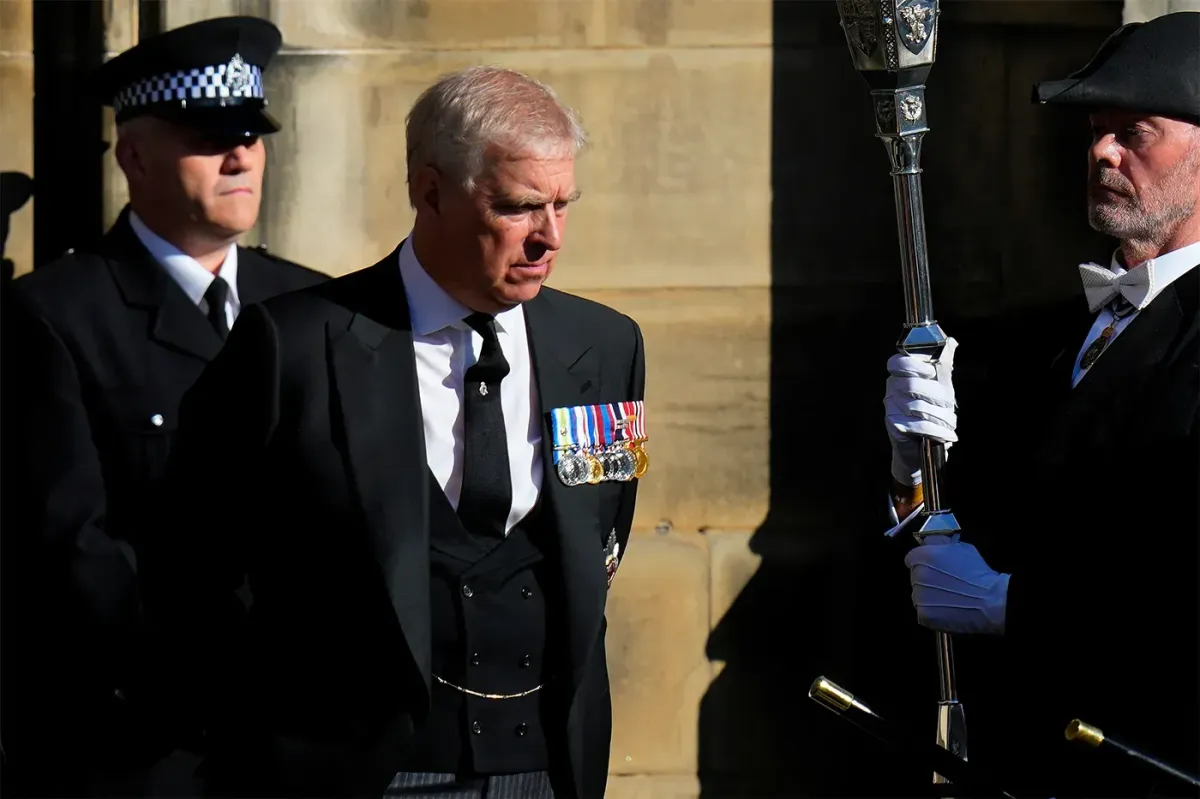
UK Police Arrest Former Prince Andrew on Suspicion of Misconduct
British authorities have arrested Prince Andrew on suspicion of misconduct, in a development that significantly intensifies scrutiny surrounding the Duke of York’s long-standing legal controversies.
According to UK police statements, the arrest follows renewed examination of evidence connected to past allegations. Officials emphasized that the investigation remains ongoing and that formal charges have not yet been confirmed at this stage.
The arrest represents one of the most serious legal actions taken against a senior member of the British royal family in modern history.
⚖️ What We Know So Far
Authorities have stated that the arrest was made “on suspicion of misconduct,” though specific legal classifications have not been fully disclosed pending further review.
Under UK law, arrest on suspicion does not imply guilt. It allows investigators to question a suspect under caution while gathering additional evidence.
Police have reiterated:
The investigation is active
Due process will be followed
No conclusions should be drawn prematurely
Legal experts note that high-profile cases involving public figures are typically handled with heightened procedural caution.
👑 Background Context
Prince Andrew has faced years of controversy linked to his association with convicted sex offender Jeffrey Epstein.
In previous civil litigation in the United States, Andrew denied allegations of wrongdoing and reached a financial settlement without admission of liability.
In 2022, he stepped back from official royal duties and relinquished military titles and royal patronages.
However, the resurfacing of documents and renewed investigative activity appear to have triggered further legal scrutiny.
🏰 Impact on the Royal Family
The British monarchy has already undergone significant transitions in recent years.
Observers say this arrest could:
Reignite public debate over accountability
Increase pressure on palace communications
Raise questions about institutional oversight
Impact public trust
Buckingham Palace has not issued an extensive statement beyond acknowledging awareness of the situation.
Royal analysts caution that the institution will likely maintain distance from the legal process while emphasizing respect for judicial proceedings.
🌍 International Reaction
The case has drawn global attention, particularly because of its connections to wider investigations involving high-profile individuals across multiple countries.
Political analysts note that legal proceedings involving royalty are rare and historically sensitive.
In constitutional monarchies like the United Kingdom, members of the royal family are not immune from legal processes.
The principle of equality before the law remains central to public discourse.
📊 Legal Perspective
British criminal procedure allows police to arrest individuals for questioning when reasonable suspicion exists.
Possible next steps may include:
Formal charging
Release pending further investigation
Bail conditions
Referral to prosecutors
Legal scholars emphasize that arrest alone does not determine outcome. The evidentiary threshold for prosecution is substantial.
🧠 Broader Implications
Beyond the individual case, the arrest could influence:
Ongoing transparency efforts within elite institutions
Public trust in accountability mechanisms
Discussions around privilege and legal equality
The case also intersects with continuing global scrutiny of historical misconduct allegations tied to powerful figures.
📌 What Happens Next?
Investigations of this nature often unfold over weeks or months.
Key questions remain:
Will formal charges be filed?
What evidence will be presented publicly?
How will the royal family position itself moving forward?
For now, the legal process has entered a new and consequential phase.