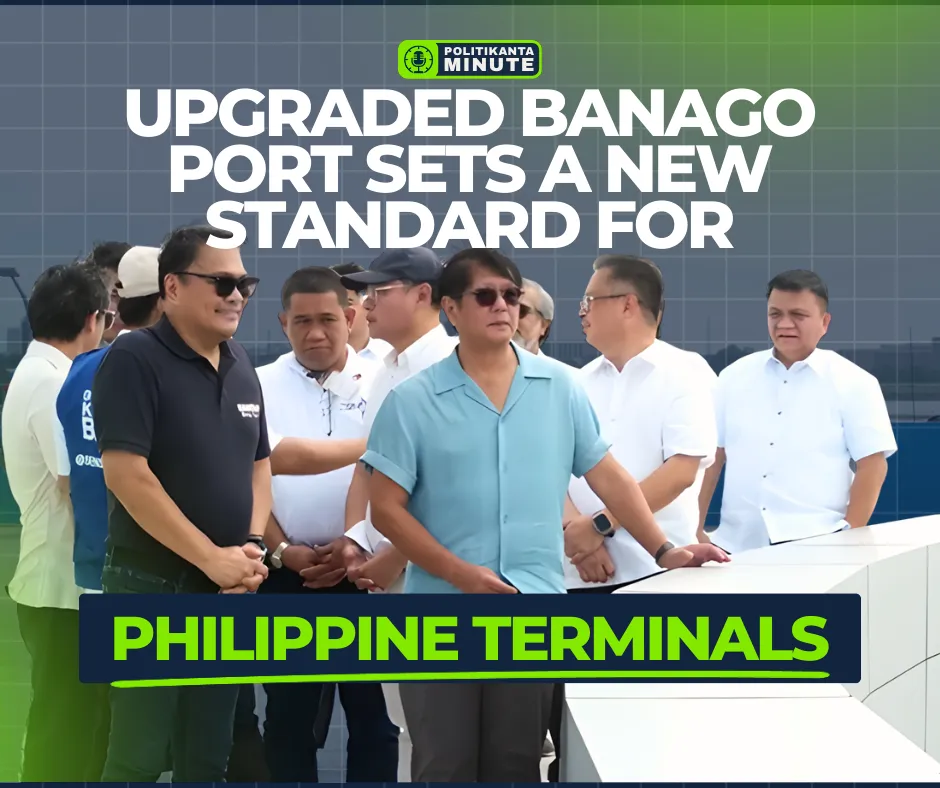
Upgraded Banago Port Sets a New Standard for Philippine Terminals
President Ferdinand “Bongbong” Marcos Jr. has declared the newly upgraded Banago Port in Bacolod City as the model for port terminal design across the Philippines—marking a clear push toward modernization, efficiency, and passenger-centered infrastructure.
During his inspection, the President emphasized that ports should no longer be confusing, congested, or unsafe. Instead, terminals must clearly guide passengers—from ticketing to boarding—while ensuring smooth cargo operations and safer working conditions for port personnel.
The upgraded Banago Port now features a modern Port Operations Building (POB), expanded operational areas, a widened causeway for improved traffic flow, and a covered passenger walkway designed to protect commuters from harsh weather. These upgrades are expected to significantly boost trade, tourism, and regional economic productivity in Western Visayas.
Beyond Bacolod, the President’s message was clear: infrastructure must work for people, not against them. A standardized port design allows travelers—especially those from the provinces—to move efficiently and with dignity, reducing confusion and delays that have long plagued transport hubs.
Marcos also inspected facilities at the National Maritime Polytechnic (NMP) in Tacloban City, where upgraded simulators and training equipment are set to raise the standards of Filipino seafarer education beginning 2026. This signals a parallel investment in human capital, ensuring that infrastructure development goes hand-in-hand with skills training.
In a country dependent on maritime transport, modern ports are not luxuries—they are necessities. The Banago Port upgrade represents a shift toward functional governance, where infrastructure directly supports economic mobility, safety, and national growth.
