Western Intelligence Warns of Potential Russian Expansion Beyond Ukraine
A newly circulated intelligence assessment has raised concerns among Western security officials that Russia may be considering its next strategic move beyond Ukraine, prompting renewed debate across NATO capitals about deterrence and preparedness.
While the report does not confirm imminent military action, it outlines scenarios in which Moscow could test alliance cohesion by applying pressure—military, hybrid, or political—on neighboring states perceived as vulnerable.
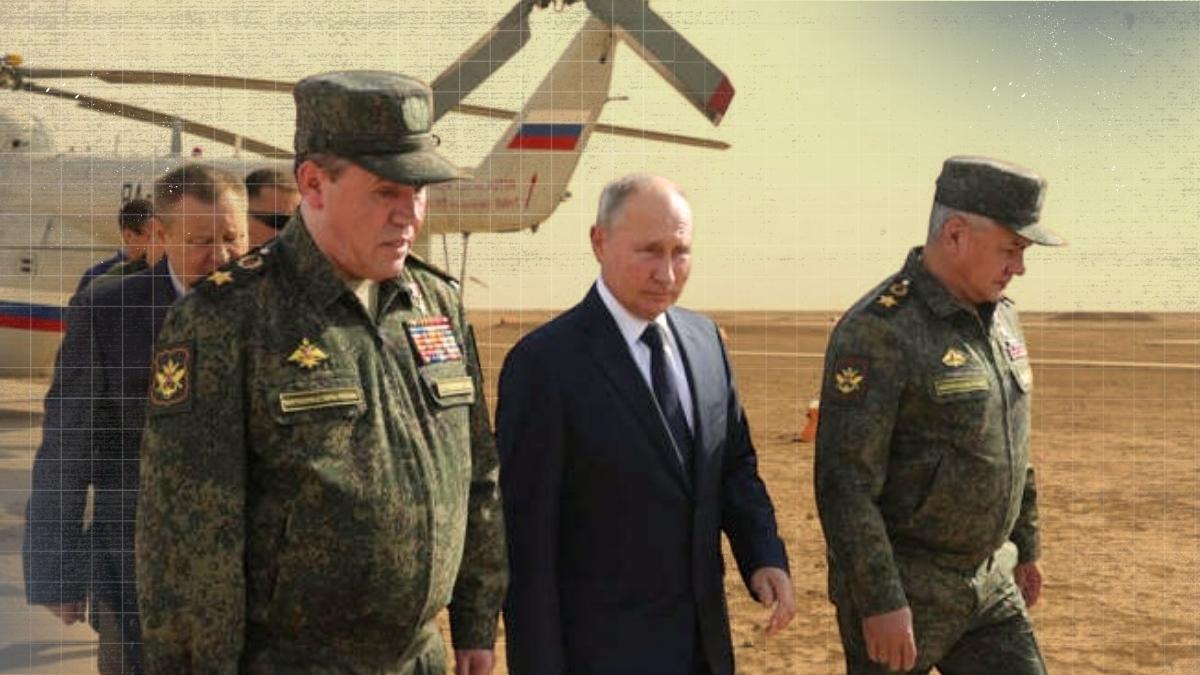
President Vladimir Putin has consistently framed Russia’s war in Ukraine as part of a broader geopolitical confrontation with NATO. Analysts say this narrative leaves room for strategic signaling aimed at other regions bordering Russia.
Security sources cited in the report suggest that potential areas of concern include NATO’s eastern flank—particularly the Baltic states—due to their geographic proximity and historical sensitivity. Countries such as Estonia, Latvia, and Lithuania are NATO members, meaning any direct military action would invoke Article 5 collective defense obligations.
NATO officials have responded cautiously, emphasizing that intelligence assessments explore possibilities rather than certainties. “Deterrence works best when readiness is visible,” one European defense analyst said.
Beyond conventional invasion scenarios, experts say Russia could escalate through asymmetric measures: cyberattacks, energy disruptions, disinformation campaigns, or destabilization efforts in politically divided states. Such methods allow Moscow to exert pressure without triggering full-scale war.
The intelligence report reportedly highlights increased Russian military activity, force repositioning, and rhetorical escalation. However, military analysts caution that troop movement does not always translate to immediate aggression.
For Volodymyr Zelensky, the warning reinforces Kyiv’s longstanding argument that the war’s implications extend beyond Ukrainian borders. Ukrainian officials have repeatedly urged Western allies to view Russian expansionism as a systemic threat rather than a regional conflict.
NATO Secretary General Jens Stoltenberg has maintained that alliance forces are prepared for any contingency. NATO has already increased troop deployments and rapid response readiness across Eastern Europe since 2022.
However, geopolitical experts note that deterrence depends not only on military readiness but also on political unity. Any signs of fragmentation within NATO could embolden Moscow.
Russia has denied ambitions to expand the conflict beyond Ukraine, accusing Western governments of exaggerating threats to justify military buildup. Kremlin officials argue that NATO expansion itself created the security tensions driving the current war.
The intelligence assessment also considers economic and domestic factors within Russia. Sustained military engagement strains resources, raising questions about whether Moscow would risk widening the conflict while still engaged in Ukraine.
Still, history shows that geopolitical strategy is not always purely rational or linear. Symbolic victories, domestic pressures, and leader psychology can influence decisions in unpredictable ways.
Experts emphasize that intelligence reports are not predictions but tools for planning. “The goal is prevention,” one former defense official said. “If deterrence succeeds, the scenario never happens.”
For smaller European states, the warning serves as a reminder that geography remains destiny. Border nations have increased defense spending and strengthened coordination with NATO allies in response to evolving security assessments.
As the Ukraine war continues into another year, the broader question remains: Is Russia’s strategy limited to Ukraine, or part of a longer-term effort to reshape European security architecture?
For now, Western governments appear focused on signaling unity and preparedness—hoping that credible deterrence prevents the scenario described in the intelligence report from becoming reality.