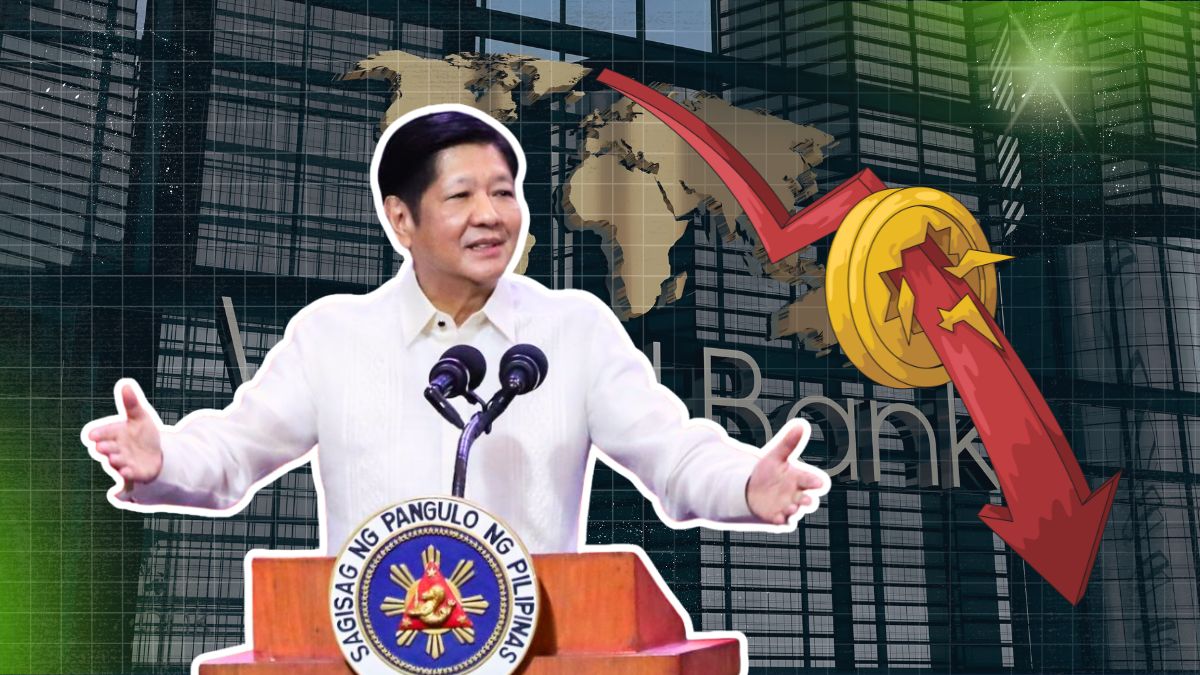
World Bank’s Red Light: When Photo Ops Can’t Hide Economic Warnings
The World Bank has raised a flashing red light on the Philippine economy—downgrading growth projections and pointing to deeper, structural problems beneath the surface of official optimism.

While photos circulated showing smiles and handshakes during World Bank meetings with President Ferdinand “Bongbong” Marcos Jr., the actual message from the institution was far less celebratory.
The Eagle reads the fine print.
📖 “Truthful words stand the test of time, but lies are soon exposed.” — Proverbs 12:19
According to the World Bank, Philippine growth is expected to remain below 5.5% through 2027, dragged down by:
Weak private investment
A sharp decline in foreign direct investment (FDI)
Delays in public infrastructure projects
Governance and corruption concerns
This was not a casual observation. It was a warning.
Investor confidence, the report noted, is being eroded not by global forces alone, but by domestic weaknesses—slow approvals, inconsistent policies, and institutions unable to assure transparency and predictability.
Here lies the irony.
Supporters celebrated the visit.
Critics read the report.
The World Bank was not endorsing leadership—it was diagnosing a problem.
The economy’s over-reliance on non-tradable sectors like construction and domestic retail has left it fragile. Without strong manufacturing, exports, and sustained investment inflows, growth becomes shallow—easily disrupted by storms, floods, and political noise.
The Eagle sees what the camera cannot.
Photo ops create perception.
Reports create accountability.
The World Bank’s call was blunt: double down on reforms. Accelerate governance improvements. Restore investor trust. Combat corruption decisively. Speed up infrastructure—not on paper, but on the ground.
Because when confidence leaves, it does not announce its exit.
It simply stops coming.
And no amount of smiling photos can bring it back.