
Golden Globes
Golden Globes Winners & Nominees: The Names Shaping This Awards Season
Tap to view
👁
Mixed

Your support keeps independent commentary alive.
☕ Buy us a coffee and keep the conversation going
Curated Politikanta Minute playlists by focused political topic.
Latest GLOBAL-related updates, reactions, political tension, hearing clips, and issue breakdowns.
Watch More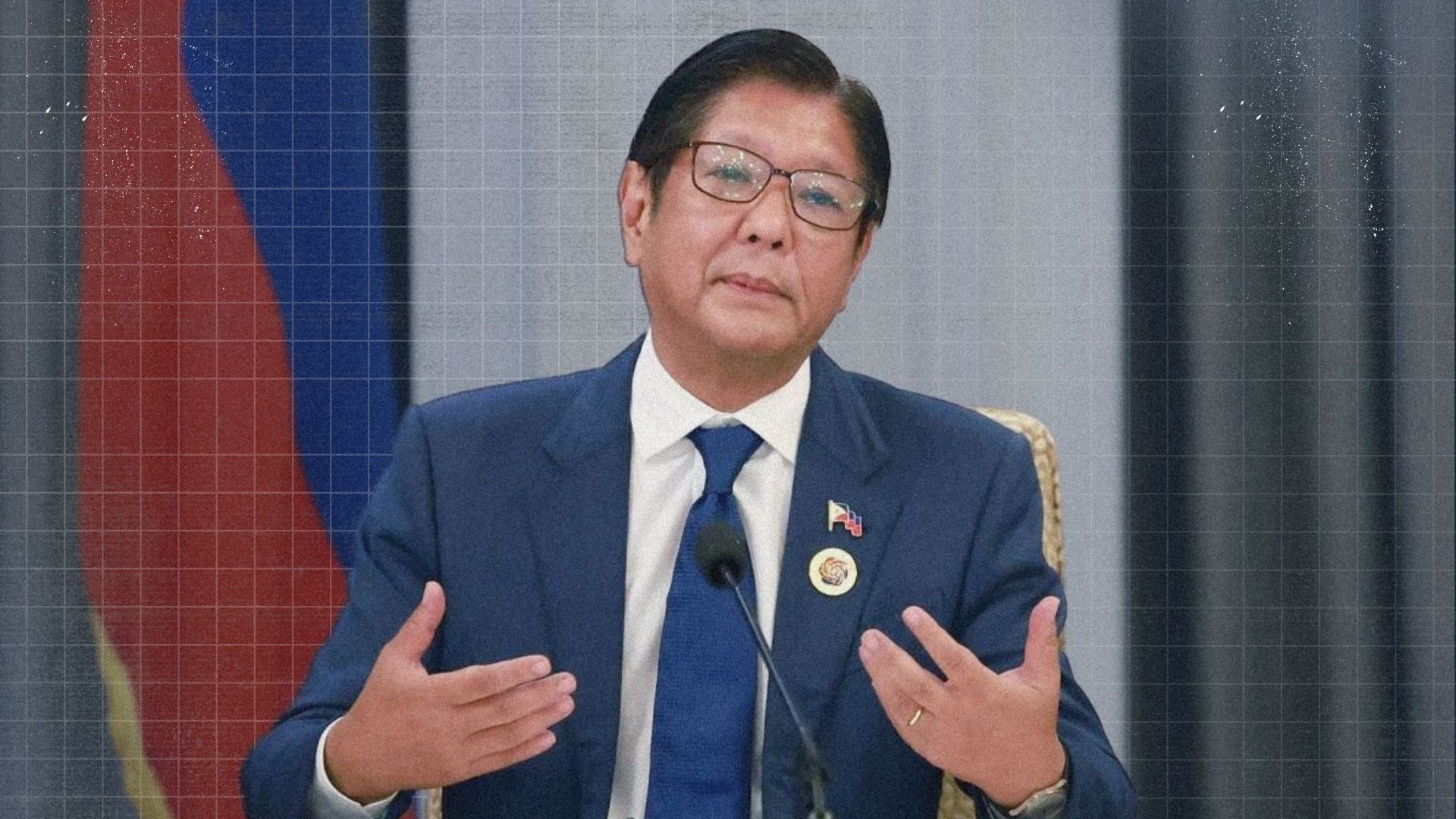
President Ferdinand "Bongbong" Marcos Jr. said workers in regions outside Metro Manila may have to wait until the fourth quarter of the year, or beginning around September, before possible wage increases are approved.
The President explained that the Regional Tripartite Wages and Productivity Boards are still conducting studies on the proposed salary adjustments in their respective areas.
The statement came after the Department of Labor and Employment (DOLE) announced an ₱85 daily wage increase for minimum wage earners in Metro Manila.
While workers in the National Capital Region have already received a decision, wage adjustments in other regions remain under review because each regional wage board independently evaluates local economic conditions before issuing its own wage orders.
According to President Marcos, the studies are still ongoing and require additional time before final decisions can be made.
Under Philippine labor laws, wage increases outside Metro Manila are determined by the Regional Tripartite Wages and Productivity Boards.
These boards consider several factors, including:
Inflation and the cost of living
Business capacity to pay
Employment conditions
Regional economic performance
Productivity levels
Because economic conditions vary across the country, wage adjustments are not automatically implemented nationwide at the same time.
Many workers outside Metro Manila continue to monitor the deliberations of their respective wage boards, hoping that proposed increases will help offset the rising cost of basic goods and services.
Employers, meanwhile, are also watching the outcome of the wage studies, as any approved adjustments could affect operating costs, especially for small and medium-sized enterprises.
For now, President Marcos indicated that regional decisions may begin to be released during the fourth quarter once the evaluation process has been completed.
Regional wage setting seeks to balance two important objectives: protecting workers' purchasing power while ensuring that businesses remain financially sustainable. Because economic conditions differ across regions, wage boards are tasked with assessing local circumstances rather than applying a uniform nationwide increase.
The timing of wage adjustments often becomes a significant concern during periods of rising prices, as workers seek immediate relief while employers weigh the impact of higher labor costs. The effectiveness of any wage increase will ultimately depend not only on the amount approved but also on broader economic factors such as inflation, productivity, and job creation.
As regional wage boards continue their deliberations, both workers and employers will be closely watching how the final decisions address these competing considerations.
"The laborer deserves his wages." — Luke 10:7 (ESV)
In Luke 10:7, Jesus teaches that those who work are worthy of fair compensation. The principle affirms the dignity of labor and the responsibility to provide just wages for honest work.
Applied to today's discussions on wage adjustments, the passage reminds both policymakers and employers of the importance of balancing fairness for workers with responsible stewardship. Decisions affecting wages should seek both justice for laborers and long-term economic stability that benefits workers, businesses, and society alike.
Public Works Secretary Vince Dizon has introduced young blood engineers as the new officers in charge of the controversial Bulacan 1st District Engineering Office, following the flood-control scandal that rocked the agency.

“We’re not here for money, but for solutions,” Dizon said—framing the move as a reset, a chance to restore credibility and competence within DPWH.
On paper, the message sounds hopeful.
Fresh minds. Clean slates. No baggage.
But the Eagle asks a harder question:
Is replacing faces enough when the system itself remains untouched?
Flood-control failures are rarely the work of a single office—or a single generation. They are the result of longstanding processes, weak oversight, and incentives that reward compliance over courage.
Young engineers may bring integrity.
They may bring idealism.
But idealism alone cannot survive inside a structure that resists transparency.

🎧 Stream Sa Gitna ng Uhaw on Spotify, Amazon Music, Itunes, Youtube and Facebook today.
https://open.spotify.com/album/63hbCvGl6brB4nhEcK1z1q?si=Xj-xKgidTEOZ1WLY6Pcckw
Apple Music: https://music.apple.com/gb/album/sa-gitna-ng-uhaw/1858077981
TIDAL: https://tidal.com/album/478344566/track/478344575
Deezer: https://www.deezer.com/us/album/868511842
📖 “Do not pour new wine into old wineskins.” — Luke 5:37
Leadership is not just about appointing new people.
It is about changing how decisions are made, how projects are approved, and how money is tracked.
If these young officers are truly empowered—protected from political pressure, shielded from coercion, and backed by firm accountability—then reform has a chance.
But if they are merely placed at the front while old habits operate behind the scenes, then this becomes not reform—but rebranding.
The country has seen this pattern before:
New faces introduced, scandals fade, systems stay intact.
This moment will matter not because of who was appointed—but because of what happens when they refuse to follow old instructions.





Disclaimer: This site uses publicly available images and materials for news, satire, and commentary. All rights belong to their respective owners. No copyright infringement intended.
© 2025 Politikanta Minute. All Rights Reserved.
Political Commentary • Satire • Faith-Based Reflection
Some visuals may be AI-generated for satire and illustration. Not real footage unless stated.

Disclaimer: This site uses publicly available images and materials for news, satire, and commentary. All rights belong to their respective owners. No copyright infringement intended.
© 2025 Politikanta Minute. All Rights Reserved.
Political Commentary • Satire • Faith-Based Reflection
Some visuals may be AI-generated for satire and illustration. Not real footage unless stated.