
Golden Globes
Golden Globes Winners & Nominees: The Names Shaping This Awards Season
Tap to view
👁
Mixed

Your support keeps independent commentary alive.
☕ Buy us a coffee and keep the conversation going
Curated Politikanta Minute playlists by focused political topic.
Latest GLOBAL-related updates, reactions, political tension, hearing clips, and issue breakdowns.
Watch More
Representative Joel Chua recently weighed in on the growing tension surrounding developments inside the Senate, and while his tone remained measured, one phrase quickly stood out:
“Medyo nakakabahala.”
That short statement immediately caught public attention because it reflects what many Filipinos have already been sensing in recent weeks — that political disagreements inside major government institutions are becoming more visible, more heated, and increasingly difficult to ignore.
During his remarks, Chua acknowledged hearing arguments that he personally does not agree with, but said these are still being pushed forward anyway.
“May mga narinig tayo na argumento na bagamat alam natin na hindi tayo sumasang-ayon pero pinipilit,” he said.
The statement may sound diplomatic on the surface, but politically, it carries weight.
Joel Chua carefully avoided directly attacking the Senate or escalating the situation publicly.
Instead, he emphasized institutional boundaries, saying that whatever is happening remains an “internal” matter among senators themselves.
That distinction matters.
Because rather than inflaming the issue further, Chua appeared to signal restraint — recognizing that tensions exist, while also respecting the independence of another branch of government.
But the concern in his voice was noticeable.
And in politics, tone often says more than the actual words.
The phrase “pinipilit” struck many observers online because it suggests frustration over arguments being advanced despite visible disagreement.
For supporters of institutional stability, this raises concern about whether political discussions are still being guided by consensus and legal clarity — or whether competing camps are now forcing narratives simply to gain advantage.
This becomes even more sensitive when the public already sees growing divisions across multiple political fronts:
Senate leadership tensions
impeachment-related discussions
constitutional debates
accountability hearings
and political positioning ahead of future elections
When lawmakers themselves begin describing developments as “nakakabahala,” people naturally start asking deeper questions.
What makes Chua’s statement significant is not just what he said — but when he said it.
Filipino politics today feels increasingly polarized, with almost every issue instantly becoming a battle between camps, personalities, and online narratives.
In that environment, even moderate remarks begin carrying symbolic meaning.
And while Chua ultimately emphasized that the Senate controls its own internal affairs, his comments subtly reflected what many citizens are quietly observing:
There appears to be growing strain within institutions that are supposed to work together.
Online reactions quickly split into familiar camps.
Some viewed Chua’s comments as a calm and responsible warning against political overreach and unnecessary escalation.
Others argued that disagreements are normal in a democracy and should not automatically be treated as alarming.
But many ordinary viewers focused on one thing:
the visible tension itself.
Because for the public, confidence in institutions depends heavily on whether leaders appear disciplined, united in purpose, and focused on governance rather than internal conflict.
Political disagreements are normal in any democracy.
But when public officials themselves begin using words like “nakakabahala,” citizens naturally pay attention.
At a time when Filipinos are already dealing with economic pressures, public trust issues, and nonstop political noise online, visible fractures inside government institutions can create uncertainty.
Joel Chua may have spoken cautiously.
But his remarks still revealed something important:
people inside government are also watching the tension closely.
And whether these divisions calm down or intensify may shape public confidence moving forward.
“Where no counsel is, the people fall: but in the multitude of counsellors there is safety.”
This verse highlights the importance of wisdom, humility, and healthy discussion in leadership. A nation becomes unstable when decisions are driven by pride, pressure, or division instead of wise counsel and discernment. Political disagreements are natural, but leaders are called to pursue truth and unity over personal ambition. Proverbs reminds us that strong institutions depend not on forced narratives, but on honest dialogue guided by wisdom and accountability.
January 16, 2026•1 min read
In politics, messages are usually filtered.
Sometimes, they bounce back.
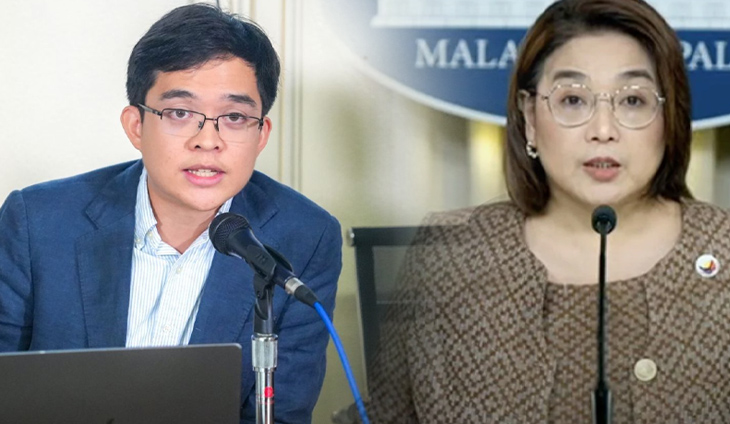
Batangas Representative Leandro Leviste said he is preparing to file a libel complaint against Palace spokesperson Claire Castro, following remarks he claims were defamatory and damaging to his reputation.
Leviste said the statements attributed to Castro went beyond clarification and crossed into accusation, prompting him to seek legal recourse. According to the lawmaker, public officials—especially those speaking from Malacañang—carry heightened responsibility, as their words travel with institutional weight.
Castro, for her part, has maintained that Palace communications are meant to address issues of public concern, not to malign individuals. No formal case has yet been filed as of reporting, but Leviste said legal steps are underway.
Quietly, the episode highlights a recurring tension in governance: when official narratives harden into personal disputes, the line between information and liability narrows fast. Press briefings are designed to manage controversy—not become part of it.
As this develops, the exchange shifts from microphones to pleadings, where tone matters less than wording, and intent is measured sentence by sentence.
For now, the message is unmistakable:
even official voices are not immune from consequence.





Disclaimer: This site uses publicly available images and materials for news, satire, and commentary. All rights belong to their respective owners. No copyright infringement intended.
© 2025 Politikanta Minute. All Rights Reserved.
Political Commentary • Satire • Faith-Based Reflection
Some visuals may be AI-generated for satire and illustration. Not real footage unless stated.

Disclaimer: This site uses publicly available images and materials for news, satire, and commentary. All rights belong to their respective owners. No copyright infringement intended.
© 2025 Politikanta Minute. All Rights Reserved.
Political Commentary • Satire • Faith-Based Reflection
Some visuals may be AI-generated for satire and illustration. Not real footage unless stated.