

Golden Globes
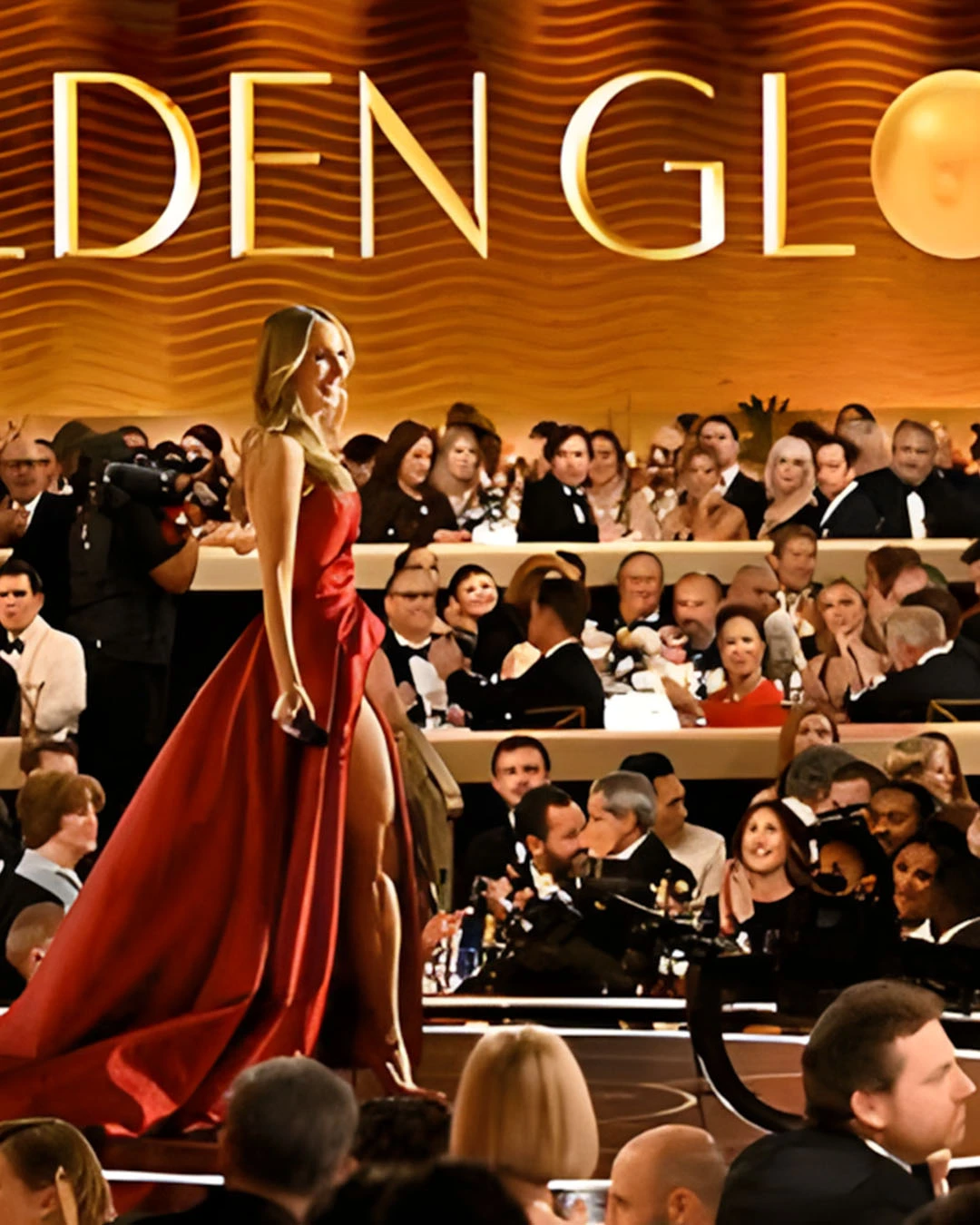
Golden Globes Winners & Nominees: The Names Shaping This Awards Season
Tap to view
👁
Mixed

Your support keeps independent commentary alive.
☕ Buy us a coffee and keep the conversation going
Curated Politikanta Minute playlists by focused political topic.
Latest GLOBAL-related updates, reactions, political tension, hearing clips, and issue breakdowns.
Watch More
Kristen Stewart is opening up about something she believes Hollywood doesn't always talk about honestly: the different standards applied to male and female actors.
In a recent conversation, the actress discussed the way certain behaviors displayed by male performers can sometimes be interpreted as signs of dedication, intensity, or even genius.
But when a woman behaves in a similar way?
The reaction, she suggested, can be very different.
She believes the woman might simply be labeled "difficult" or "crazy."
And that's where Stewart's argument gets interesting.
Stewart questioned the culture surrounding some highly demanding acting performances.
She talked about situations where actors may insist on particular rituals before filming, become extremely particular about how they speak, or challenge interviewers in ways that dominate the conversation.
Her argument isn't necessarily that these performers aren't talented.
In fact, she acknowledged the extraordinary abilities of legendary actors.
Instead, Stewart questioned whether some of the behavior surrounding the performance can become part of the mythology.
The idea that the actor must appear larger than life.
More intense.
More mysterious.
More difficult to access.
Almost as if the audience needs to believe that great acting is some kind of impossible magic trick that only a select few can perform.
Stewart offered a colorful analogy, describing the behavior as almost like someone "pounding their chest" before becoming vulnerable on camera.
Her theory?
Sometimes the performance of being powerful can serve as a shield against vulnerability.
Acting requires people to expose themselves emotionally.
That can be uncomfortable.
So perhaps, Stewart suggested, some performers create an intimidating persona before stepping into that vulnerable space.
It becomes a form of control.
A way of establishing authority.
And perhaps even a way of protecting oneself from the fear of being emotionally exposed.
But the most revealing part of Stewart's conversation came when she described an interaction with another actor.
She said she asked a fellow actor whether he had ever encountered a female actor who practiced the same kind of intense, highly demanding approach sometimes associated with male actors.
According to Stewart, the conversation immediately became defensive.
Instead of answering the question, she said the actor responded:
"Actresses are crazy."
And Stewart immediately pushed back.
Her reaction was essentially:
Wait. You just called me crazy.
For Stewart, this was exactly the point she was trying to make.
She wasn't asking whether actresses were crazy.
She was asking why the behavior is interpreted differently depending on who is doing it.
This is where Stewart's comments touch on a much larger cultural conversation.
For decades, women who are outspoken, demanding, emotional, intense, or difficult to control have often been described using labels that carry a negative connotation.
Men displaying similar characteristics may sometimes be described differently.
Passionate.
Driven.
A perfectionist.
A visionary.
A genius.
The question Stewart raises is whether the same behavior deserves the same interpretation regardless of gender.
It's an uncomfortable question.
Because sometimes the answer may be yes.
And sometimes the reality may be more complicated.
Stewart also spoke about what she sees as differences between men and women in performance and collaboration.
She argued that women are often expected to be highly responsive and emotionally giving.
In her words, women are "made to give."
Whether one agrees with that broad characterization or not, the underlying idea is worth examining.
Acting is fundamentally about collaboration.
Actors depend on directors.
Directors depend on actors.
The crew depends on everyone.
And ultimately, the audience depends on the entire team.
So when does artistic intensity become unproductive behavior?
And when does demanding excellence simply become part of the creative process?
That's a debate that probably doesn't have one universal answer.
Perhaps Stewart's most interesting point isn't about men versus women.
It's about how we interpret power.
When someone is confident and demanding, do we see leadership?
When someone is difficult, do we excuse it because they're talented?
When a famous actor behaves badly, do we call it genius?
And when someone less powerful does the same thing, do we call it unacceptable?
Those are questions worth asking—not only in Hollywood, but in almost every industry.
Talent should be respected.
But talent shouldn't automatically excuse bad behavior.
And being difficult doesn't automatically make someone a genius.
At the same time, someone shouldn't be dismissed as "crazy" simply because they challenge the status quo.
Maybe the real goal should be simpler:
Judge the behavior by the behavior—not by whether the person doing it is a man or a woman.
Because if we're serious about equality, the standard should work both ways.
November 24, 2025•1 min read
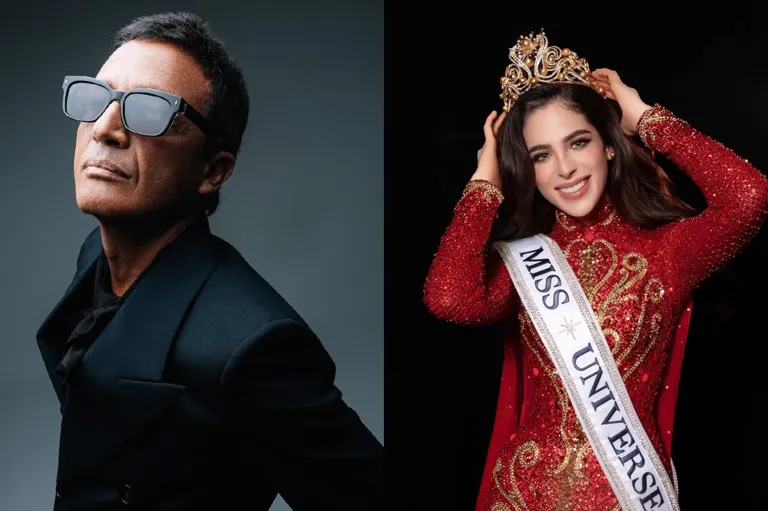
The Miss Universe 2025 controversy has exploded into the global spotlight after French-Lebanese composer and former Miss Universe judge Omar Harfouch demanded the resignation of newly crowned Miss Universe Fatima Bosch of Mexico.

Harfouch revealed that her win was allegedly pre-determined before coronation night — a claim fiercely denied by Miss Universe Organization (MUO) president Raúl Rocha. Still, the calls for accountability haven't stopped.
According to Harfouch, “urgent measures” must be
taken immediately, citing confirmed financial and political ties between Bosch’s family and the MUO. This includes her father’s multimillion-dollar business ties with Rocha and political connections stretching into the highest offices in Mexico.
👇 SUBSCRIBE or📌 Follow us on social media:
Facebook @PolitikantaMinute | YouTube ➡️ @PolitikantaMinute
🎧 Stream Buwaya sa Congreso on Spotify, Amazon Music, Itunes, Youtube and Facebook today.
https://open.spotify.com/album/7GkurDB4gUdWB9TlxRpcvP?si=m8jDgQQ_Qxe_kARwO2TwTQ
Apple Music: https://music.apple.com/us/artist/politikanta-minute/1851182606
☕ Support the channel here: buymeacoffee.com/politikantaminute

Harfouch’s demands include:
Immediate resignation of Fatima Bosch as Miss Universe 2025
Permanent removal of Raúl Rocha from all pageant-related activities
Creation of an independent auditing committee to overhaul all national and international voting
Extension of Victoria Kjær Theilvig’s reign as Miss Universe 2024 for one more year
A full investigation into the sale of the Miss Universe Organization to Puerto Rico
The allegations have shaken one of the most recognizable global pageants. As of this writing, the MUO has not issued an official response to these new claims.
Despite the backlash, Bosch maintains that her victory was “destined by God.” But Harfouch insists the world deserves a transparent, audited, and corruption-free Miss Universe system — not a politically influenced crowning.
This is a developing story.





Disclaimer: This site uses publicly available images and materials for news, satire, and commentary. All rights belong to their respective owners. No copyright infringement intended.
© 2025 Politikanta Minute. All Rights Reserved.
Political Commentary • Satire • Faith-Based Reflection
Some visuals may be AI-generated for satire and illustration. Not real footage unless stated.
Disclaimer: This site uses publicly available images and materials for news, satire, and commentary. All rights belong to their respective owners. No copyright infringement intended.
© 2025 Politikanta Minute. All Rights Reserved.
Political Commentary • Satire • Faith-Based Reflection
Some visuals may be AI-generated for satire and illustration. Not real footage unless stated.