
Support Politikanta Minute
Your support keeps independent commentary alive.
☕ Buy us a coffee and keep the conversation going
Latest Videos
Curated Politikanta Minute playlists by focused political topic.
HOR Issues
Latest HOR-related updates, reactions, political tension, hearing clips, and issue breakdowns.
Watch MoreDuterte Legacy Playlist
Senate Circus Playlist
House of Representatives Scandals Playlist
Celebrity Updates
Sports
🎵 Music
18 Marines Playlist
Global Entertainment Playlist
Global News Playlist
Bible Scripture Playlist
Breaking News Playlist
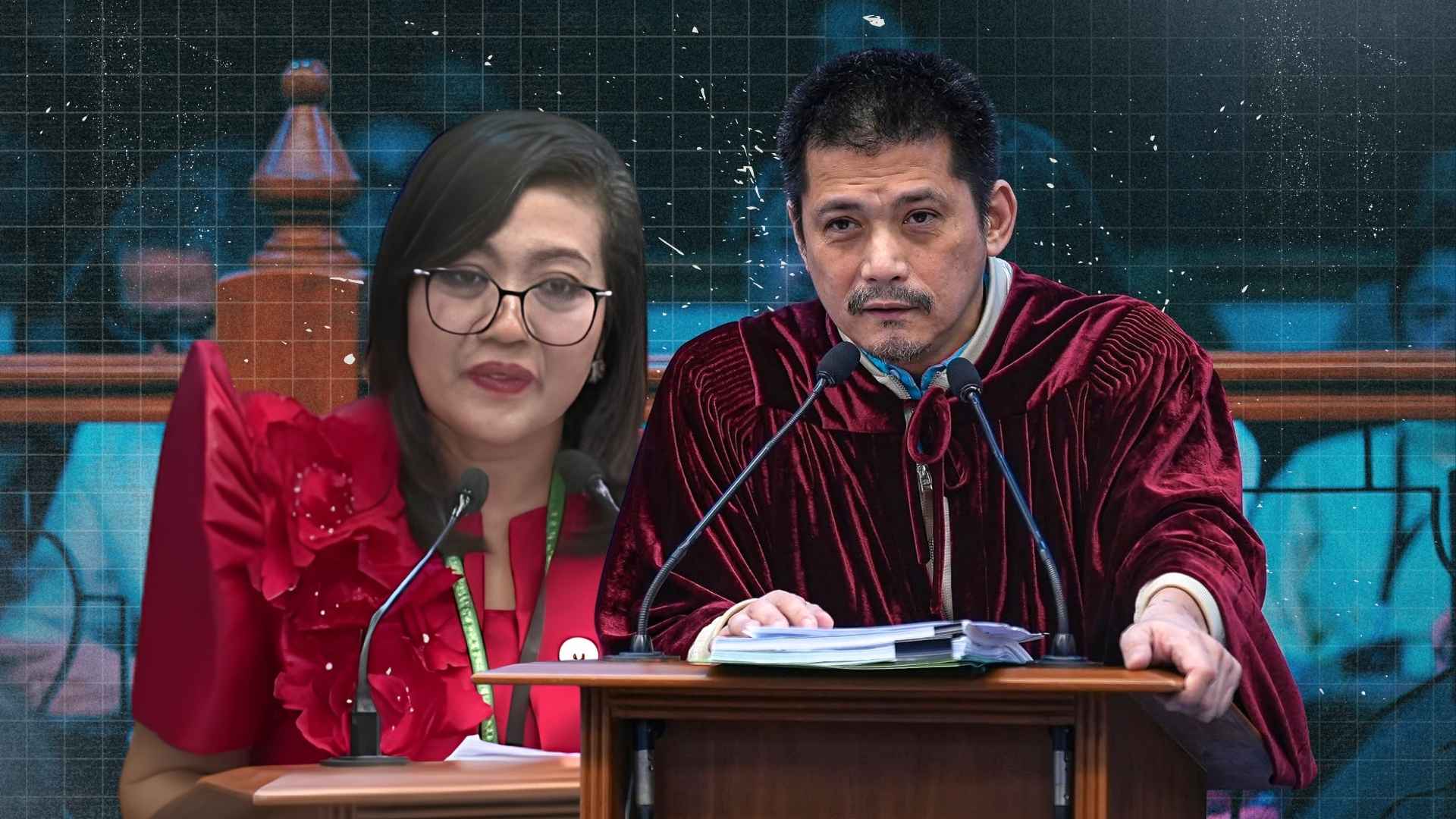
LUISTRO TO PADILLA: CONVICTION NOT AUTOMATIC GROUND TO DISQUALIFY WITNESS
LUISTRO TO PADILLA: CONVICTION NOT GROUND TO DISQUALIFY WITNESS
The issue of witness credibility and qualification once again took center stage during the impeachment trial of Vice President Sara Duterte after Senator-Judge Robin Padilla questioned the prosecution about whether individuals facing criminal cases—or those who have been convicted—should still be allowed to testify.
During the proceedings, Padilla raised the possibility of excluding witnesses who have pending cases, citing supposed perjury complaints involving previous witnesses NBI agent John Mark Calilung and NBI Regional Director Jeremy Lotoc.
In response, lead prosecutor Jinky Luistro explained that a person's conviction does not automatically disqualify that individual from serving as a witness.
According to Luistro, there are specific legal circumstances that must be considered before a conviction can affect a person's qualification to testify.
She explained that a conviction becomes a ground for disqualification only when it is final, carries a penalty of more than one year, and involves a crime that constitutes moral turpitude.
The exchange highlights an important distinction in legal proceedings: the existence of a criminal complaint or case is not necessarily the same as a final conviction, and neither automatically determines whether a person is competent to testify.
Padilla's questioning, however, focused on whether witnesses with pending legal cases should be treated differently, particularly when their testimony could have an impact on the credibility of the evidence being presented before the impeachment court.
Luistro, for her part, said the prosecution had verified that both Calilung and Lotoc do not have pending cases, countering the concern raised during the proceedings.
The discussion comes amid intense scrutiny over the testimonies of witnesses presented in the impeachment proceedings, where both the prosecution and defense have repeatedly challenged the reliability, credibility, and evidentiary basis of statements presented before the Senate sitting as an impeachment court.
At its core, the exchange raises a larger question:
Should a person's legal history automatically determine whether their testimony should be heard?
For the prosecution, the answer appears to be no. A witness's background may affect how the court evaluates credibility, but that is different from automatically declaring the person disqualified from testifying.
For the defense, however, questions surrounding a witness's legal history, credibility, and possible bias remain important issues that may be raised during cross-examination.
As the impeachment trial continues, the battle is increasingly becoming not only about what the witnesses are saying, but also about whether their testimony can withstand scrutiny.
And that distinction could become crucial as the Senate impeachment court weighs the evidence before it.
REPORTORIAL COMMENTARY
The latest exchange between Senator-Judge Robin Padilla and prosecutor Jinky Luistro shows just how complicated the impeachment trial has become.
At first glance, the question seems simple:
Can someone with a criminal case still testify?
But the deeper issue is credibility.
A witness can be legally qualified to testify—and yet the court can still examine whether that person's testimony is believable, consistent, and supported by evidence.
That is where the real battle lies.
The defense has every right to scrutinize the people appearing before the impeachment court. If a witness has a history that could affect credibility, it is reasonable for lawyers to ask questions about it.
But the prosecution also has a point: a mere accusation is not automatically proof of guilt.
A pending complaint is not the same as a final conviction.
And even a conviction does not necessarily mean that every statement made by that person should automatically be thrown out.
This is why the impeachment proceedings are becoming a test not only of political accountability but also of the rules governing evidence and testimony.
The Senate must ultimately separate political noise from legal substance.
Because in a trial this consequential, the question should not simply be:
"Who is the witness?"
The more important question is:
"What evidence supports what the witness is saying?"
That is where both sides will ultimately have to stand.
EXEGESIS / BIBLE VERSE
Proverbs 18:17
“In a lawsuit the first to speak seems right, till someone comes forward and cross-examines.”
Exegesis
This verse offers a powerful reminder about the importance of careful examination before reaching a conclusion.
The first testimony we hear can sound convincing. The first accusation can appear believable. But wisdom requires us to listen to both sides, examine the evidence, and allow claims to be tested.
That principle is especially relevant in any proceeding where a person's testimony can influence a major decision.
The lesson is simple:
Do not rush to judgment based on one voice alone.
Truth must be tested.
Claims must be examined.
And justice must be grounded not merely in who speaks first, but in what can ultimately withstand scrutiny.
When Congress Blocks Evidence, Does It Block the Truth? Erice Votes NO
BBM Watch|House of Representa’Thieves
February 11, 2026•2 min read
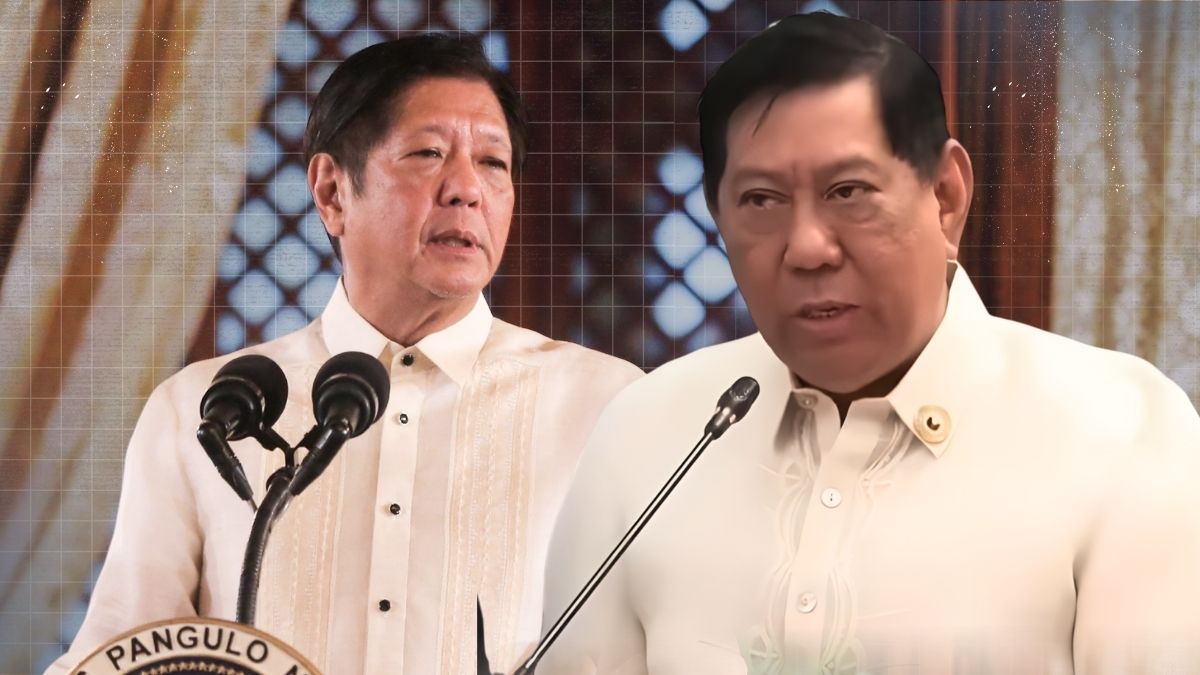
During a tense committee session, Edgar Erice cast a vote that quickly echoed beyond the halls of Congress.
“When Congress blocks the presentation of evidence, Congress blocks the search for truth.”
He voted NO on the committee report and warned that the consequences of the decision extend far beyond impeachment — potentially affecting democracy, the economy, and the future of the Filipino people.
It was not just a vote. It was a protest.
But what exactly was being blocked? And does rejecting a committee report automatically mean suppressing truth?
🧭 The Constitutional Context
Impeachment in the Philippines is not merely political. It is a constitutional mechanism designed to hold high officials accountable through a structured legal process.
The steps generally include:
Determining sufficiency in form
Determining sufficiency in substance
Committee deliberation
Plenary vote
A vote to dismiss at the committee level does not necessarily mean evidence was silenced. It may mean the majority concluded that the complaint failed to meet constitutional thresholds.
However, perception is powerful. If hearings appear rushed or limited, critics will naturally question transparency.
🔍 Erice’s Core Concern
Erice’s position hinges on one idea: truth requires exposure.
If evidence is not allowed to be presented, tested, and debated, the public cannot evaluate it. That, in his view, weakens democratic accountability.
His warning about economic and democratic consequences may sound dramatic — but institutional credibility does influence:
Investor confidence
Public trust
Political stability
Markets react not only to numbers, but to signals of governance quality.
⚖️ The Counterargument
Supporters of the committee’s decision argue:
Majority rule is still democratic rule.
Not every complaint deserves full trial-level exposure.
The Constitution sets thresholds to prevent weaponization of impeachment.
From this angle, dismissal is not suppression — it is procedural discipline.
And here lies the tension:
Is this protection of stability, or protection of power?
🦅 Agila Perspective
Strength in leadership is not just about winning votes. It is about winning legitimacy.
If Congress wants the public to trust its decisions, transparency must be visible, not assumed.
At the same time, opposition lawmakers must ensure their warnings do not become exaggerated narratives that erode institutions unnecessarily.
Truth is not blocked by votes alone.
Truth is blocked when process lacks clarity.
📌 The Bigger Democratic Question
The deeper issue is this:
Do Filipinos believe that impeachment processes are decided by evidence — or by numbers?
That perception will shape not only this controversy, but future accountability efforts.
Because in politics, once trust erodes, rebuilding it is harder than winning any vote.





More House of Representa’thieves Stories
FOLLOW US
Disclaimer: This site uses publicly available images and materials for news, satire, and commentary. All rights belong to their respective owners. No copyright infringement intended.
© 2025 Politikanta Minute. All Rights Reserved.
Political Commentary • Satire • Faith-Based Reflection
Some visuals may be AI-generated for satire and illustration. Not real footage unless stated.
FOLLOW US
Disclaimer: This site uses publicly available images and materials for news, satire, and commentary. All rights belong to their respective owners. No copyright infringement intended.
© 2025 Politikanta Minute. All Rights Reserved.
Political Commentary • Satire • Faith-Based Reflection
Some visuals may be AI-generated for satire and illustration. Not real footage unless stated.