
Support Politikanta Minute
Your support keeps independent commentary alive.
☕ Buy us a coffee and keep the conversation going
Latest Videos
Curated Politikanta Minute playlists by focused political topic.
HOR Issues
Latest HOR-related updates, reactions, political tension, hearing clips, and issue breakdowns.
Watch MoreDuterte Legacy Playlist
Senate Circus Playlist
House of Representatives Scandals Playlist
Celebrity Updates
Sports
🎵 Music
18 Marines Playlist
Global Entertainment Playlist
Global News Playlist
Bible Scripture Playlist
Breaking News Playlist
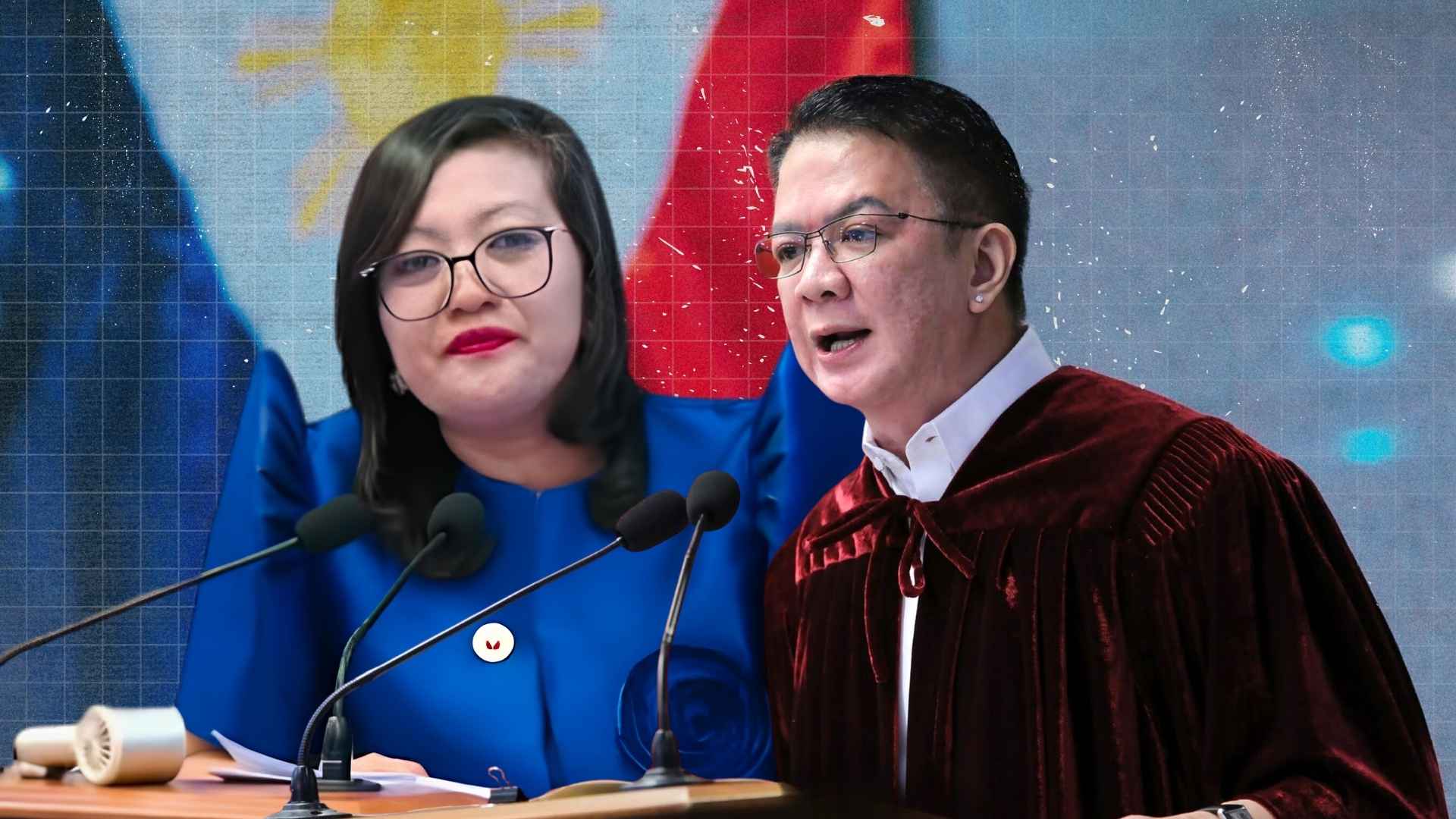
“MERE SCRAP OF PAPER!” VINLUAN CHALLENGES LASCANAS AFFIDAVIT IN SARA IMPEACHMENT TRIAL
“THIS IS A MERE SCRAP OF PAPER” — DEFENSE CHALLENGES LASCANAS AFFIDAVIT IN SARA DUTERTE IMPEACHMENT TRIAL
By Politikanta Minute
The eighth day of the impeachment trial of Vice President Sara Duterte once again placed the spotlight on the rules of evidence—and this time, the issue centered on a document presented by the prosecution involving former police officer Arturo Lascañas.
Defense counsel Atty. Mark Vinluan strongly objected to the affidavit presented before the Senate impeachment court, questioning the document's authenticity and legal sufficiency.
According to Vinluan, the affidavit was unsigned and unnotarized.
His argument was direct:
“Without the proper notarization and proper signature, it is a mere scrap of paper. The witness cannot testify based on this document.”
For the defense, the issue is straightforward.
If a document is being presented as an affidavit, it should meet the basic requirements expected of such a document.
Without a proper signature and notarization, the defense argues, the document should not be treated as a valid affidavit that can serve as the basis for testimony.
But the prosecution offered a different explanation.
Lead House Prosecutor Rep. Gerville Luistro clarified that the document was not being presented to prove that everything written inside it was true.
Instead, the prosecution said the document was being presented for a different purpose.
“We are not presenting it to prove the truthfulness of the contents of the affidavit.”
According to Luistro, the question before the court was whether the document was among the materials considered by the Special Task Force during its investigation into the alleged threat against President Ferdinand Marcos Jr.
And this distinction is critical.
There is a major difference between presenting a document to prove the truth of what it says and presenting a document to establish that the document existed and was considered during an investigation.
The first involves the substance of the document.
The second involves the document's role in the investigative process.
That distinction may become important as the senator-judges determine what evidence they will consider and what weight they will give to it.
The defense appears to be questioning whether the document can legitimately be treated as an affidavit in the first place.
The prosecution, on the other hand, appears to be arguing that the document's value lies not necessarily in proving the truth of its contents, but in showing that it formed part of the investigative material reviewed by the Special Task Force.
And this is where the impeachment trial enters a complicated area.
The court is not simply being asked whether a piece of paper exists.
The senator-judges must eventually determine what the document proves, how reliable it is, and what significance it has to the allegations being examined.
The defense is essentially saying:
If the document isn't properly signed and notarized, don't treat it as a legitimate affidavit.
The prosecution is responding:
We're not asking you to accept the contents as true. We're showing you that this was one of the documents considered during the investigation.
Two very different arguments.
And the senator-judges will have to determine which interpretation carries more weight.
The exchange also reflects a recurring theme throughout the impeachment proceedings.
The defense has repeatedly emphasized procedural safeguards and the importance of following evidentiary rules.
The prosecution, meanwhile, has argued that the impeachment court should be able to examine relevant information necessary to establish the truth behind the allegations.
Both sides are therefore fighting not only over what the evidence says, but also over what the evidence is being presented to prove.
That distinction matters.
A document may be unreliable as proof of the truth of its contents, but it could potentially have another purpose in establishing the history of an investigation.
At the same time, simply showing that a document was considered by investigators does not automatically prove that the allegations contained in that document are true.
And that's the part the public should pay attention to.
A document being part of an investigation does not automatically make its contents factual.
But neither does a challenge to its form automatically erase the fact that investigators may have considered it.
The impeachment court must therefore separate three different questions:
Was the document properly executed?
Was it actually considered by investigators?
And most importantly:
What, if anything, does the document actually prove?
Those questions should not be confused.
The debate over the Lascañas affidavit is therefore more than a technical argument about a piece of paper.
It goes to the heart of how evidence is evaluated in an impeachment trial.
The defense wants the court to maintain strict standards.
The prosecution wants the court to consider the investigative context in which the document was used.
And the senator-judges must ultimately decide what evidence deserves weight.
In the end, the phrase “mere scrap of paper” may make for a powerful headline.
But the real issue is deeper.
Is the document being offered as proof of the truth—or merely as proof that it existed and was considered during an investigation?
That is the question the impeachment court must answer.
Because in a proceeding this consequential, the public deserves more than political arguments.
It deserves a careful examination of the evidence.
Not just what a document says.
Not just who presented it.
But what it actually proves.
📖 EXEGESIS — “TEST EVERYTHING; HOLD ON TO WHAT IS GOOD”
1 Thessalonians 5:21
“But test everything; hold on to what is good.”
This verse offers a powerful principle when examining evidence.
Test everything.
Don't automatically believe something simply because it was presented by the prosecution.
But don't automatically reject something simply because it was presented by the defense.
Every piece of information should be examined carefully.
In the impeachment trial, the question surrounding the Lascañas document demonstrates exactly why discernment matters.
The defense raises questions about its signature and notarization.
The prosecution explains that it is not being offered to prove the truth of its contents, but to show that it formed part of an investigative process.
Both sides are asking the court to look at the same document differently.
And that is why the senator-judges must carefully distinguish between what a document is, why it is being presented, and what it can actually prove.
Truth does not fear examination.
But neither should justice be rushed.
The responsibility of the court is not merely to collect documents.
It is to test them, examine them, and determine what deserves to be believed.
📌 ICC Watch | Go Denies Allegations in ICC Document Linked to Duterte Case
February 14, 2026•2 min read
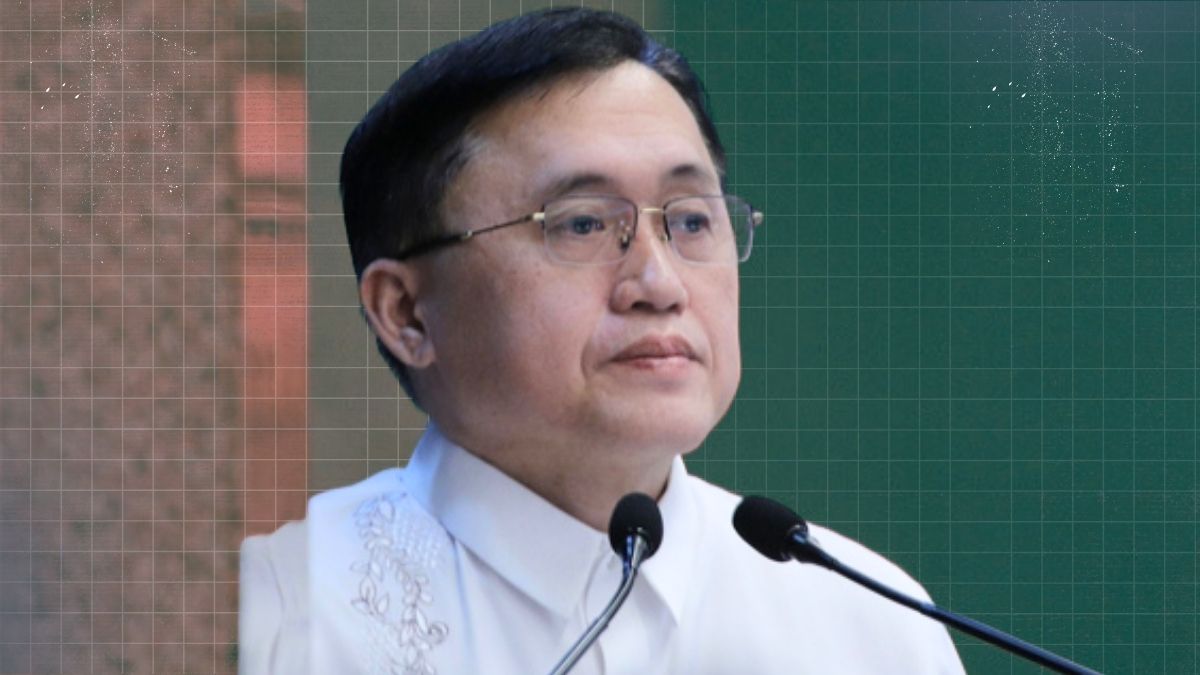
Senator Christopher Bong Go has denied allegations reportedly contained in a document associated with the International Criminal Court that names him as a co-perpetrator in connection with the case involving former president Rodrigo Duterte.
Go described the claim as “unfounded,” asserting that he had no involvement in any unlawful acts connected to the controversial anti-drug campaign of the previous administration. His statement follows renewed public attention surrounding ICC proceedings related to alleged crimes against humanity linked to the drug war.
What We Know
According to reports, an ICC-related document referenced Go’s name in connection with ongoing proceedings. Go responded swiftly, rejecting the allegation and reiterating that his role during the Duterte administration was primarily administrative and supportive in nature.
He maintained that he had no operational authority over law enforcement agencies responsible for implementing anti-drug operations.
As of now, there is no confirmation that formal charges have been filed against Go. The ICC process involves multiple procedural stages, including documentation review, evidence evaluation, and determination of prosecutorial action.
The ICC Context
The ICC has been examining alleged human rights violations tied to the anti-drug campaign launched during Duterte’s presidency. The Philippine government withdrew from the Rome Statute in 2019, but the court has maintained that it retains jurisdiction over alleged crimes committed while the country was still a member.
This legal question—jurisdiction after withdrawal—remains central to the broader debate.
Political and Legal Implications
If an ICC document names a sitting senator as a co-perpetrator, even at a preliminary stage, the implications are significant:
Legal Exposure – Depending on the stage of proceedings, the named individual may face international legal scrutiny.
Political Ramifications – Allegations can influence domestic political alliances and public perception.
Diplomatic Considerations – ICC developments intersect with the Philippines’ foreign policy posture.
However, being named in a document does not equate to conviction or even formal indictment. ICC processes are lengthy and evidence-driven.
Go’s Defense
Go’s defense centers on three main arguments:
He had no command responsibility over police operations.
His work focused on administrative coordination.
The allegation lacks factual basis.
He has framed the mention as politically motivated and has signaled willingness to defend himself through proper legal channels.
Public Reaction
Public response remains polarized. Supporters argue that the ICC process is politically charged and infringes on national sovereignty. Critics maintain that international accountability mechanisms exist precisely for cases where domestic remedies are questioned.
The issue remains legally complex and politically sensitive.
The Bigger Question
Beyond individual denial or allegation, this development raises broader questions:
How will international legal processes interact with domestic politics?
What is the threshold for naming individuals in ICC documents?
How should public officials respond to preliminary allegations?
The ICC’s procedures prioritize documentation and evidentiary review. Until formal charges are issued, the situation remains in a procedural stage.
📖 Reflection
Proverbs 18:17 — “The one who states his case first seems right, until the other comes and examines him.”
Legal processes unfold over time.





More House of Representa’thieves Stories
FOLLOW US
Disclaimer: This site uses publicly available images and materials for news, satire, and commentary. All rights belong to their respective owners. No copyright infringement intended.
© 2025 Politikanta Minute. All Rights Reserved.
Political Commentary • Satire • Faith-Based Reflection
Some visuals may be AI-generated for satire and illustration. Not real footage unless stated.
FOLLOW US
Disclaimer: This site uses publicly available images and materials for news, satire, and commentary. All rights belong to their respective owners. No copyright infringement intended.
© 2025 Politikanta Minute. All Rights Reserved.
Political Commentary • Satire • Faith-Based Reflection
Some visuals may be AI-generated for satire and illustration. Not real footage unless stated.