
Support Politikanta Minute
Your support keeps independent commentary alive.
☕ Buy us a coffee and keep the conversation going
Latest Videos
Curated Politikanta Minute playlists by focused political topic.
SENATE Issues
Latest SENATE-related updates, reactions, political tension, hearing clips, and issue breakdowns.
Watch MoreDuterte Legacy Playlist
BBM Playlist
House of Representatives Scandals Playlist
Celebrity Updates
Sports
🎵 Music
18 Marines Playlist
Global Entertainment Playlist
Global News Playlist
Bible Scripture Playlist
Breaking News Playlist
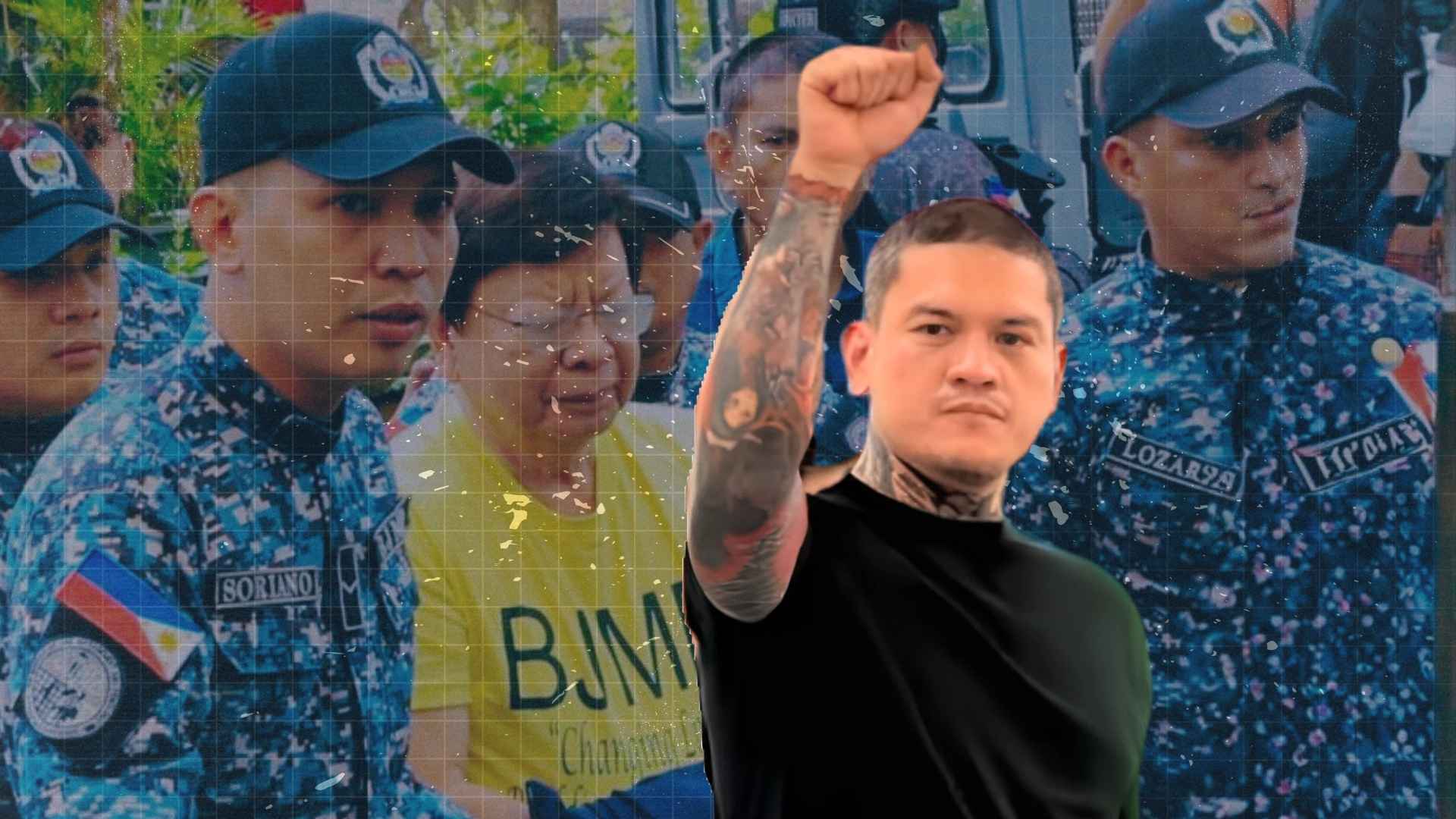
“DO WE EVEN HAVE FREEDOM?” Baste Duterte Reacts to Marcoleta Arrest
“DO WE EVEN HAVE FREEDOM IN THIS COUNTRY?” BASTE DUTERTE QUESTIONS POLITICAL FREEDOM AFTER MARCOLETA ARREST
DAVAO CITY — A political debate over freedom, accountability, and alleged government retaliation intensified after Davao City Mayor Sebastian “Baste” Duterte questioned whether Filipinos still have political freedom in the country.
Speaking at the PDP-Laban national assembly, Duterte claimed that the Marcos administration was targeting lawmakers who attempted to expose alleged corruption involving flood control projects.
He cited the arrest of Senator Rodante Marcoleta, whom he alleged was targeted because of his efforts to push for a Senate Blue Ribbon Committee investigation into flood control projects.
Then came the question that immediately grabbed attention:
“Do we even have freedom at all at this point sa bansa natin?”
It was a statement that quickly transformed what could have been another political speech into a much larger debate.
Because the question is no longer simply about one senator.
It is about the line between political accountability and political persecution.
And that is a line that every administration must be prepared to defend.
THE CLAIM OF POLITICAL TARGETING
According to Duterte, the arrest of Marcoleta should be viewed in the context of his alleged efforts to investigate flood control projects.
From Duterte's perspective, the timing raises questions about whether political figures who challenge powerful interests are being subjected to retaliation.
That is a serious allegation.
But it remains an allegation.
The public should therefore distinguish between what has been claimed politically and what has been established legally.
The reported case against Marcoleta involves plunder charges connected to alleged undeclared campaign donations totaling ₱75 million, allegations that he has denied.
That distinction matters.
Because there are two separate questions being debated.
The first:
Was Marcoleta targeted because of his political activities?
The second:
Are the criminal charges against him supported by evidence?
Those questions should not automatically be treated as the same issue.
But neither should legitimate questions about possible political retaliation simply be dismissed without examination.
FREEDOM AND ACCOUNTABILITY CAN EXIST AT THE SAME TIME
This is where the conversation becomes complicated.
A democracy requires accountability.
If a public official is accused of wrongdoing, that person should face investigation and, when warranted, prosecution.
At the same time, democracy also requires freedom.
Lawmakers must be able to investigate government spending.
Journalists must be able to question officials.
Citizens must be able to criticize those in power.
And political opposition must be allowed to exist without fear of retaliation.
These principles are not enemies.
They are supposed to work together.
Accountability without freedom can become political persecution.
Freedom without accountability can become impunity.
A healthy democracy needs both.
THE FLOOD CONTROL QUESTION
The controversy surrounding flood control projects adds another layer to the debate.
For years, massive public funds have been allocated for flood mitigation and infrastructure projects across the Philippines.
Whenever allegations of irregularities emerge, lawmakers have a responsibility to ask questions.
Where did the money go?
Who received the contracts?
Were the projects actually completed?
Were the projects necessary?
Were government funds used properly?
Those are legitimate questions regardless of political affiliation.
And if a lawmaker raises those questions, the public should not automatically assume that the investigation is either heroic or politically motivated.
The evidence should determine that.
But if a lawmaker is investigated or arrested immediately after challenging powerful interests, the public is also justified in asking:
Is this ordinary law enforcement—or is something else happening?
That question deserves a serious answer.
THE POLITICS OF TIMING
In politics, timing matters.
A legal case may be entirely legitimate.
A political investigation may also be entirely legitimate.
But when legal action happens in the middle of a highly contentious political environment, suspicion naturally follows.
That is why transparency becomes critical.
If the charges are strong, show the evidence.
If the case is legitimate, allow the legal process to work.
If the accusations are false, let the accused defend himself in court.
But if there is evidence of political retaliation, that too must be investigated.
The answer should not be:
"Trust us."
The answer should be:
"Here is the evidence."
BASTE DUTERTE'S QUESTION IS BIGGER THAN BASTE DUTERTE
Whether one agrees with Baste Duterte or not, his question is worth examining:
“Do we even have freedom at all at this point sa bansa natin?”
That question should not be answered simply by political loyalty.
Supporters will say:
"He's right."
Opponents will say:
"He's exaggerating."
But perhaps the better response is:
Let's examine the facts.
Because freedom is not proven by speeches.
It is proven by what happens when someone criticizes the government.
It is proven by whether investigations can proceed without interference.
It is proven by whether journalists can report freely.
It is proven by whether opposition politicians can challenge those in power.
And it is proven by whether the law is applied equally.
POLITIKANTA MINUTE TAKE 🎙️
Here's the uncomfortable question.
If the government says:
"This is not political. This is accountability."
Then prove it.
Show the evidence.
Follow the legal process.
Let the courts decide.
But if the opposition says:
"This is political persecution."
Then prove that too.
Show the timeline.
Show the connections.
Show the evidence.
Because in a democracy, accusations should not replace evidence—whether the accusation comes from the government or the opposition.
And here's where the public needs to be smarter.
Don't blindly believe politicians.
Not Baste Duterte.
Not Marcos.
Not Marcoleta.
Not anyone.
Believe the evidence.
Because the moment Filipinos stop asking questions, democracy becomes nothing more than a stage where politicians perform for their own supporters.
And that brings us back to Baste's question:
Do we even have freedom?
Perhaps the better question is:
Are we still free enough to ask that question—and demand an honest answer?
THE FINAL TEST OF FREEDOM
The Philippines has experienced administrations of every political color.
And every administration eventually faces the same test.
When criticism comes, does the government tolerate it?
When investigations begin, does it allow them to proceed?
When accusations are made, does it answer with evidence?
When the opposition speaks, does it listen—or retaliate?
These are the moments when democratic institutions are tested.
The arrest of a political figure can be legally justified.
It can also raise legitimate political questions.
Both things can be true at the same time.
That is why the public must demand transparency.
Not because we automatically believe Marcoleta.
Not because we automatically believe Baste Duterte.
But because the Filipino people deserve to know whether the law is being applied fairly and consistently.
FINAL COMMENTARY
Baste Duterte's statement has opened a debate that goes far beyond the politics of one family or one administration.
The real issue is whether Filipinos can trust their institutions to distinguish between accountability and retaliation.
If Marcoleta is guilty of the charges against him, the courts should determine that based on evidence and due process.
If the allegations of political targeting are true, those claims deserve serious investigation.
And if neither claim is supported by evidence, then the public deserves to know that too.
The answer to “Do we even have freedom?” should never be determined by which political camp you support.
It should be determined by whether every Filipino—whether powerful or ordinary, administration or opposition—is given the same rights under the law.
Because freedom means nothing if it only belongs to those who agree with us.
And accountability means nothing if it only applies to our political enemies.
✝️ BIBLE VERSE — FREEDOM AND JUSTICE
Galatians 5:13
“You, my brothers and sisters, were called to be free. But do not use your freedom to indulge the flesh; rather, serve one another humbly in love.”
EXEGESIS
Paul's teaching in Galatians 5:13 presents freedom not simply as the absence of restriction, but as a responsibility.
True freedom is not permission to do anything we want.
It is the ability to live responsibly and serve others.
That principle can also challenge political discourse.
Freedom of speech does not mean freedom from accountability.
Political power does not mean freedom from scrutiny.
And government authority does not mean freedom from criticism.
In a democracy, freedom and responsibility must exist together.
Citizens have the freedom to question.
Officials have the responsibility to answer.
Lawmakers have the freedom to investigate.
Institutions have the responsibility to act fairly.
And those accused of wrongdoing have the right to due process.
The question raised by Baste Duterte therefore invites a deeper reflection:
If freedom is a right, are we also willing to protect the freedom of people we disagree with?
That is the real test.
Viral ICC Quote on Duterte Christmas Visit Circulates — Court Actions Still Governed by Due Process
December 29, 2025•1 min read
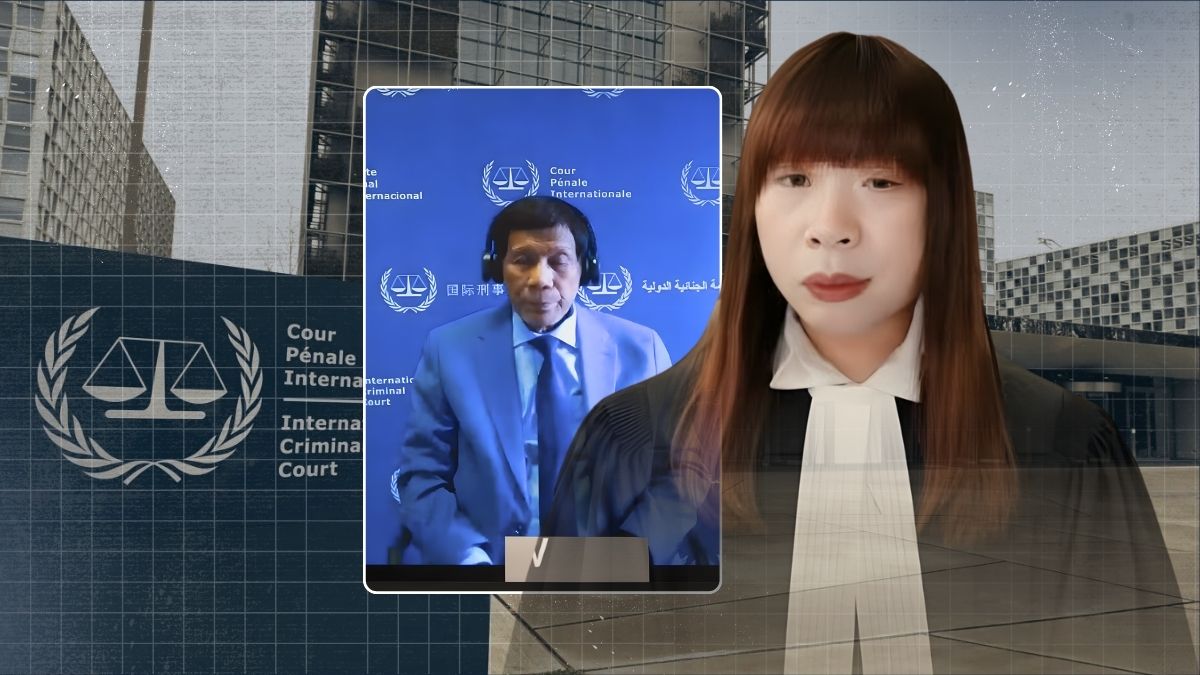
A viral graphic circulating on social media attributes a humanitarian appeal to an alleged International Criminal Court (ICC) judge, urging that former President Rodrigo Duterte be allowed to return home and spend Christmas with his family.

The image claims the statement was made by “Atty. Redora Unclemi Hong,” described as an ICC judge in The Hague. However, as of this writing, no official ICC ruling, transcript, or press release confirms such an appeal as part of any formal court action.

What is clear, based on established ICC procedure, is that decisions regarding detention, interim release, or humanitarian considerations are made collectively through formal judicial processes, not personal appeals circulated on social media.
The International Criminal Court has consistently emphasized that all proceedings are governed by law, due process, and written rulings, particularly in high-profile cases involving crimes against humanity.
Legal analysts caution the public to distinguish between viral commentary and official court actions, especially when names, titles, and quotes are presented without verifiable sourcing. While humanitarian arguments are often raised in international cases, they must be formally filed, deliberated, and resolved within the court’s legal framework.
For Duterte’s supporters and critics alike, the central reality remains unchanged: any decision on custody or movement rests solely on documented judicial orders, not sentiment—even during the holidays.
🦅 Agila note:
Compassion matters. But in courtrooms, compassion must walk hand-in-hand with law.
Bible Verse:
“Learn to do right; seek justice. Defend the oppressed.” — Isaiah 1:17






More Senate Stories
FOLLOW US
Disclaimer: This site uses publicly available images and materials for news, satire, and commentary. All rights belong to their respective owners. No copyright infringement intended.
© 2025 Politikanta Minute. All Rights Reserved.
Political Commentary • Satire • Faith-Based Reflection
Some visuals may be AI-generated for satire and illustration. Not real footage unless stated.