
Support Politikanta Minute
Your support keeps independent commentary alive.
☕ Buy us a coffee and keep the conversation going
Latest Videos
Curated Politikanta Minute playlists by focused political topic.
SENATE Issues
Latest SENATE-related updates, reactions, political tension, hearing clips, and issue breakdowns.
Watch MoreDuterte Legacy Playlist
BBM Playlist
House of Representatives Scandals Playlist
Celebrity Updates
Sports
🎵 Music
18 Marines Playlist
Global Entertainment Playlist
Global News Playlist
Bible Scripture Playlist
Breaking News Playlist
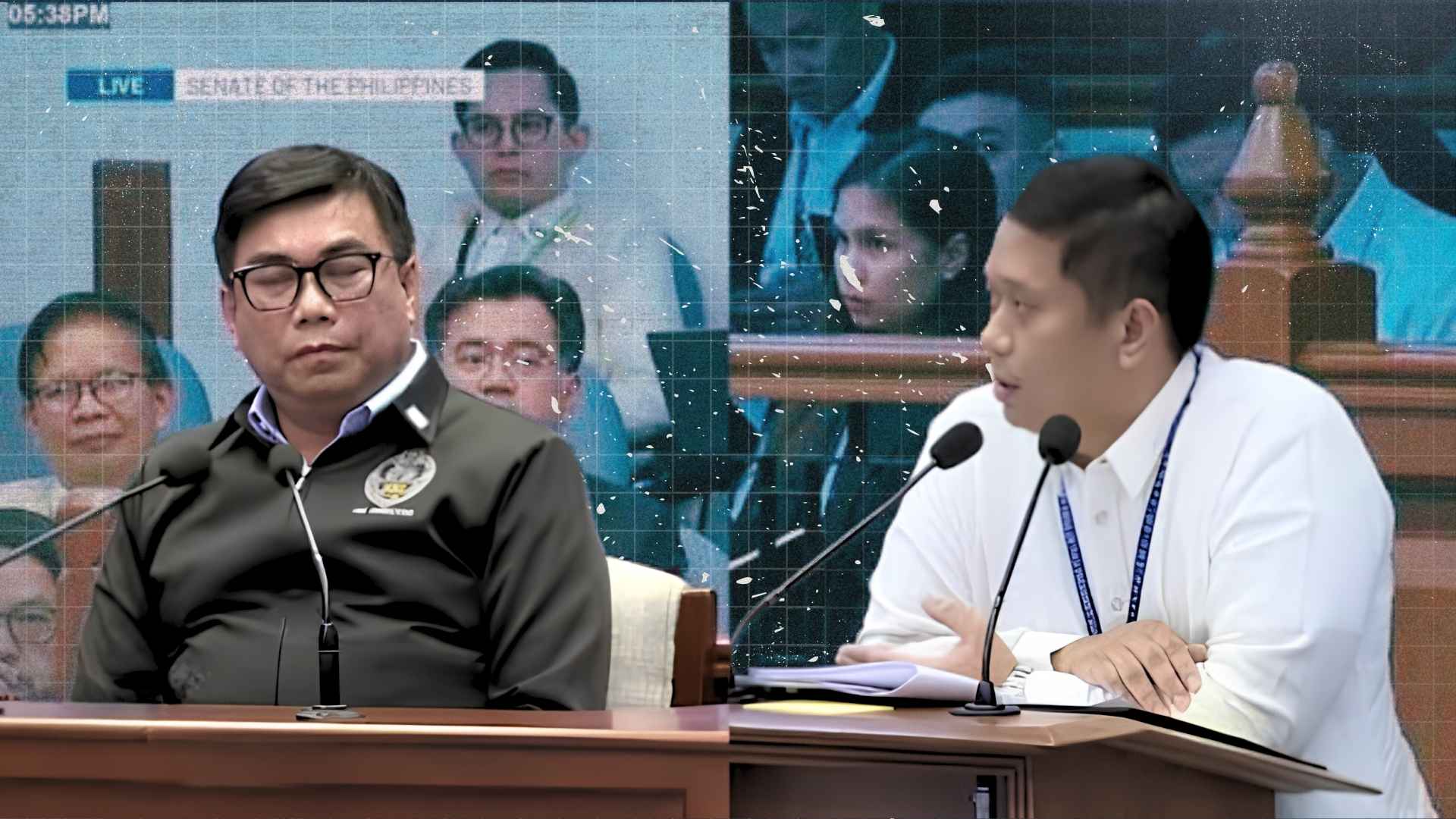
WHO AUTHORED THE LASCAÑAS AFFIDAVIT? VINLUAN PRESSES MATIBAG ON VERIFICATION PROCESS
Who actually wrote the document? And if Arturo Lascañas himself was not subpoenaed for verification, how was the document authenticated?
That became the focus of a tense exchange between defense counsel Atty. Mark Vinluan and NBI Director Melvin Matibag during the impeachment trial of Vice President Sara Duterte.
The questioning centered on a document allegedly connected to Lascañas and the investigation being presented before the Senate impeachment court.
WHO AUTHORED THE LASCAÑAS AFFIDAVIT? VINLUAN PRESSES MATIBAG ON VERIFICATION PROCESS
The impeachment trial of Vice President Sara Duterte once again turned to questions surrounding the evidence being presented before the Senate impeachment court—this time involving a document connected to former Davao police officer Arturo Lascañas.
During the proceedings, defense counsel Atty. Mark Vinluan pressed NBI Director Melvin Matibag on the identity of the document's author and the process used to verify its contents.
Vinluan first pointed out that the identity of the person who authored the document had not yet been clearly established.
He then asked Matibag whether the NBI had issued a subpoena to Lascañas and personally verified the document with him.
Matibag clarified that no subpoena had been issued to Lascañas.
However, he maintained that a verification process had taken place.
That prompted Vinluan to press further.
If Lascañas was not subpoenaed, the defense appeared to be asking a straightforward question: Who exactly verified the document, and on what basis was it treated as reliable?
The exchange became particularly notable when Matibag appeared to respond in a manner that drew a reminder from the presiding officer.
The presiding officer reminded the witness to avoid making rulings on behalf of the chair.
Matibag apologized and proceeded with his response.
For the defense, however, the central issue remained.
The question was not simply whether the document existed.
It was about where it came from, who authored it, and how the NBI established its authenticity.
These questions are significant because the impeachment trial is not merely a political debate. Evidence presented before the Senate impeachment court can potentially influence how senator-judges evaluate serious allegations against the Vice President.
The defense's line of questioning therefore appears designed to test the reliability and evidentiary foundation of documents being presented by the prosecution and investigative agencies.
At the same time, the prosecution's position has been that documents may be presented for specific purposes beyond proving the absolute truth of every statement contained in them.
This distinction is important.
A document may be introduced to establish that it was part of an investigation, that investigators considered it, or that it contributed to certain investigative actions. That is different from using the document itself as definitive proof that every allegation inside it is true.
And this is where the impeachment proceedings become increasingly complicated.
One side is asking:
Can the document be trusted?
The other side may be asking:
Was the document relevant to the investigation, regardless of whether it independently proves every allegation?
Those are two different questions.
As the trial continues, the Senate impeachment court will ultimately have to determine what weight should be given to each piece of evidence—and whether the evidence presented is sufficient to support the allegations against the Vice President.
For now, the questioning by Atty. Vinluan puts the spotlight back on one crucial issue:
Before the Senate accepts a document as meaningful evidence, the public deserves to know where it came from, who prepared it, and how it was verified.
Because in a trial where the stakes involve the presidency, the vice presidency, and the stability of the country, the credibility of the evidence matters just as much as the allegations themselves.
REPORTORIAL COMMENTARY
Here's the uncomfortable part.
In a case this politically explosive, every document will be scrutinized.
The prosecution cannot simply say, "We have a document."
The defense will naturally ask:
Who wrote it?
Who signed it?
Was it authenticated?
Was the person who supposedly made it ever questioned?
And how did investigators verify it?
Those are not unreasonable questions.
But the defense also cannot simply dismiss every document as worthless just because the person who authored it was not personally present.
The real question is what the document is being offered to prove.
If it is being used to prove the truth of its contents, then its reliability and authentication become critical.
If it is being presented only to show that investigators considered it during their investigation, that is a different evidentiary purpose.
That distinction is where the Senate impeachment court must be extremely careful.
Because the public deserves neither a rubber-stamp conviction nor a rubber-stamp acquittal.
What the country needs is a process that examines the evidence honestly.
No shortcuts.
No political theater.
No selective standards.
And no moving of the goalposts depending on whose side the evidence appears to favor.
At the end of the day, the question should be simple:
What actually happened?
And the answer should come from evidence that can survive scrutiny—not from whoever shouts the loudest inside or outside the courtroom.
EXEGESIS BIBLE VERSE
Proverbs 18:17
“In a lawsuit the first to speak seems right, till someone comes forward and cross-examines.”
Exegesis
This verse carries a powerful lesson for any serious proceeding: the first version of a story is not automatically the complete truth.
One side presents its evidence. The other side examines it.
One witness gives an account. The opposing counsel asks questions.
That process is not necessarily an attack on truth—it is part of the search for truth.
In the impeachment trial, questions about documents, witnesses, authorship, and verification are therefore important. They allow both sides to challenge what has been presented and force the evidence to withstand scrutiny.
The lesson is simple:
Truth should not fear examination.
And when the stakes involve public trust and national leadership, every claim deserves to be tested carefully before judgment is made.
Palace: Marcos to Work Through Christmas as 2026 Budget Review Takes Center Stage
December 25, 2025•2 min read
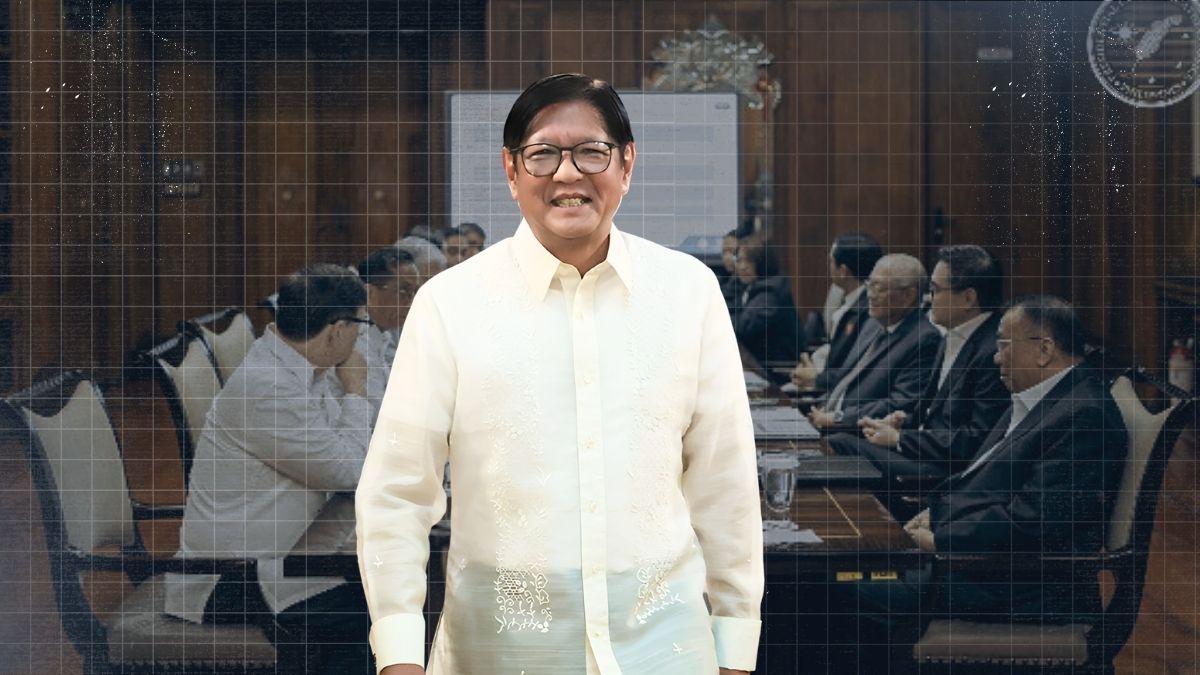
President Ferdinand Marcos Jr. will spend the Christmas holidays working, Malacañang confirmed, as the administration rushes to review the proposed ₱6.7-trillion national budget for 2026 approved by the Bicameral Conference Committee.

According to Presidential Communications Office Secretary Dave Gomez, the President has already mobilized his economic and budget teams to conduct a detailed review of the allocations and policy provisions contained in the bicameral version of the General Appropriations Bill.
The Palace said the review aims to ensure that taxpayer funds are used efficiently and in line with national priorities, particularly in light of recent controversies surrounding public infrastructure spending.
Focus on budget integrity
Malacañang stressed that the President’s decision to work through the holidays underscores the importance of fiscal responsibility, especially as lawmakers race against time to ratify the budget before the year ends.
Congress extended its sessions until December 30 to complete the ratification process. Once approved by both chambers, the bill will be transmitted to the President for signing.
However, Senate President Vicente Sotto III earlier expressed doubts that the timetable could be met, raising the possibility that the government may begin 2026 under a reenacted budget.
DPWH budget cut looms large
One of the most notable developments in the proposed 2026 budget is the significant reduction in funding for the Department of Public Works and Highways (DPWH). The agency’s proposed allocation was reportedly cut from ₱880 billion to ₱529.6 billion following public backlash and investigations related to alleged flood control kickback schemes.
The controversy has prompted calls for closer scrutiny of infrastructure pricing, project implementation, and accountability mechanisms—issues that continue to dominate public discourse.
Malacañang said the President’s review will include tracing changes made from the original National Expenditure Program (NEP) submitted earlier this year to ensure that adjustments are justified and transparent.
A political signal
Observers note that the announcement of a “working Christmas” carries symbolic weight. At a time when public trust in institutions is under strain, the Palace appears keen to project diligence and oversight—especially with a budget that will shape governance and public services in the coming year.
Whether the budget is signed before year-end or temporarily reenacted, the administration faces mounting expectations to prove that lessons from past controversies are reflected in how public money is allocated moving forward.
For many Filipinos, the question is no longer just whether leaders are working—but whether that work will translate into measurable accountability and better outcomes on the ground.




More Senate Stories
FOLLOW US
Disclaimer: This site uses publicly available images and materials for news, satire, and commentary. All rights belong to their respective owners. No copyright infringement intended.
© 2025 Politikanta Minute. All Rights Reserved.
Political Commentary • Satire • Faith-Based Reflection
Some visuals may be AI-generated for satire and illustration. Not real footage unless stated.