
Unprogrammed appropriations
Decision to veto nearly P92.5 billion in unprogrammed appropriations
Tap to view
👁
Mixed

Your support keeps independent commentary alive.
☕ Buy us a coffee and keep the conversation going


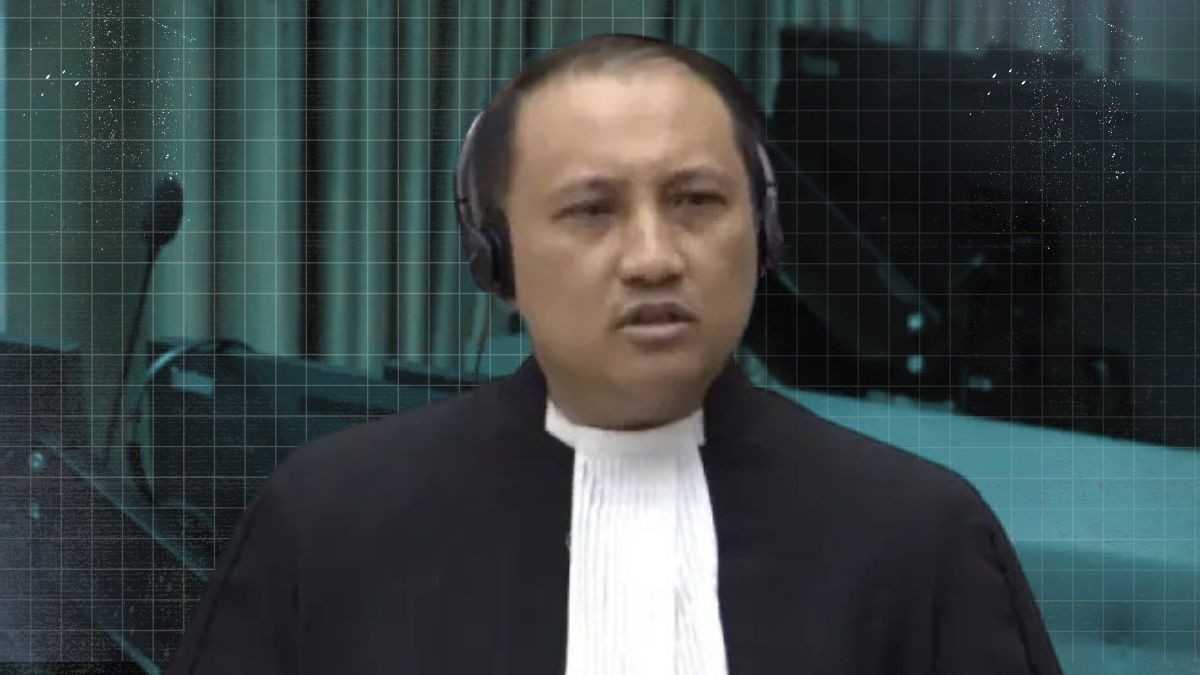
During proceedings related to the International Criminal Court, lawyer Gilbert Andres emphasized the inherent dignity of individuals alleged to have been victims of extrajudicial killings (EJKs).
Representing families of the alleged victims, Andres stated before the court:
“In the end, your honors, the victims, they're also created in the image of God and they also believe that the God of the universe is the God of Justice.”
His remarks framed the issue not only as a legal matter but also as a moral and spiritual one — underscoring the principle that every human being possesses inherent worth.
At the center of Andres’ statement is a foundational belief shared across many faith traditions: that human beings are created in the image of God.
This theological concept translates, in legal systems, into the language of human rights and dignity.
According to Andres, the alleged victims — regardless of accusations made against them during the anti-drug campaign — are entitled to:
Due process
Equal protection under the law
Justice through proper legal mechanisms
He further claimed that some families continue to experience intimidation, and urged the court to allow proceedings to move forward so that truth and accountability may emerge.
The ICC hearings focus on determining whether crimes under international law may have occurred in connection with the Philippine war on drugs.
It is important to note:
Proceedings are ongoing.
Allegations must be tested through evidence.
Legal determinations have not yet reached final judgment.
On the other side, former President Rodrigo Duterte has consistently denied ordering unlawful killings and has maintained that the anti-drug campaign was carried out to preserve peace and protect communities.
Supporters argue the campaign addressed severe criminal threats.
Critics argue that due process was compromised.
These perspectives continue to shape national discourse.
What makes Andres’ statement notable is its appeal to shared moral ground.
By invoking the “image of God,” he speaks to a deeply religious nation where faith often intersects with politics.
Scripture itself reflects the tension between justice and authority:
“He hath shewed thee, O man, what is good; and what doth the Lord require of thee, but to do justly, and to love mercy, and to walk humbly with thy God?” — Micah 6:8 (KJV)
Justice requires fairness.
Mercy requires compassion.
Humility requires accountability.
These principles apply to victims, accused individuals, and institutions alike.
In Philippine politics, everyone quotes God —
but the court still asks for evidence.
Faith inspires the heart.
But verdicts require proof.
The ICC hearings are not just about individuals.
They are about institutions.
They are about the rule of law.
They are about how a nation reconciles security and rights.
Whether one supports the war on drugs or questions its implementation, one truth remains:
Justice must be pursued carefully, honestly, and transparently.
And dignity must never be selective.
Stay informed. Stay prayerful. Stay discerning.






Disclaimer: This site uses publicly available images and materials for news, satire, and commentary. All rights belong to their respective owners. No copyright infringement intended.
© 2025 Politikanta Minute. All Rights Reserved.
Political Commentary • Satire • Faith-Based Reflection
Some visuals may be AI-generated for satire and illustration. Not real footage unless stated.
