Dynasty
BOYING REMULLA & CHILDREN.
Tap to view
👁
Mixed

Your support keeps independent commentary alive.
☕ Buy us a coffee and keep the conversation going


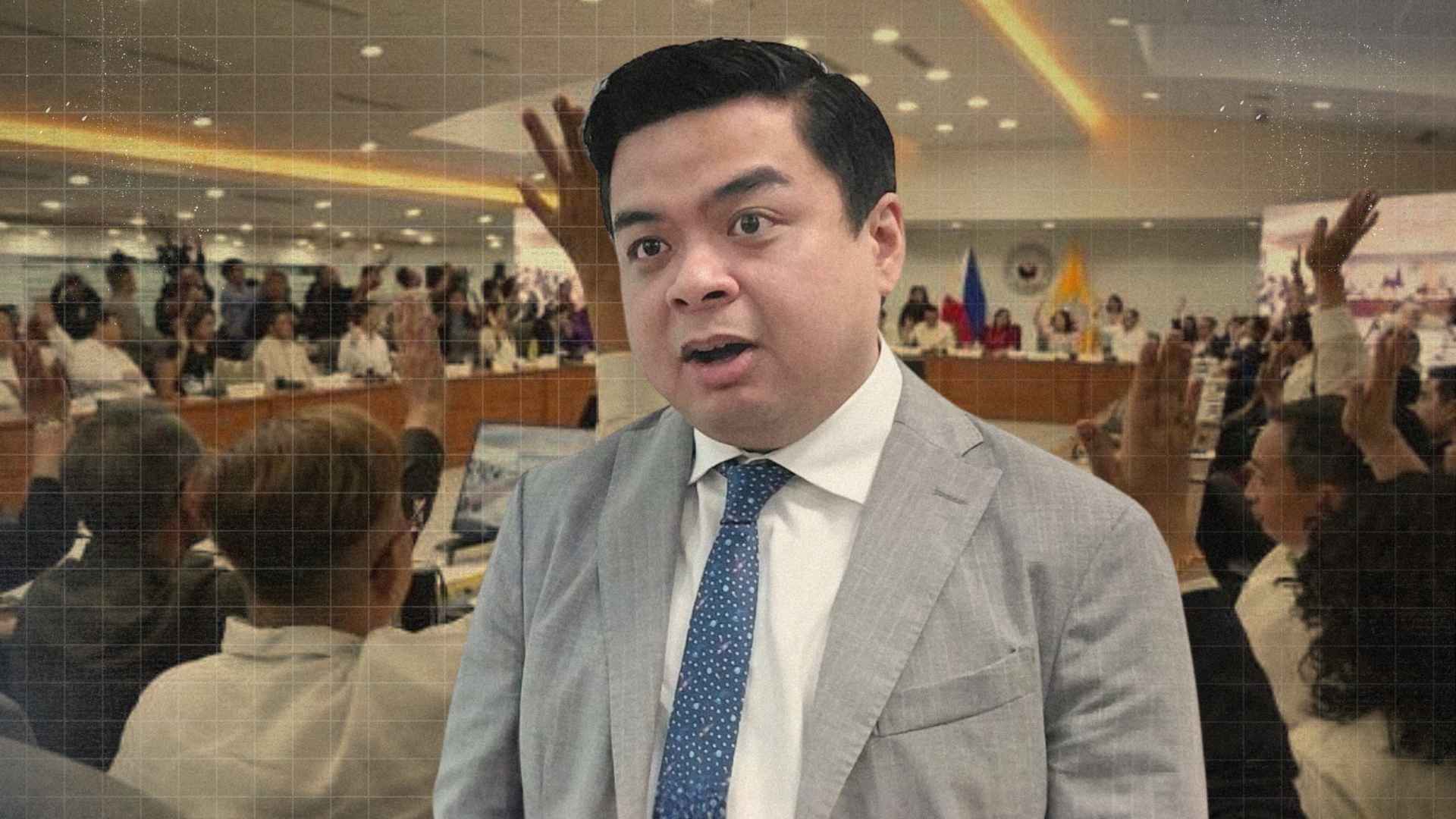
The political atmosphere continues to intensify as discussions surrounding the possible impeachment of Vice President Sara Duterte gain momentum.
According to Bicol Saro Representative Terry Ridon, there is growing confidence within the House that the process may move forward swiftly—possibly within the next two weeks.
This follows developments from the House Committee on Justice, which reportedly found probable cause in the complaints filed. With this step completed, attention now shifts to the next phase: potential transmission to the Senate.
“Our expectation is that within the next two weeks, we have transmitted to the Senate and we have impeached the vice president,” Ridon stated.
This is no longer just a discussion.
It’s a timeline.
Once probable cause is established, the process enters a more structured and accelerated phase. What used to be speculation now becomes procedural movement.
And when timelines are mentioned publicly,
it signals something deeper:
alignment or confidence within the institution.
Impeachment is not just legal—it is political.
Numbers matter. Support matters. Timing matters.
If momentum continues, it suggests that backing within the House is reaching a level where delay becomes less likely.
But here’s the reality:
Speed can be interpreted in two ways—
👉 Efficiency
👉 Or urgency driven by pressure
And the public is left to interpret which one it is.
This isn’t just about one official.
This is about:
Institutional power
Legislative process
National stability
Because impeachment is one of the most serious actions in governance.
And once it moves forward,
it reshapes the political landscape entirely.
Strength in leadership is often tested not during calm—but during confrontation.
Moments like this reveal not only political alignment,
but also resilience.
Because in high-pressure situations,
what stands firm is not noise—
but conviction.
The next two weeks may prove decisive.
Not because everything will be resolved—
but because direction will become clearer.
In the end, processes will move, debates will intensify,
and the nation will continue to watch.
Because beyond positions and politics,
what people are really observing is this:
👉 How power is exercised
👉 And how accountability is defined
Ecclesiastes 3:1 (KJV)
"To every thing there is a season, and a time to every purpose under the heaven."
Every event unfolds in its proper time—whether swift or delayed.
In moments of uncertainty, patience and discernment matter.
Not everything is about speed—sometimes it’s about timing and purpose.
January 07, 2026•2 min read
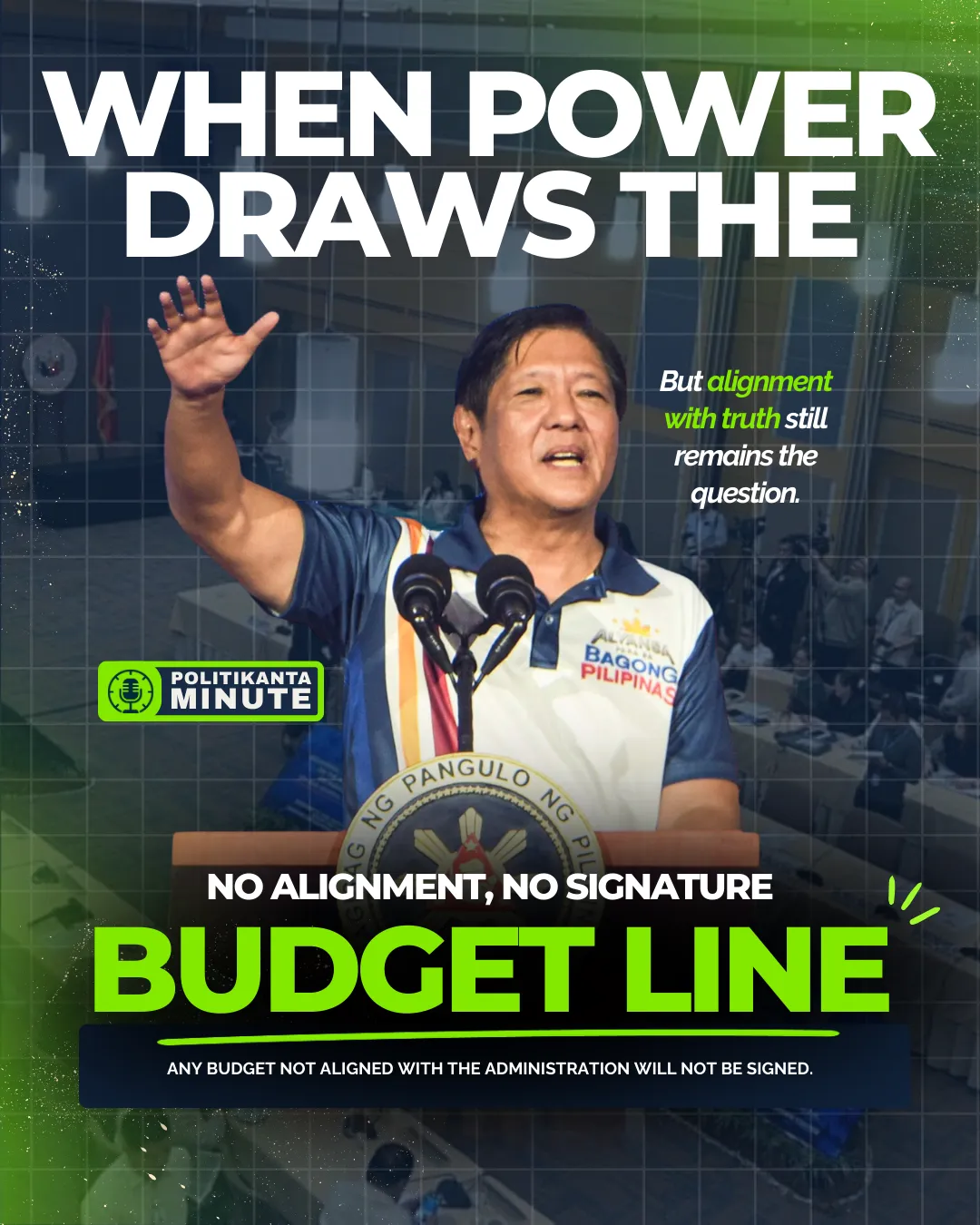
Senior Deputy Minority Leader Edgar Erice has drawn a clear legal line: if President Ferdinand Marcos Jr. signs the 2026 national budget without vetoing its unprogrammed funds, a petition before the Supreme Court of the Philippines is ready.
Erice’s argument is not about politics—it is about constitutionality.

Under the proposed ₱6.793-trillion 2026 national budget, Congress ratified ₱243 billion in unprogrammed appropriations—funds that will only be released if excess revenues or special funding sources materialize. For Erice, this mechanism itself raises constitutional red flags.
Unprogrammed appropriations are, by design, conditional. They exist on paper but are not guaranteed to be funded. Erice argues that this structure undermines the constitutional principle that appropriations must be clear, definite, and enforceable.
He points out that even essential obligations—such as teachers’ retirement benefits and salary increases—should be placed under programmed funds, not parked in conditional categories.
In short:
What must be guaranteed by law should not be left to chance.
This is not the first budget to carry unprogrammed items. In fact, Erice himself acknowledges that the 2026 budget is more organized than the previous three years. Yet organization does not automatically equal constitutionality.
The Agila notices the pattern:
Congress approves
The Executive signs
Questions arrive after the ink dries
This time, the warning comes before the signature.
If the President vetoes the unprogrammed funds, the issue ends in Malacañang.
If not, it moves to Padre Faura—where laws are weighed, not spun.
This debate is not about personalities. It is about precedent.
If unprogrammed funds become routine, they risk turning the national budget into a menu of maybes, instead of a binding plan for public service. The Constitution does not speak in estimates—it speaks in obligations.
ROMUALDEZ PARANGAL? NGAYON PA? KAPAL NG MUKHA AWARD 2025
Same Seats, Same Power: PCIJ Flags Top DPWH Budget Insertions for 2026














Disclaimer: This site uses publicly available images and materials for news, satire, and commentary. All rights belong to their respective owners. No copyright infringement intended.
© 2025 Politikanta Minute. All Rights Reserved.
Political Commentary • Satire • Faith-Based Reflection
Some visuals may be AI-generated for satire and illustration. Not real footage unless stated.
Disclaimer: This site uses publicly available images and materials for news, satire, and commentary. All rights belong to their respective owners. No copyright infringement intended.
© 2025 Politikanta Minute. All Rights Reserved.
Political Commentary • Satire • Faith-Based Reflection
Some visuals may be AI-generated for satire and illustration. Not real footage unless stated.
Disclaimer: This site uses publicly available images and materials for news, satire, and commentary. All rights belong to their respective owners. No copyright infringement intended.
© 2025 Politikanta Minute. All Rights Reserved.
Powered by Graprix Design and Prints.
Political Commentary • Satire • News • Faith & Devotion