
Dynasty
“THE POLITICAL FAMILY OF SUANSING.
Tap to view
👁
HOR

Your support keeps independent commentary alive.
☕ Buy us a coffee and keep the conversation going


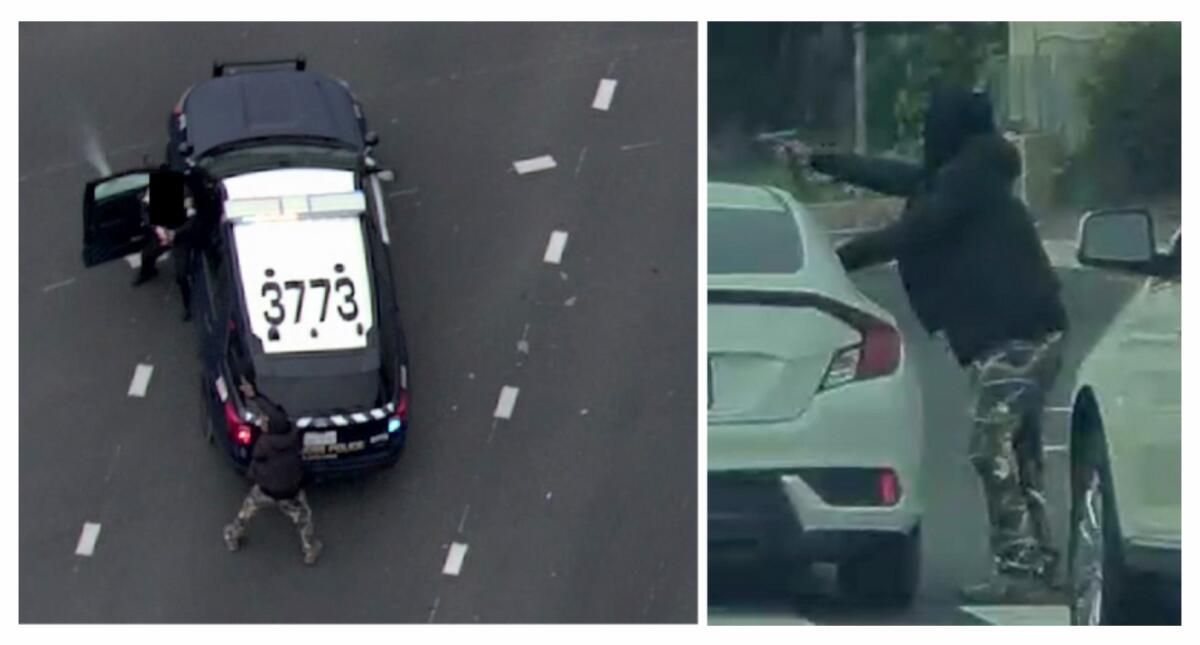
An officer-involved shooting in San Jose has once again thrown the United States into a familiar — and deeply polarized — debate about use of force, intent, and what constitutes a deadly weapon.
At the center of the controversy is a simple but uncomfortable question:
If a suspect uses a car aggressively, does it become a weapon?
Critics on the political left have historically argued that police escalate too quickly, especially in encounters that don’t involve firearms. Supporters of the officer, however, argue that the context matters — particularly when a vehicle is used in a way that threatens lives, including the officer’s own.
Authorities say the incident involved a San Jose police officer attempting to disengage during a tense encounter when a vehicle was allegedly used in a threatening manner.
Supporters of the officer argue the shooting was defensive, not punitive — an attempt to escape imminent danger, not to escalate it.
This framing directly challenges a long-standing narrative:
That only guns justify lethal force.
🚗 WHEN A CAR BECOMES A WEAPON
A vehicle is not just transportation. In the wrong hands, it becomes a 2-ton projectile capable of mass harm.
History makes this painfully clear.
In Nice, the 2016 truck attack killed 80 people and injured more than 400. No gun. No bomb. Just speed, mass, and intent.
The global security community classifies vehicle-ramming as a form of asymmetric attack — deadly, fast, and difficult to stop.
So the question isn’t whether a car can be a weapon.
The real question is:
Why do some refuse to acknowledge it when the driver fits a preferred narrative?
Public reaction often hinges less on facts and more on political alignment.
If a civilian is struck → “The car was the weapon.”
If a police officer is threatened → “Was it really a weapon?”
This inconsistency fuels public distrust — not just in law enforcement, but in the debate itself.
Accountability matters. So does fairness.
But pretending a vehicle can’t be deadly is not justice — it’s denial.
Use-of-force standards depend on perceived imminent threat, not on the object alone. Courts have repeatedly recognized vehicles as potential deadly weapons when used aggressively.
Ignoring that reality doesn’t make communities safer.
It just clouds judgment when seconds matter.
You can demand police accountability and acknowledge reality at the same time.
A car can be a weapon.
Context does matter.
And honest debate requires intellectual consistency — not selective outrage.
The conversation shouldn’t be about politics first.
It should be about truth.
















Disclaimer: This site uses publicly available images and materials for news, satire, and commentary. All rights belong to their respective owners. No copyright infringement intended.
© 2025 Politikanta Minute. All Rights Reserved.
Political Commentary • Satire • Faith-Based Reflection
Some visuals may be AI-generated for satire and illustration. Not real footage unless stated.
Disclaimer: This site uses publicly available images and materials for news, satire, and commentary. All rights belong to their respective owners. No copyright infringement intended.
© 2025 Politikanta Minute. All Rights Reserved.
Political Commentary • Satire • Faith-Based Reflection
Some visuals may be AI-generated for satire and illustration. Not real footage unless stated.


